dailynewsnblog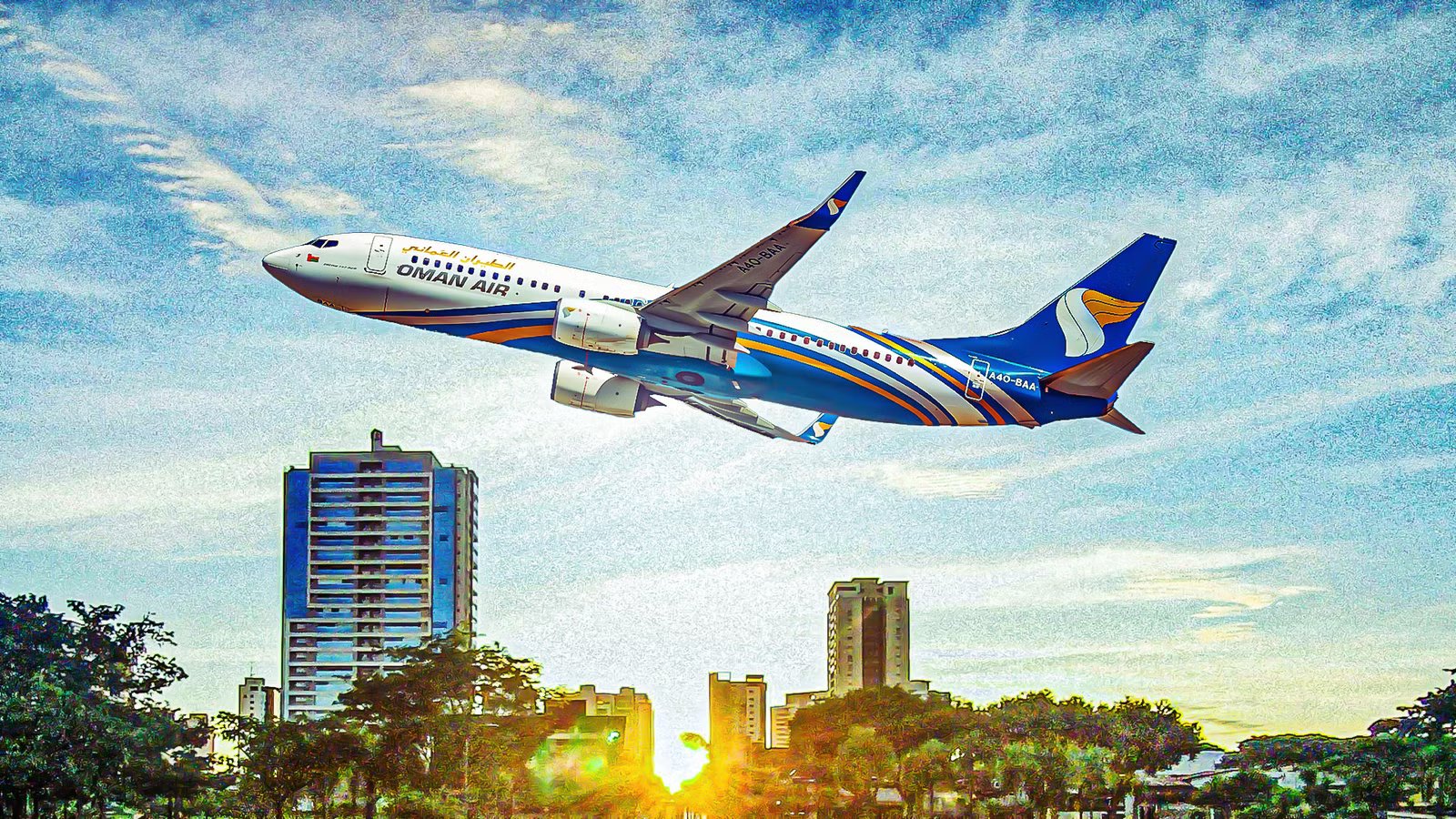
When it comes to Middle Eastern carriers, the so-called ‘big three’ of Emirates, Etihad Airways, and Qatar Airways tend to dominate the discussion. However, elsewhere in the region,  Oman Air is currently experiencing considerable network growth of its own, with five new routes launching within the space of a week. These launches commenced yesterday, with the last set to take place next Thursday.
The corridors in question serve a wide range of markets, with both regional and short to medium-haul international corridors covered. All of them use aircraft from the  Boeing 737 MAX family of narrowbody twinjets, with one in particular testing passengers’ endurance with a block time of almost eight hours. Let’s take a closer look at where Oman Air is now flying, and the frequencies with which it does so.
Two Of The Five New Routes Are Regional Services Within The Middle East

Today (July 3) marks the inaugural operation of Oman Air’s new route from Salalah International Airport (DXB) in the south of Oman to  Dubai International Airport (DXB) in the United Arab Emirates. While the carrier’s network is primarily concentrated through its main hub in Muscat (MCT), Salalah acts as the country’s secondary international hub and serves a different catchment area close to Yemen.
These flights will operate three times a week, with current scheduling data made available by Cirium, an aviation analytics company, showing that Oman Air will use the Boeing 737 MAX 8 on this route. Meanwhile, July 9 will see the carrier launch daily flights from Muscat to Abu Dhabi (AUH), primarily operated by the 737 MAX 8 but occasionally by the 737-800. Con Korfiatis, Oman Air’s CEO, said that:
“Every new destination we add not only strengthens our network but, most importantly, brings more people into Oman. We hope our guests enjoy discovering these incredible destinations with us.”
Flying Further Afield

Away from the Middle East, Oman Air is also launching a trio of longer international flights. Arguably the most notable of these is the four-times-weekly service from Muscat to Singapore Changi Airport (SIN), whose eastbound block time with the Boeing 737 MAX 8 is a whopping seven hours and 50 minutes. Flying westbound back to Muscat, the block time is shorter, at seven hours and 20 minutes.
That route commenced operations yesterday (July 2), as did Oman Air’s new weekly route to Sochi International Airport (AER) in the southwest of Russia. Operated by the Boeing 737 MAX 8, passengers flying from Muscat to Sochi can expect a block time of four hours and 25 minutes. The return leg back to Oman, meanwhile, takes four hours and 14 minutes, and arrives into Muscat at 5:45 AM local time.
Oman Air’s fifth and final new route, which commences operations today (July 3), links Muscat with Islam Karimov Tashkent International Airport (TAS) in Uzbekistan. The corridor is set to be served twice a week using the Boeing 737 MAX 8, with an outbound block time of three hours and 45 minutes. The return leg also shares this block time, with its 7:55 AM arrival in Muscat making it good for connections.
Can You Survive A 10-Hour Ride On A Boeing 737?
A subjectively exciting new route will take flight this week, but can passengers endure the journey?
What’s It Like On Board?

The Boeing 737-800 and 737 MAX 8 narrowbody jets with which Oman Air plans to operate these new routes make up more than half of its overall fleet. Indeed, present fleet data made available by ch-aviation shows that the carrier currently has 18 737 MAX 8s (5.7 years old on average) and four 737-800s (9.8 years old on average) at its disposal. Its other jets are two 737-900ERs and nine 787-9s.
As far as what the onboard passenger experience will be like across these routes, flyers can expect a consistent service, with data from aeroLOPA showing that Oman Air configures its Boeing 737-800 and MAX 8 jets identically. Indeed, both have 12 business class and 150 economy seats on board, with the former cabin featuring spacious four-abreast recliners. All 162 seats have personal IFE screens.