dailynewsnblog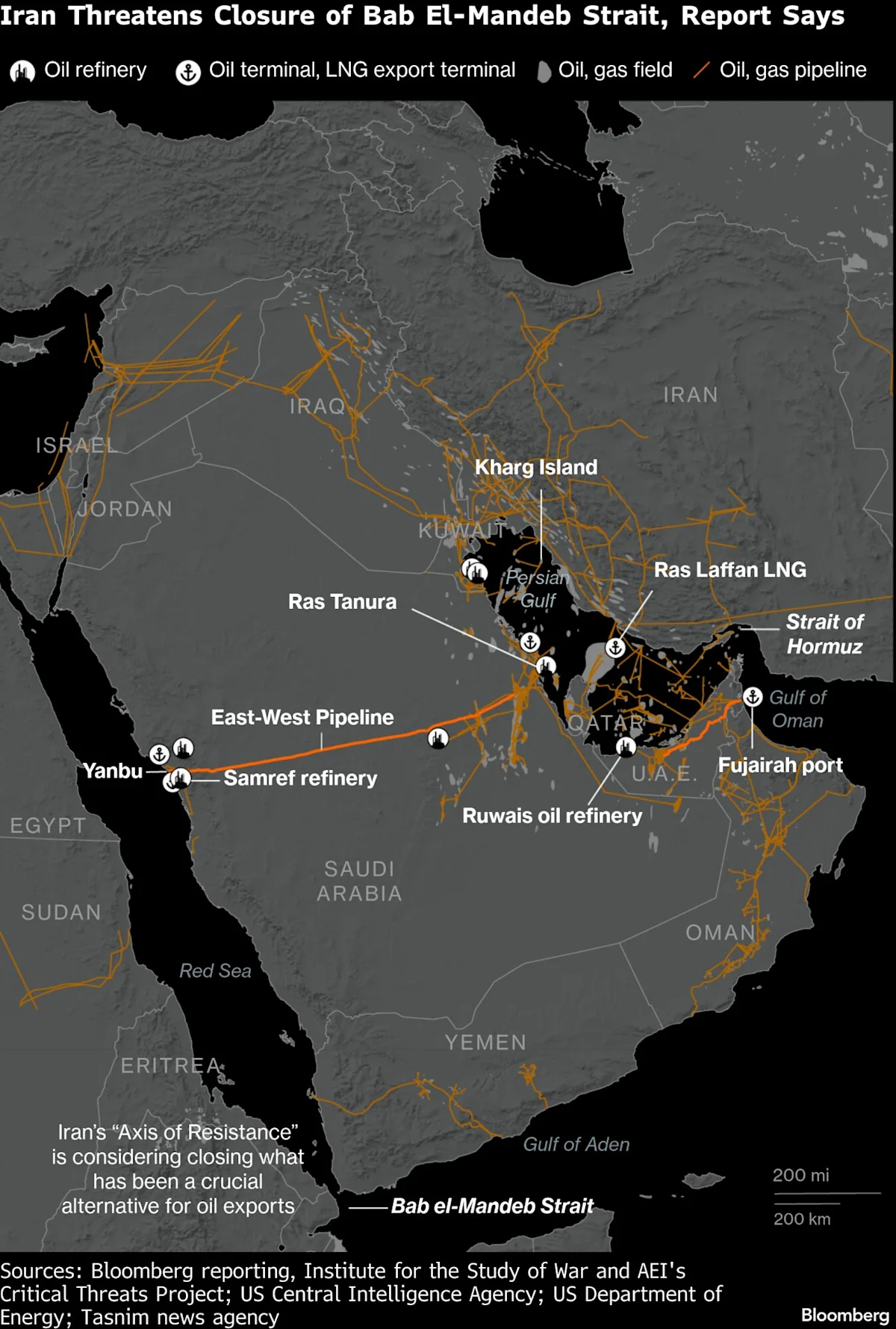
(Bloomberg) — Oil ticked lower after its biggest gain in about a month, as uncertainty about the state of US-Iran peace talks raised the risk that energy flows from the Persian Gulf could be curtailed for longer.
Most Read from Bloomberg
Brent for August delivery traded near $94 a barrel after adding 4.2% in the previous session, while West Texas Intermediate was around $91. Prices surged Monday on a report that Tehran was halting talks with Washington in protest against Israel’s attacks in Lebanon, before paring gains after President Donald Trump said negotiations were continuing.
The US leader said a memorandum of understanding with Iran to reopen the Strait of Hormuz could happen over the next week, according to a telephone conversation he had with ABC News. Washington still had “to get a few more points” before a deal, he said.
The lack of clarity over the potential extension of the current ceasefire — and the future of flows through the Strait of Hormuz — has buffeted oil prices, which fell last month on optimism a deal could be reached. The report by Iran’s semi-official Tasnim news agency also said that Tehran and its regional proxies have placed on their agenda the complete closure of Hormuz, as well as the Bab el-Mandeb Strait at the southern end of the Red Sea — a crucial alternative for oil exports.
“As long as flows through Hormuz have not fully normalized and the US–Iran negotiation process remains uncertain, oil prices are likely to stay elevated and volatile,” said Linh Tran, a market analyst at XS.com in Ho Chi Minh City, Vietnam.
Adding to the confusion, Trump and Israeli Prime Minister Benjamin Netanyahu offered differing accounts of a call about the fighting in Lebanon. A US-brokered ceasefire between Tel Aviv and Iran-backed Hezbollah should be extended from Beirut to include the entirety of Lebanese territories, with more negotiations taking place on Tuesday and Wednesday, the Lebanese presidency said in a post.
The primary focus for oil market remains the vital Strait of Hormuz, which handled about one-fifth of global oil and liquefied natural gas in peacetime. Visible commercial traffic through the waterway remains constrained as the renewed strains in US-Iran diplomacy add to shipping uncertainty.