dailynewsnblog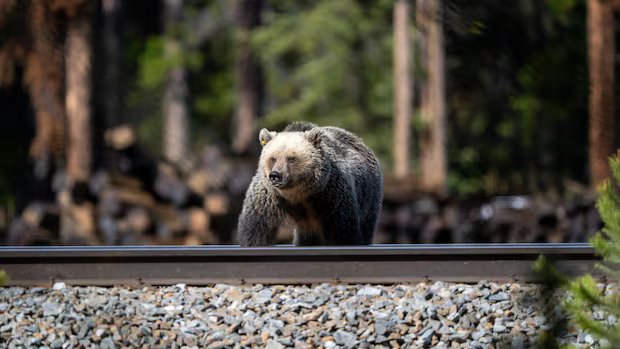
A recent encounter with a grizzly bear that went viral, as well as new research, are highlighting the importance of keeping dogs on-leash while hiking.
A woman is facing a fine of up to $25,000 after posting a TikTok video in July that generated several million views. It shows a man with bear spray yelling at a grizzly bear, as a small off-leash dog runs between him and the woman filming.
The video shows grizzly bear No. 142, a well-known female bear, walking along Taylor Lake trail in Banff National Park, showing no aggression.
The woman who filmed the video is scheduled to appear in Canmore court later this month.
A new peer-reviewed study, The Canine Conundrum: Is a Dog a Help or Hindrance in Bear Country?, dug into conflicts similar to what the video depicts, by analyzing 326 reported human-bear conflicts from 1901 to 2023 involving dogs.
The study found 54 per cent of conflicts were started by dogs. In the encounters researchers included in the study, five people and 56 dogs were killed, and 170 people were injured.
Lana Ciarniello, an independent researcher who co-authored the study, said researchers found when a person goes hiking with at least one other person, the odds of a negative bear encounter decrease by 50 per cent.

A clip of a video posted to the TikTok account twohumanstwodogs shows a close grizzly bear encounter on a hiking trail in Banff National Park. Parks Canada has charged the two hikers because their dog was off-leash.
However, when a dog is involved, the chances of a negative bear encounter increase because “a dog really adds a chaotic factor into the mix of recreation,” said Ciarniello.
The study began after two hikers and their dog were killed by a grizzly bear in the Red Deer Valley area of Banff National Park in 2023.
A human-bear conflict can “negatively shape public perception of these vital ecosystem components.… Dog-bear conflicts not only affect owners, their dogs and the bears involved, but also the future of bears,” the study said.
Frontcountry and backcountry encounters took place at about the same rate, and the study’s findings indicate “risk of conflict could have been greatly reduced had [hikers] carried a deterrent, kept their dogs on-leash and hiked in a group.”

The research noted injuries were 4.5 times higher for people with off-leash dogs than on-leash, and more bear encounters took place with off-leash dogs.
Ciarniello said she hopes people follow on-leash dog mandates, which are law in Canada’s national parks, and potentially explore dog restrictions in some critical grizzly habitat areas.
“People are really expanding across that landbase,” she said. “We have critical areas for bears and maybe we say in those areas, ‘sorry, your dog can’t come.’”
‘Enhanced dog restrictions’ recommended: report
Parks Canada wildlife experts recommended “enhanced dog restrictions” throughout Banff National Park in an internal report, after the two hikers and their dog died in the Red Deer Valley area in 2023, according to a document obtained by CBC.
The report recommends the federal agency ask people leave their dogs at home rather than promoting them to come to the park.
“The Red Deer Valley incident clearly demonstrates the need for Parks Canada to critically re-evaluate dog-related policy and regulations in [Banff National Park] and across its network of protected areas,” the report stated.
The report, received via access to information legislation, noted “the presence of dogs is well recognized as an important risk factor for serious bear-human contact encounters and attacks.”
It added “compliance with leash regulations is very often lacking,” despite wildlife encounters regularly occurring in the park.
The report was sent to senior Banff field unit leadership. It cautioned that as visitation increases, the risk of negative dog-wildlife encounters “are easily foreseeable.” No changes were implemented from the report.

One man and one woman are dead after being mauled by a grizzly bear while hiking in a remote part of Banff National Park, west of Sundre, Alta., says Parks Canada. The couple’s dog was also killed in the attack. Park officials say the bear was later located and destroyed.
“Predatory grizzly bear attacks are exceptionally rare,” the report stated, with 67 per cent of human-bear conflicts between 2000 and 2015 happening due to a surprise encounter, and 17 per cent because a dog was involved.
Yellowstone, Grand Teton and Glacier national parks in the United States were examples given where dogs aren’t allowed on hiking trails or the backcountry.
The report noted that the Canada National Parks Act and the 2022 Banff National Park management plan don’t “guarantee the public’s rights to have dogs in Banff National Park.”
‘Looked like a bear trying to get from point A to point B’
Kim Titchener, founder of Bear Safety & More, said owners should understand what their dog is like around other wildlife and determine whether it’s a good idea to bring it along.
“If you have a dog that’s hard to handle, it’s probably not the best idea to bring it out to environments with large carnivores, and big animals like moose and elk who can get very upset by these animals,” she said.
Titchener said the Taylor Lake trail encounter only gives a 90-second glimpse and it’s not known what happened before or after, but the grizzly showed no signs of aggression.
“It honestly just looked like a bear trying to get from point A to point B,” said Titchener.
If encountering a bear, Titchener recommends people get off the trail and allow it to walk by, carry bear spray, have a dog on-leash and focus on safety rather than filming.
She said people encountering a bear should remain calm in bear encounters and focus on the situation, rather than think about capturing it on video.
“Instead, it’s ‘I’ve got to video this because I’m going to die,’ or ‘I’ve got to get this because no one’s going to believe me,’ or ‘I want to make thousands of dollars on YouTube,'” said Titchener.