dailynewsnblog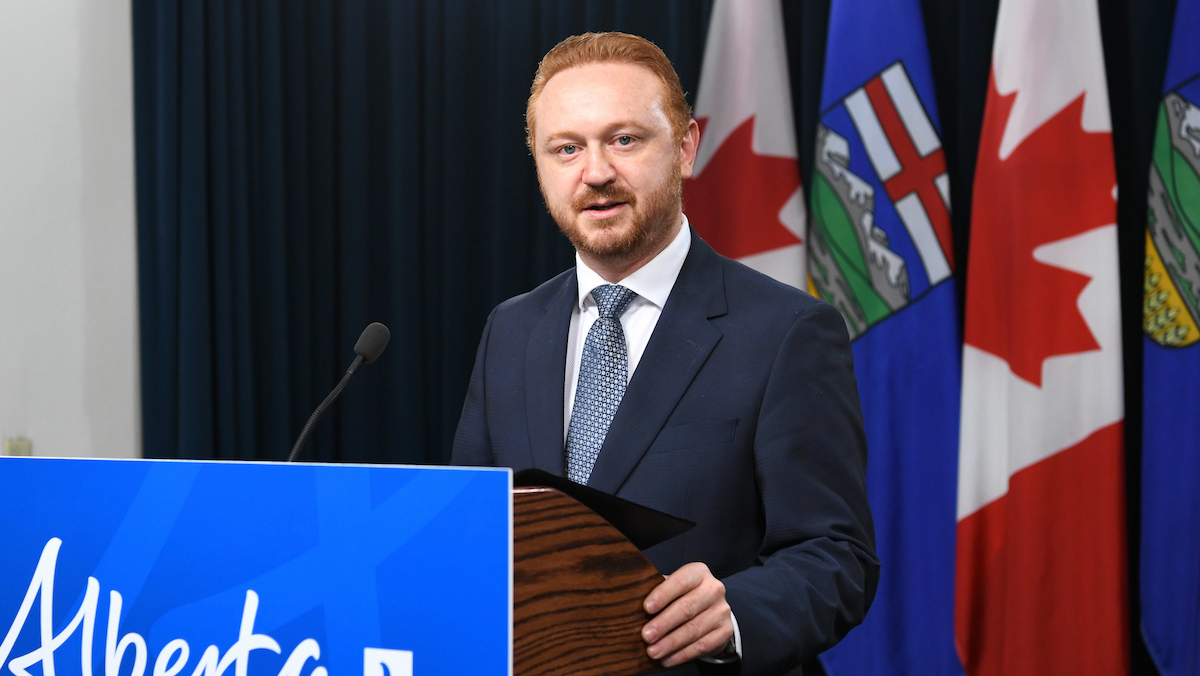
Notwithstanding Friday’s ruling by the Federal Court of Appeal that the Trudeau Government’s use of the Emergencies Act to end the convoy occupation of Ottawa in January and February 2022 was unreasonable, the most appropriate place for this matter to be settled once and for all remains the Supreme Court of Canada.

Naturally, the current iteration of Alberta’s United Conservative Party Government – which has clearly allied itself with the convoy protesters who occupied the national capital, blocked borders, and attempted to foment a takeover of the elected government of the day – crowed about the decision of the federal appeal court.
“We are pleased that the Federal Court of Appeal has sided with Alberta that the use of the Emergencies Act by the federal government in 2022 was unlawful and infringed the Charter right to freedom of speech, upholding the 2024 Federal Court decision,” Justice Minister Mickey Amery said in a short statement published Friday on the Government’s website. “This decision is a win for freedom and for Canadians.”
“Alberta’s government will always use every legal tool at our disposal to push back against unconstitutional federal actions, and to protect and promote freedom in this federation,” he added piously.
From the UCP’s perspective, of course, commenting the appeal court decision was helpful if only because it provided an opportunity to push the story of the continuing meltdown of Alberta’s big-city hospital Emergency Rooms out of the headlines for a few hours.
Unlike the statement by Mr. Amery and Premier Danielle Smith in January 2024 on the Federal Court of Canada ruling that was upheld Friday by the appeal court, this time he didn’t histrionically suggest that “the federal government simply does not understand or respect the Constitution of Canada,” and or complain about the possibility of an appeal.

That may reflect a recognition that the UCP may need some more distraction soon. More likely, though, the latest effort was minimal simply because it was Friday night and everyone wanted to go home for the weekend and be unavailable to comment on the health care crisis.
Whatever, it remains a small irony that while Ms. Smith’s version of the UCP may insist the convoy occupation and blockades were not a crisis, Jason Kenney’s UCP government didn’t seem to agree when the events were under way in 2022.
Leastways, in February that year, then municipal affairs minister Ric McIver fired off a letter to the feds pleading for Ottawa’s help to clear the blockade at Coutts, which the federal government did by using the Emergencies Act.
It is true, as Mr. McIver insisted later when he was called on it, that his letter never actually mentioned the Emergencies Act. But it was pretty obvious what kind of help Mr. McIver, who is now the Speaker of the Alberta Legislature, had in mind when he wrote, “as this complex and dynamic situation continues to impede the free and safe movement of not only Albertans, but also of critical goods and services vital to both the Canadian and American economy, we are looking to the government of Canada for assistance.”
Of course, the situation was made even more complex and dynamic by the in-person support of the Coutts blockade by UCP MLAs like Grant Hunter, since promoted by Ms. Smith to be Alberta’s environment minister.
Also ironically, from the Critical Infrastructure Defence Act to the Alberta Sovereignty within a United Canada Act, neither Mr. Kenney’s UCP nor Ms. Smith’s has been particularly shy about constitutional overreach of their own.

It is possible the federal government will recognize the need to proceed with an appeal. After all, in 2023 Justice Paul Rouleau of the Ontario Court of Appeal, acting as commissioner for the mandatory inquiry into the use of the Emergencies Act required by that legislation, concluded that the government did meet the threshold required to invoke the act’s provisions.
“Lawful protest descended into lawlessness, culminating in a national emergency,” he wrote in his report.
But while divisions in Canada about the use of the Emergencies Act are still deep enough the question ought to be decided by the nation’s highest court, Friday’s appeal court ruling is likely to make things worse in one important way for supporters of protests like the convoy occupation and blockades no matter what happens next.
Even if the Supreme Court of Canada were to reverse the federal appeal court’s ruling on appeal, faced with a similar crisis Ottawa is far less likely to use the Emergencies Act because of the political challenges it presents, but simply to send in police with clubs and guns to clear the streets and border crossings without a declaration of an emergency.
Given the cruder options that remain on the books, it is possible that our current pragmatic prime minister will decide an appeal isn’t worth the bother when there are other things to do if Canada faces a new “just watch me” moment.
If the resulting response to some future convoy protest ends in tears for some of the people celebrating today, other Canadians may conclude, as the same prime minister who made the observation quoted above also said, that the universe is unfolding as it should.