dailynewsnblog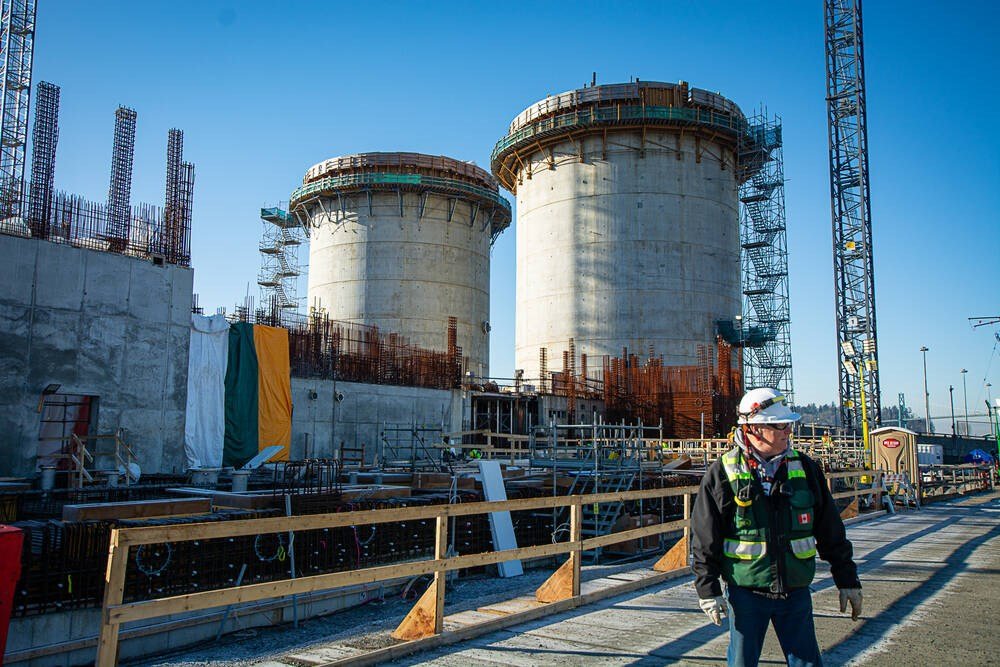

The regional government and the company issued a joint statement on Thursday.
Metro Vancouver and Acciona have settled their lawsuits launched over the botched North Shore Wastewater Treatment Plant.
The regional government and the engineering firm issued a joint statement on Wednesday afternoon.
“Issues arose during the project which resulted in both parties filing lawsuits against the other. The parties have mediated and have reached a settlement agreement wherein Acciona provided $235 million to the Greater Vancouver Sewerage and Drainage District. The lawsuits have been resolved,” the statement read.
Metro Vancouver fired their main contractor in 2021, alleging they had underperformed and failed to meet its contractual obligations to deliver the project on time and within budget. The regional authority said engineers found mountains of deficiencies in the construction that would have to be repaired.
In March 2022, Acciona filed a $250 million civil claim against Metro Vancouver for wrongful termination, unpaid costs related to the project, as well as lost profits and “diminished reputation.”
Metro filed its own suit in July that year alleging the Acciona was responsible for $500-million in cost overruns thanks to “ incompetent, wrongful and negligent performance.”
The two sides have had skirmishes both in public and in B.C. Supreme Court since then, although the main trial wasn’t scheduled to begin until 2027.
Metro later hired PCL Construction to resume the project, but by then the estimated cost for completion rose to $3.86 billion – more than five times the original budget.
Under the cost sharing agreement struck by the Metro Vancouver board, the costs overruns will be disproportionately paid by North Shore residents – about $590 per year more on their utility bills for the next 30 years.
Immediately after the announcement, Metro Vancouver gave notice it would be restarting its independent review into how the project went so off track, which the board had put on pause pending the outcome of litigation with Acciona.
District of North Vancouver Mayor Mike Little said Wednesday while he’s happy the two sides have settled the legal dispute out of court, “I don’t think it addresses the deficit that’s going to be borne by North Shore residents over the next 30 years.”
Little said significant questions remain despite the conclusion of the legal case.
“Will the settlement be applied to the North Shore sub area? Will it be net of legal expenses? Where does that leave us in terms of giving relief to the North Shore? Will that $235 million allow us to reduce the annual rates for the utility going forward?” he said. “I still feel like we haven’t received a fair agreement with Metro Vancouver.”
He added he’s glad to see Metro resuming the independent review of the cost overruns.
“And if it’s not satisfactory, then I’ll go back to supporting the provincial government interceding and pursuing perhaps a public inquiry, which our council has unanimously supported,” he added.
Mike Hurley, chair of the Metro Vancouver board, said in a press statement Wednesday that “we are very aware of residents’ concerns about the project.
“It is important to us at Metro Vancouver to have a thorough, independent review of this project so our residents get the transparency they deserve and Metro Vancouver can continue to strengthen delivery of our critical infrastructure projects,” he said.
But Little said Metro has a long way to go on that.
“I don’t think we’ve gotten to the point where we’ve improved the procurement process sufficiently enough to expect different results,” he said.
John Logan, a mediator and arbitrator, said it’s not uncommon for large legal disputes to have settlement processes running alongside the court case. Often when parties assess what their risk of going to court is versus coming up with a solution outside of court, they’ll choose to settle.
Such cases are often time and labour intensive with bankers’ boxes of documents taking up entire school gyms, he said.
Little said one big remaining question on the sewage plant construction is how much it’s going to cost to decommission the old sewage plant, before the land is returned to the Sḵwx̱wú7mesh Úxwumixw (Squamish Nation).
“So far, we only have $20 million set aside in the budget for the decommissioning of the old plant, which is expected to be hundreds of millions of dollars,” he said.