dailynewsnblog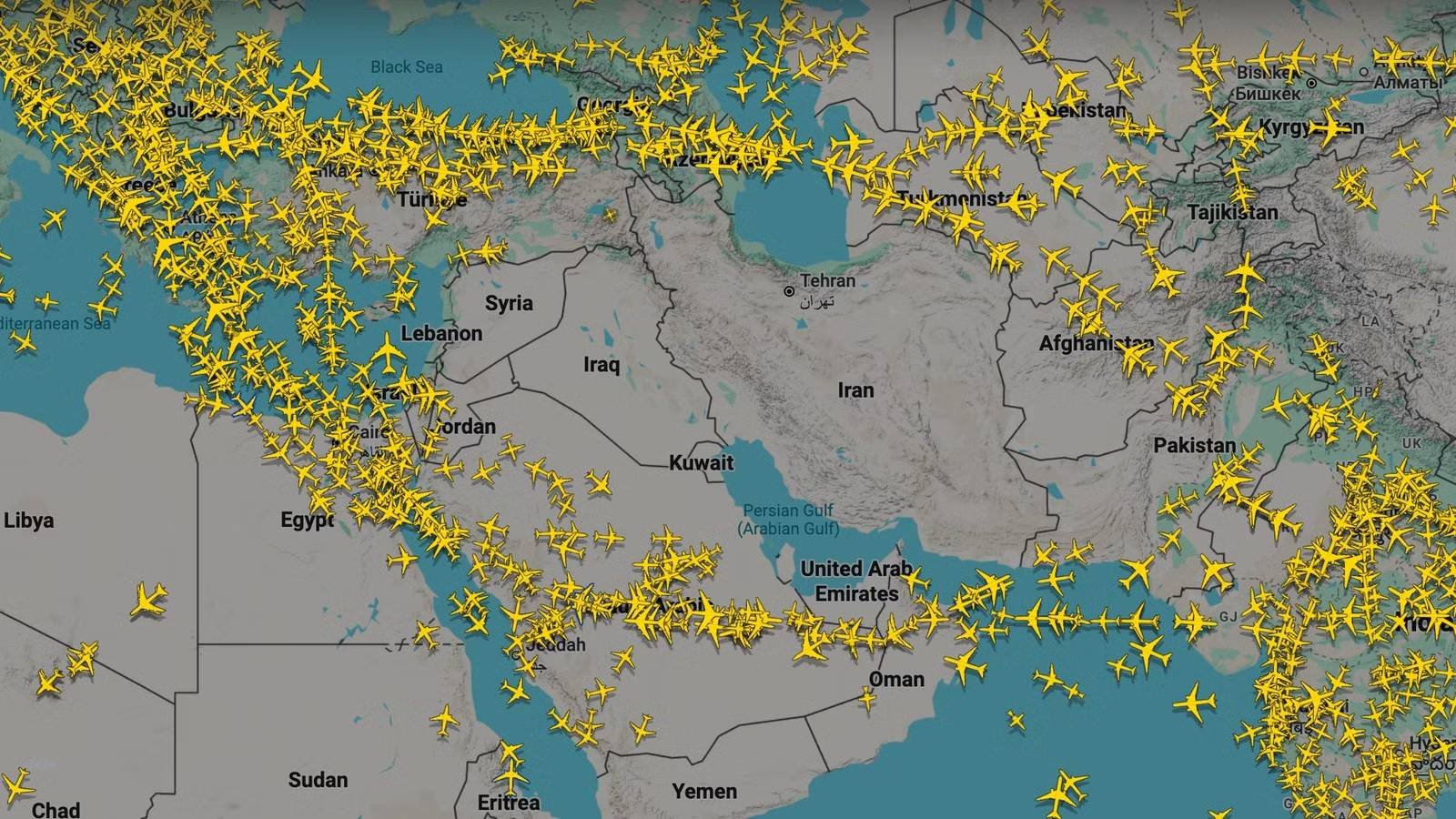
There are multiple ongoing global conflicts, and they are having a major impact on air traffic. The two biggest and most consequential conflict zones on international air routes from Europe to almost all of Asia are the kinetic and geopolitical Russian/Ukrainian conflict and the broader Iran conflict. With both conflicts ongoing, air traffic between Europe and Asia has been rerouted into two uneasy corridors.
This is adding hours to diversions and flight disruptions. This, in turn, burns more fuel, reduces the aircraft’s availability for other flights, closes off profitable routes, and drives up fares. However, not all air closures are the same. Sometimes, airlines avoid airspace as a precautionary measure, making it de facto closed, while at other times the airspace is solidly closed to all commercial air traffic, with no exceptions.
Civilian Aircraft Being Brought Down

Conflict is many things. Among these are messiness and organized chaos. When it comes to air defense, local commanders often have to make life-or-death decisions on a moment’s notice with incomplete information, and this often leads to tragic results. Since the beginning of Russia’s conflict with Ukraine, it has been responsible for downing two commercial flights and almost downing at least one more. These include Malaysia Airlines flight 17 (MH17) by its proxies in 2014 and Azerbaijan Airlines flight 8243 in 2024, while Aeroflot flight 1845 was reportedly hit by flak fire in 2025.
In 2020, Iranian air defense brought down Ukraine International Airlines flight 752 during a period of heightened tensions with the US. These incidents were also somewhat common during the Cold War, with the Soviets downing Korean Air Lines flight 7 in 1983, being a motive for the US to make its military GPS commercially available.
It’s not just the Russians/Soviets and Iranians hitting commercial aircraft by mistake. In 1988, the US downed Iran Air flight 655 during high regional tensions. Today, airlines use GPS/GNSS navigation and are constantly squawking, but as has been demonstrated as recently as 2025, there is no guarantee they will be identified as friendly in the heat of the moment.
Not All Conflicts Are Equal

It should be noted that not all of the world’s conflicts are treated equally. Commercial aircraft fly at around 30,000 to 40,000 feet. This puts them out of harm’s way for lower-tier air defense systems like MANPADS. To be at risk, a combatant needs more advanced systems like Patriot, Buk, S-300s, etc. State forces combating poorly equipped insurgents and militias may be a source of concern, but not a deal breaker for airlines.
Examples include much of Mali, Afghanistan, Myanmar (Burma), parts of Ethiopia, and other regions. Generally speaking, most airlines fly across these airspaces but often maintain high altitudes. At the other end of the spectrum is when nation-states go to war with other nation-states. These almost always have high-end air defense assets that can easily reach commercial airlines.
|
Airspace Safety Categorizations By Country (Safe Airspace) |
|
|---|---|
|
Level 1: Do not fly |
Russia, Ukraine, Syria, Iran, Yemen, Libya, Sudan, Israel, Haiti |
|
Level 2: Danger exists |
Belarus, Venezuela, Mali, South Sudan, Ethiopia, Somalia, Afghanistan, Pakistan, Moldova, Iran, Lebanon, North Korea |
|
Level 3: Caution |
Turkey, Armenia, Azerbaijan, Egypt, Saudi Arabia, Oman, India, Myanmar, others |
The most dramatic example is currently all of Ukraine’s airspace and much of Russia’s bordering airspace. This airspace is completely closed to commercial air traffic, and all aircraft in the airspace may be considered military. Other examples include much of Sudan, Yemen, and Libya. Iran, Iraq, and other Middle Eastern airspace are not a no-fly zone per se, but the warnings, risks, and insurance costs are such that commercial airlines largely avoid it. The situation remains tense and ready to flare up at any time.
Airlines Halt Middle East Flights As Trump Warns US ‘Armada’ Is Heading Toward Iran
Major carriers have pulled services to the region over the weekend.
Not All Conflicts Are Military In Nature

Not all conflicts in the world are kinetic. They can also be geopolitical conflicts. Perhaps the best example is how Europe, the US, Canada, and some other countries closed their airspace to all Russian and Belarusian air traffic in 2022. Russia reciprocated and closed its airspace to European and other “unfriendly” countries.
This immediately made it much more difficult for European carriers to compete in East Asian markets and gave some Asian carriers (like those of China) a major advantage. Other ways airlines can find airspace de facto closed are countries refusing to grant permission to use their airspace for safety or geopolitical reasons. For example, EASA banned Iran Air from European airspace due to the latter’s smuggling weapons to Russia, while others may be banned due to concerns about aircraft maintenance and questionable airport security.
The FAA has a similar list of banned airlines. While not conflict-related, it is also worth noting that China’s airspace is heavily restricted, far more so than in the United States or Europe, where 80-90% of airspace is available for commercial use. It is reported that around 70-80% of China’s airspace is military-controlled, leaving only 20-30% available for civil aviation. This leads to infamous circuitous routes and congestion within China.
The Middle East Pinch Point

Flights from Europe to South and Southeast Asia are increasingly being funneled through two corridors that are becoming chokepoints, resembling shipping chokepoints such as the Strait of Hormuz. To the north is the Ukrainian/Russian closed airspace, south of that is the Iranian/Iraqi/Syrian/northern Saudi Arabia closed airspace. South of that is the closed Yemeni airspace, and to the west of that is the closed Sudanese/Libyan airspace.
This has created two vulnerable and congested corridors. One is the northern Caucasus route over Central Asia/the South Caucasus (Azerbaijan/Armenia/Georgia), and Turkey/southern Black Sea. The second is Oman/parts of southern and central Saudi Arabia/Egypt. The current loss of the Iraqi corridor is painful for airlines.
These two corridors are far from stable. In April, Georgia announced the closure of a portion of its airspace around properties of its top oligarch, Bidzina Ivanishvili. Worse is the fact that while relations have improved between Armenia and Azerbaijan, they have fought major conflicts in 2016, 2020, and 2023. Worryingly, in March, Azerbaijan temporarily closed its airspace after being hit by Iranian drones. While either Georgia or Armenia (one) can be avoided, Azerbaijan cannot.
How Airlines Are Avoiding War Zones As Tensions Mount
Several airlines have canceled flights or diverted routes as airspace closures have taken effect over parts of Israel, Iraq, and Jordan.
Restricted Doesn’t Mean Completely Closed

At the end of the day, there may be commercial passenger flights operating within ostensibly “closed airspace.” Insurance premiums, airline policies, and FAA/EASA may issue notices banning Western carriers from operating over large areas and at lower altitudes. However, airlines within those countries may decide to accept the risk and keep operating. That said, this is not relevant to Ukraine and parts of Russia, that airspace is fully closed to commercial traffic.
One example that went viral came in March when a Middle East Airlines (MEA) flight was filmed taking off from Beirut-Rafic Hariri International Airport (BEY) with Israeli airstrikes visibly happening nearby around it. Some airports have demonstrated they can operate even when under attack. Dubai International Airport (DXB) came under sporadic attack by Iranian missiles and drones, and  Emirates largely kept operating throughout the conflict. Sometimes flights resumed just hours after the airport was struck.
 Qatar Airways also largely maintained operations from its Doha base, even though the airport is very close to Iran and the country was under constant attack. Flights to Qatar and the UAE were routed to approach from the south, from Saudi Arabian territory. Currently, Iraqi Airways flight 135 has taken off from Basra, Iraq, and is en enroute to Beirut. This commercial passenger route is entirely over airspace that many Western airlines consider de facto closed.
Potential For Things To Get Worse

There is plenty of scope for airspace closures to worsen in the short to medium term before they improve. The conflict with Iran could erupt again, and this has the potential to engulf the Middle East more thoroughly than it did in March. Ethiopia is unstable with a high risk of conflict with Eritrea, its Tigray region, its Amhara region (ongoing insurgency), and even Sudan. Afghanistan and Pakistan have an uneasy truce following the conflict in February that even saw Pakistani airstrikes on Kabul International Airport (KBL). Something similar is true for Thailand and Cambodia. The risk of Pakistani conflict with India remains, and cross-strait tensions with Taiwan run high. Chinese exercises often impact Taiwanese flights.
But perhaps what is most concerning for airlines is the reemergence of kinetic state-on-state conflict after the 2000s and 2010s were characterized by state-on-insurgency conflict. The hybrid conflict between Ukraine and Russia has escalated into direct conflict. Part of the reason why MH17 was lost over Ukraine in 2014 is that it had been thought separatists lacked higher-end air defense systems. This was an erroneous assumption, as Russia was clandestinely supplying them. Nation-states inherently have more resources and higher-end assets, such as air defense systems that threaten airliners, than ad hoc insurgent groups.
Also concerning is the proliferation of air defense systems. The Houthis have repeatedly demonstrated their ability to hit US MQ-9 Reaper drones, while RSF forces in Sudan have repeatedly brought down aircraft such as Ilyushin Il-76 transports. If the militants in Myanmar, Afghanistan, Mali, Somalia, Burkina Faso, and other countries start receiving more capable air defense systems, then the no-fly zones for commercial airlines could get significantly worse.