dailynewsnblog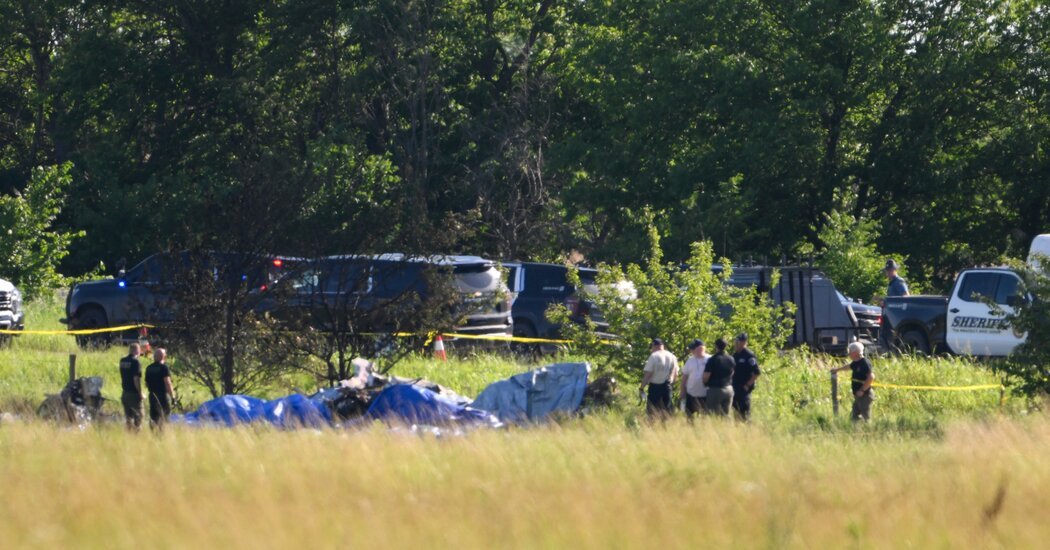
A preliminary investigation by the National Transportation Safety Board into a skydiving plane crash that killed 12 in Butler, Mo., last month found no obvious cause, noting that the plane’s engine had not failed, and its fuel had been clean.
The crash, which occurred shortly after takeoff on a sunny day in mid-June, stunned the tight-knit skydiving community. There was no obvious cause on the day of the crash: The weather was clear, and the pilot had made two other skydiving trips that morning without incident.
The preliminary federal report added to the unknowns. A more complete report from the N.T.S.B. is likely to take months or more to complete.
The report released Thursday gave details of the steps the pilot took before takeoff, which included writing down the wind speeds on a whiteboard, and making a flight plan. A test of the jet fuel on the morning of the crash showed it was free of sediment, the report said.
The flight that crashed was the third of eight flights scheduled for the day. Shortly before leaving, the plane refueled, taking 15 gallons into the left-wing fuel tank and 45 gallons into the right-wing one. It took off at 11:25 a.m.
Security footage from Butler Airport showed the plane making a gradual turn to the west shortly after takeoff and continuing to turn, with its wings eventually becoming perpendicular to the ground. The plane then crashed nose-first in a flat field not far from the runway, the report said. Then a fire broke out and consumed the wreckage.
The report noted that there were no indications of mechanical malfunctions or failures of any of the engine components and that the plane had met weight and balance limits.
There was no “black box” on the plane that might have given a glimpse into the moments before the crash: The report noted that the plane was not equipped with a voice or data recorder, because it was not required to be, as a private, commercial skydiving plane.
Investigators said the pilot had more than 4,100 flight hours and had passed his most recent flight review in October. He worked as a contractor, and this was his second season working for Skydive Kansas City, the company that operated the flight.
The report cited the company saying it “did not have any previous concerns with the pilot, he was safety oriented and he was also conservative with his decision making.”