dailynewsnblog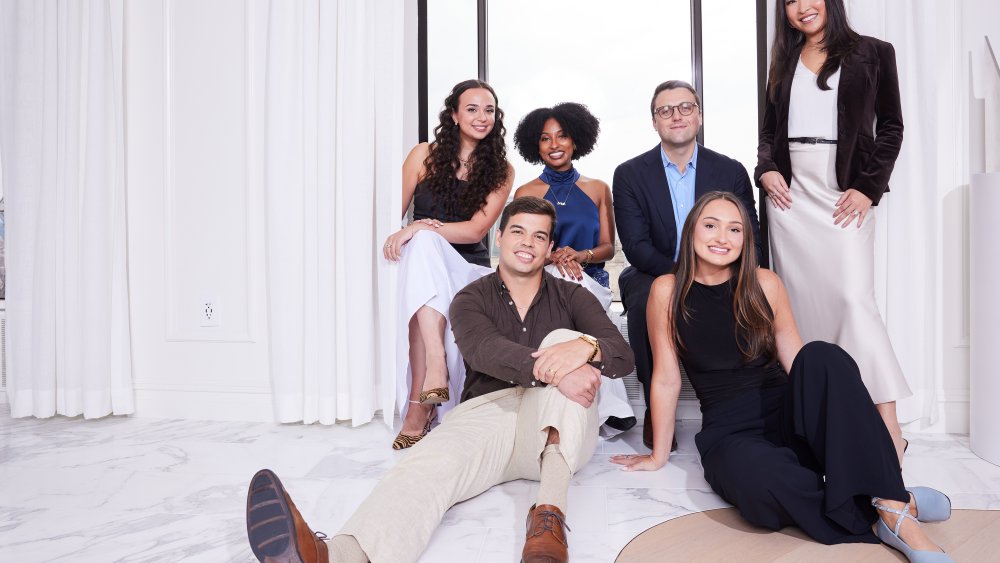
Just two floors below the pristinely preserved office of the late Mrs. Estée Lauder, a new generation of beauty leaders is plotting the company’s next 80 years with a shared vision for hybrid work and how best to honor its heritage.
Having grown up on the cusp of the tech boom, their initial instinct is to innovate — not just products but also processes that will preserve and introduce the history of the Estée Lauder Cos. to future generations. While they believe innovation and agility are essential to building the brands of tomorrow, they are equally firm in their conviction that legacy drives longevity.
“Legacy is a differentiator that allows us to anchor ourselves in the things that have made us resonate with so many consumers of the past,” said Anna Boykis, a senior analyst shaping digital consumer experiences, who has been with the company for four years. “But I’m also excited to see what the new frontier is, and it’s exciting to work in a place that’s always moving forward.”
Here, six Gen Z employees from across the organization discuss the state of the industry, the key drivers of change and the positive attributes they bring to the table.
The Panelists:
Anna Boykis
Anna Boykis is a Temple University graduate who studied management information systems. She first joined the Estée Lauder Cos. as a global IT intern in 2022 and has spent most of her career in the technology function of the company. She now serves as a senior analyst on the data and AI team, with a concentration in consumer AI.
Brittney Kim
A Fashion Institute of Technology alum, Brittney Kim works on the hair care brands Aveda and Bumble and Bumble under the official title senior manager, haircare consumer technology. Kim started as an intern in the summer of 2019 and has been with the company ever since.
Eli Mundy
Senior manager of global communications and public affairs, Eli Mundy is early into his career at Estée Lauder, having started in early 2026.
Jarrett Ortiz
Jarrett Ortiz’s journey at Estée Lauder began over five years ago through the Drexel University cooperative education program. Upon graduating in 2023, he was hired as a part-time industrial engineer. Since then, he has pivoted to focus more on operations and now serves as the senior manager of distribution operations, PADC2 in Philadelphia.
René Rossman
René Rossman is a product development manager advising across all color categories at MAC Cosmetics. Hailing from Tom Ford, Rossman has spent the last four years at the company.
Samhal Asfaw
A first-generation college graduate, Samhal Asfaw is a scientist for research and innovation in the Long Island Melville facilities. Asfaw primarily develops cost-friendly skin care products that target young consumer needs.
What inspired you to pursue a career in beauty?
René Rossman: The first purchase I ever made with my own spending money was a MAC lipstick in hot pink at 13 years old. When it came to figuring out what career I wanted to go into, I decided I didn’t want to just be around makeup, I wanted to make it. The idea that I could potentially develop someone else’s first purchase that could open up the world of beauty the way it did for me was everything.
Brittney Kim: I have two older sisters, so we all learned from each other and did each other’s makeup when we were younger. As a Gen Zer, I also grew up with technology and have always been interested in tinkering with the newest iPhone or iPad. When this role came about, it was perfect; it bridged both sides.
Eli Mundy: I have friends who work in finance and consulting and different kinds of jobs, but there’s something special about the fact that we make products that you can feel and hold. People have an affinity for them.
Anna Boykis: On a macro scale, the beauty industry is something that is deeply personal to everyone in their everyday routine and in life and it’s also part of many milestones. I’ve always loved the beauty space, whether it be the Claire’s flip phone glitter eyeshadow and lip balm, I’ve always enjoyed playing around with it. When I was exploring internships, I remember I sat down reflecting on applications and asked myself, “What do I love?”
Jarrett Ortiz: I never knew, at least when I started, that beauty was going to be a field that I was so intrigued by. In the co-op at Drexel University, I was more on the data side, focusing on engineering and continuous improvement. But as I spent more time at Estée Lauder, I got accustomed to the culture and that was so enticing to me. Then, in my transition from engineering to the operations side, it’s been cool to be part of delivering an experience to someone.
Samhal Asfaw: In high school, I was driven by science, and for the longest time, I was like, “Oh, I’m gonna go into the medical field because that’s the standard. What else would I do?” But as I was writing my college applications, I thought, “Wait, I know a lot about hair products and someone’s making this. This is science. This is real innovation. Plan B is medical school. I want to be in the forefront of beauty. I want to create hair products.” Then, when I came into college, it opened my eyes to all the different aspects of beauty and so that’s where skin care and fragrance crawled in for me.

(L-R) Brittney Kim, Eli Mundy and Anna Boykis
Masato Onoda/WWD
What were the qualities that attracted you to ELC? What’s it been like working for a large legacy company?
René Rossman: What interested me is how wide of a reach Estée Lauder has. The idea that something we’re talking about in a New York conference room will, in the near future, be used by someone from halfway across the world is so interesting. My algorithm will drop me off on a random person doing their makeup in a country halfway across the world, speaking a language I don’t even recognize, and they’ll be using a MAC product that I developed and my eyes will bulge out of my head.
Samhal Asfaw: One of the dopest things that I experienced is that all my coworkers are genuine experts. They’ve been here for 15 to 25 years, and the wealth of knowledge that they contain, I’m like, “Oh my gosh.” I’m trying to grasp all the science and knowledge and experience of formulation and how do we problem-solve when error comes about, or if there’s a goal that wants to be achieved by product development marketing, how do we use our expertise to maximize and achieve those goals? When I was part of an indie brand, they didn’t have these capabilities, and so I told myself I wanted to be a part of something bigger.
Brittney Kim: Something that’s unique and cool about working at a company at such a large scale is the amount of opportunities here. One thing that the company promotes are summits on different teams, so you can get exposed to different areas of the business, which is a great opportunity to upskill yourself and then share your learnings and knowledge with other people.
What is your assessment of the beauty industry? What are the challenges it faces and where is the opportunity?
René Rossman: There’s a lot more emotion now. Decades ago, there were three shades of lipstick, and if you didn’t like them, you went somewhere else. Now, we have thousands of lipsticks and foundations and are making sure the undertones are met so that everyone can find something that they love to wear to make themselves feel good. Instead of putting out what we want, we listen and see what the consumer wants and tailor the product that way.
Brittney Kim: There’s a lot more competition now, especially with the celebrity beauty brands and the indie or niche brands that are blowing up on TikTok, which is a super popular platform for discovering new beauty products. It’s an opportunity for ELC to hone in on and ask, “What can we do differently?” while still respecting the experience and what’s worked. There are exciting opportunities to start thinking outside the box in different ways on how we can we continue to keep up with our competition.
Anna Boykis: Thinking about the beauty landscape now, something exciting is the way that it continues to blend with culture. Watching “Love Island,” there’s always beauty products sprinkled throughout and elements where it’s interwoven. There are these hybrid opportunities to cross-pollinate our incredible products, as well as big moments happening in culture.
Jarrett Ortiz: From my chair, [a challenge is] bridging the speed while not sacrificing the quality and the experience. Because we live in an instant gratification world, everyone wants the influencer-level box-opening experience that you see online. We want to give you that personal touch, but also get it to you as fast as an Amazon would. It’s an interesting challenge to walk that line and discover what works and what doesn’t work, and decide where we want to sit. Is it better to get things damage-free to your door instantaneously, or is it better to do something more personal and heartfelt?
René Rossman: Trends live and then die, or they’re long-lasting. Brands need to decide which trends resonate, which ones make sense to capitalize on and make a new product launch or an entire franchise and which to let go and pass over.

(L-R) Anna Boykis, Jarrett Ortiz and Samhal Asfaw
Masato Onoda/WWD
What is the secret sauce to keeping heritage brands relevant today? How do you build for the next generation?
Eli Mundy: Speed is the number-one thing. There’s power in retaining the magic of the heritage, but also at speed, at scale and in the channels and markets that are most important to our consumers.
Jarrett Ortiz: Getting ahead of trends so that our network, beyond our marketing, is still capable of keeping up with the demand as they shift. At a legacy brand, you get the confidence in the consumer, the confidence that they’re getting a quality product that’s going to meet what they want, but then also you’re evolving to the trends and into the space fitting a niche mold so that the next generation grows up and sees all these awesome things that we can provide and they’re able to take some identity from it. Being a heritage brand that’s been around for 80 years is a testament to being able to continuously adapt and evolve. As every year goes on, you continue to learn new things and then the experts continue to anchor that back in key fundamentals that are always applicable. The heritage leadership that’s been here throughout these changes are good at that adaptability piece.
Brittney Kim: The underlying message is personalization. This is something that will keep us growing. With Aveda, for example, we have these hair and scalp cameras in our stores that allow the advisers to see consumers’ scalps up close, so they can diagnose their conditions. Each consumer is so unique. They have different hair needs, skin care needs, fragrance needs, makeup needs. We can continue to hone in on this and optimize as we grow.
What will be the key drivers of change in beauty over the next decade?
Samhal Asfaw: There will be certain channels that will stay consistent. Amazon has been growing at an exponential rate. This would be a platform that might evolve but will stay relevant in the consumer-buying process. With the way that the world is constantly evolving, like the pandemic, there are things you can’t predict and then things will blossom through that. It’s just a matter of being on top of the tools, and that’s why we have so many cross-functional teams that are actively doing their own respective jobs to ensure that they are on top of it within their specific industry. So, understanding that from an omnichannel lens or other platforms is incredibly important. New platforms will definitely arise. AI is one of the main ones right now.
René Rossman: So much ideation has to happen. We all have to be investigators and pick up on signals from different areas, fashion, art and then connect those dots and figure out what that means for our brands.

René Rossman
Masato Onoda/WWD
There is a lot of debate around in-person, hybrid and fully remote work. What is your ideal work schedule?
Jarrett Ortiz: My first job, I had more of a hybrid [schedule]. I was only in three days a week for the engineering side. Now, on operations, I’m in five days a week. Why that’s not as miserable as it sounds is the people. I’m crazy, but I’m gonna say I prefer more in person. The commuting is tough, but I learn so much better. On a screen, you record meetings and refer to your notes, but when you’re together in person, it sticks better.
Eli Mundy: For our age group, starting a job or being in college during COVID was so miserable. I’m also coming into the office because it’s easier to work that way, especially in my job, which is quick and changing a lot. It’s good to be in close proximity to my colleagues and makes it a lot more fun. The experience of being on Zoom for eight hours a day is not something that I want to replicate.
Brittney Kim: Feel that. I also started fully remote in 2020. That was all I knew for a while, and then when we switched over to hybrid working, I was looking forward to seeing people and talking to them face-to-face. Also, because I was early in my career, I didn’t know many people. In 2020, when I was fully remote, I put coffee chats on with people in the company on different teams. It felt definitely forced because it was on Zoom or Teams, but in person it’s just way more natural. That being said, I do think the hybrid model is great because of the flexibility. Sometimes when I need to lock in and get a lot of work done, where I don’t want to be bothered, working from home is great to check many things off.
Anna Boykis: Working in tech, we are always on our laptops. Being able to have the in-person connectivity with talking to your coworkers, being able to collaborate, is great and then also the larger programming of the company as a whole. We have a lot of employee resource groups. I’m a part of Gen Next, which harnesses generational insights, and you’re able to do small focus groups with brand presidents or brands. You’re able to go to movies like “The Devil Wears Prada 2″ and things like that with so many other people. In person, it’s so special. Plus there are also amazing meals and snacks [in the office].
Gen Z has gotten a bad rap in the workforce. What positive qualities do you bring to the table?
Brittney Kim: I would say my curiosity and willingness to challenge some old assumptions or even the status quo, while at the same time still respecting all the work that has been done and what’s worked in the past. But what’s great about our generation is our fearlessness and our boldness, and that’s allowed us to grow in different areas and challenge our own selves and fears.
René Rossman: Growing up on technology, we have this natural tendency to always ask, “Is there an easier way, a smarter way, a faster way to do this?” Innovation isn’t always a breakthrough product or a product launch. It could also be improving the process or finding a new tool to get it to the point where we can showcase those products.
Samhal Asfaw: I feel like we’re an ambitious generation. We’re eager to see everything. I saw a little bit of pre-tech, a smidge bit, and then I saw the tech boom and how it evolved, and so it makes you even more eager to see what else is out there. I saw the before, I’ve seen the after, I’m seeing the future. As Gen Zers, it’s exciting to see that evolution and that makes us want more for ourselves. Our personhood is [also] prominent. We’re thinking about all the granule pieces, on a full corporate lens. How do we incorporate corporate, but also personal and future? It’s a balance game, and we’re doing a great job of trying to figure that out in our own respective manner.
Jarrett Ortiz: AI is the newest technology that everyone wants to have their mark on, but I don’t think anyone quite understands what to use it for and everyone’s still figuring it out. But it makes a lot of people uncomfortable. For our generation, since we’ve seen technology grow so much as we grew up, we’re comfortable being like, “Hey, that’s just the next step, right?” We look at it more as a tool to succeed rather than something that’s threatening.
Anna Boykis: Mrs. Estée Lauder, I was obsessed with her. I love the way that she never took no for an answer. I see that as an undercurrent of Gen Z, how we’re self-starters, how we’re bold. There’s an element of our beauty commitments that’s just “yes.” Mrs. Estée Lauder completely embodies that. When she released Youth-Dew, she literally would crack the bottle in store and then everyone would smell it and be like, “What is this?” That’s how she got her first purchase order. It reminds me every day, no matter where I am on a project, to be crafty. Whatever constraints we have, how can we think around them and see if there’s some way we can make it work.
What do you envision the future of the Estée Lauder Cos. to look like?
Samhal Asfaw: One thing I see in the future is that we will dig into the archives. We have some sick archives from the packaging standpoint. We have a lot of things that we’ve already succeeded and done, but people don’t know about it because it’s been in the past. [Also,] we’ll find the next breakthrough product, ingredient or active.
Brittney Kim: Even me, before I joined the company, there were a lot of things that I didn’t know about our brands and I had a different appreciation after working here. I want that appreciation to be more widespread for some of our younger consumers. So, more education opportunities for our younger consumers, more innovation as well, especially in the tech space. AI is booming, and there’s lots of opportunity there to innovate with new tools for finding our products or building experiences to engage with our products.