dailynewsnblog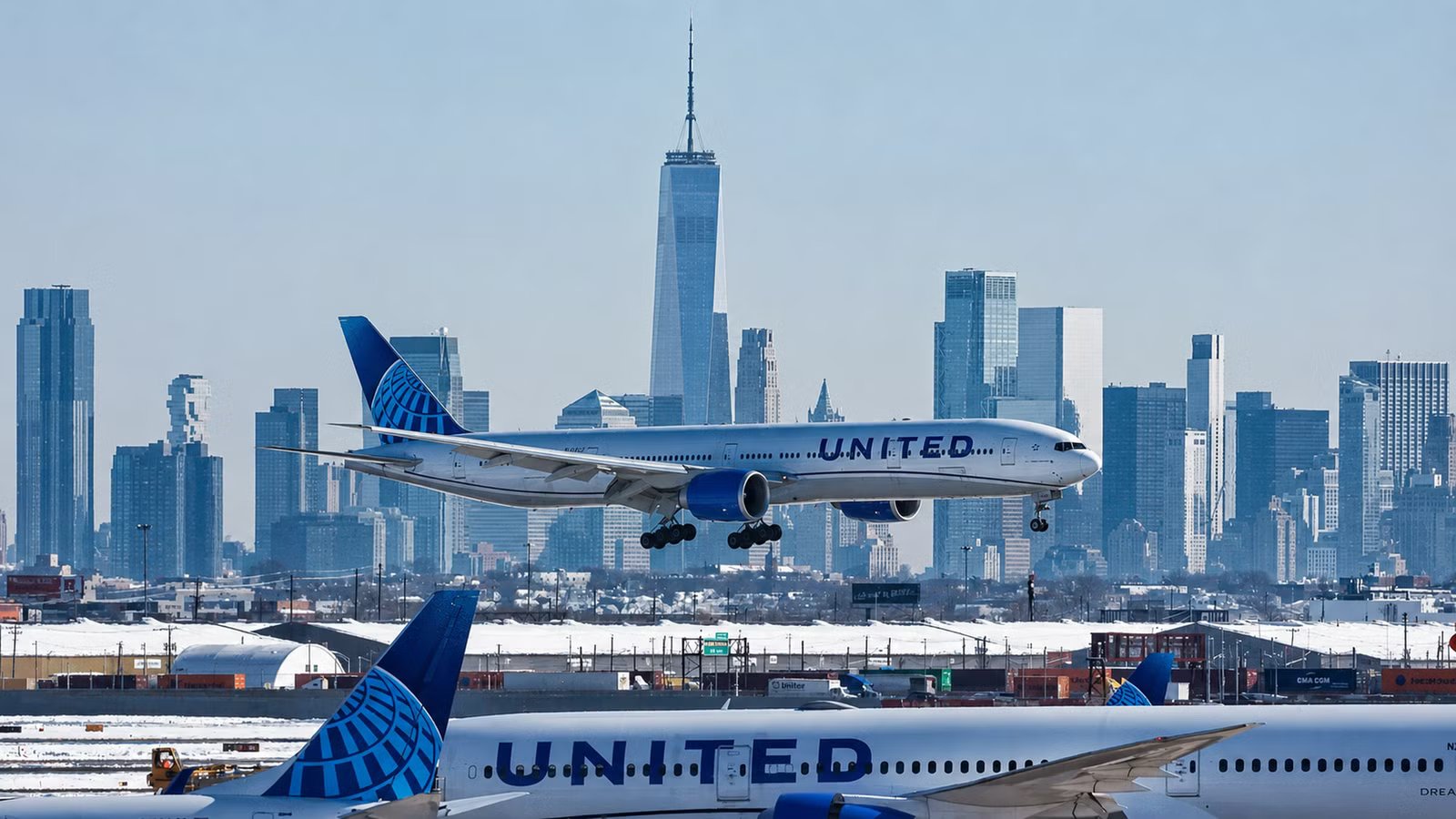
Plans are afoot at the Port Authority of New York and New Jersey (PANYNJ) for another round of rehabilitation on Runway 11/29 at  Newark Liberty International Airport (EWR). Under the agency’s 2026–2035 Capital Plan. $85 million in spending is listed for the runway and its connecting taxiways over the coming decade. The project remains in the planning stage.
NJ.com reported on September 25 that commissioners had authorized $4.5 million for preliminary work on the project. The authorization covers planning and evaluation of the design for the next rehabilitation. The same report says the planning work will examine the runway’s pavement, lighting, signage, and mechanical, electrical, and communications infrastructure.
Runway 11/29 Has Seen Its Share Of Trouble

One of the most recent examples came on May 3, when  United Airlines Flight 169 struck a light pole near the New Jersey Turnpike while approaching Runway 29 from Venice. According to a National Transportation Safety Board (NTSB) report, debris from the pole then hit a tractor-trailer below. The Boeing 767-400ER sustained substantial damage but landed safely and taxied to its gate. None of the 231 people onboard were injured, while the truck driver suffered minor injuries.
In the wake of the accident, United cautioned pilots about “ducking under” during short-runway landings. The NTSB’s preliminary report describes the practice as shifting the aimpoint of electronic or visual glidepath indications, a technique United said can contribute to low approach altitudes during the visual segment. The investigation is still underway, and the NTSB has not yet determined the probable cause.
Simple Flying reached out to PANYNJ for comment. The agency said the funds are being used for runway rehabilitation and are not related to this incident.
What Makes The Approach To Runway 29 Challenging?

Runway 11/29 comes with a few quirks of its own. At 6,725 feet (2,050 meters), it is Newark’s shortest runway by a wide margin. AirNav’s Federal Aviation Administration (FAA) data shows 6,501 feet (1,982 meters) available for landing on Runway 29, compared with roughly 10,000 and 11,000 feet for Newark’s other two runways. Runway 29 also does not have an instrument landing system (ILS), which gives pilots lateral guidance (left and right) to line up with a runway and vertical guidance (up and down) to follow the proper descent path. Instead, Flight 169 was flying the RNAV (GPS) W approach. The FAA approach chart takes crews to a published Visual Guidance Fix called AXELL. From there, the procedure requires pilots to continue visually along the depicted track toward Runway 29.
That visual portion emphasizes what the crew can see outside the cockpit. An Aircraft Owners and Pilots Association (AOPA) guide from 2020 noted that Runway 29 is generally used for arrivals during high-wind conditions and that gusts and turbulence can leave an aircraft too high or too low while turning toward the runway. The guide also pointed to the highway and power lines beneath the approach. At night, tightly packed lights from the nearby port can make the runway harder to pick out.
Newark has dealt with a runway-identification problem before. In 2006, Continental Airlines Flight 1883 landed on Taxiway Z instead of Runway 29. According to the NTSB, the taxiway appeared slightly brighter than the runway under the lighting settings used that night. Investigators also noted that the runway-identification lights, PAPI, and differences in light color were still visible. Afterward, the Port Authority and FAA increased the intensity of Runway 29’s lighting and reduced the intensity of Taxiway Z’s.
Runway 11/29 Has Been Rehabilitated Before

In 2019, the FAA announced $8.28 million in grants for Newark, including rehabilitation of 6,400 feet (1,951 meters) of Runway 11/29 and Taxiways S and Z. NJ.com reports that the runway was last rehabilitated in 2020 and has an estimated 10-year useful life. Planning is beginning now so the next rehabilitation can be completed within that period. The planning work will include evaluations of pavement conditions, lighting, signage, and mechanical, electrical, and communications infrastructure for compliance with FAA standards.
Whether the work ultimately changes any of the issues that have caused problems in the past will remain to be seen.