dailynewsnblog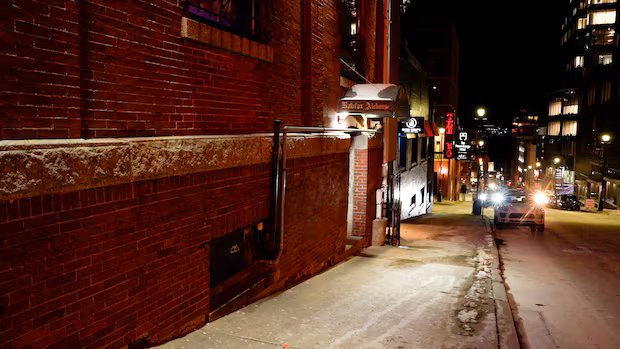

Listen to this article
Estimated 4 minutes
The audio version of this article is generated by AI-based technology. Mispronunciations can occur. We are working with our partners to continually review and improve the results.
New rules for security staff at Nova Scotia bars come into effect Monday, but the sister of a man killed by a bouncer nearly 30 years ago believes the regulations are too little, too late.
Under the new rules — introduced as amendments to Nova Scotia’s Liquor Control Act last fall — bouncers at every licensed establishment must complete an online training course and pass a criminal background check.
Kyle Robar, manager of policy for the province’s Alcohol, Gaming, Fuel and Tobacco Division, said the regulations are the culmination of work that began after high-profile incidents in 2022 and 2023.
The new rules follow the death of Ryan Sawyer, 29, who died after being held in a chokehold by a Halifax Alehouse bouncer on Dec. 24, 2022. At the time of the incident, the bouncer was facing assault charges from a separate altercation involving a bar patron earlier that year.
Sawyer’s death first led to changes to bars with cabaret licenses, which allow venues like the Halifax Alehouse to stay open until 3:30 a.m. Those rules are being expanded to all licensed bars and restaurants in the province.
There were no regulations in place for bouncers in Nova Scotia bars at the time of Sawyer’s death, despite the advocacy of a family that lost a loved one in a similar incident almost three decades ago.
“[I’m] surprised that they didn’t do what they should have done,” said Terri Giffin, sister of Stephen Giffin, who was killed by Halifax bouncers on Christmas Day in 1999. “Three consecutive governments … have failed to put in legislation that actually would protect patrons at these establishments.”
Giffin family thought 1999 death led to change
Stephen Giffin died on Christmas Day in 1999 after being beaten by bouncers at a former Halifax bar called Captain Eli’s.
Cyril Giffin, Stephen’s father, spent a decade advocating for legislation to regulate bouncers. That led to the NDP government of the day introducing the Security and Investigative Services Act.
The legislation would have required in-house security staff to be licensed and trained in a number of areas, but was never proclaimed.

The Giffin family says it didn’t find that out until it learned what happened to Ryan Sawyer.
Terri Giffin said she thought the province would have immediately proclaimed the legislation after Sawyer’s death, but she and Ryan’s family had to fight the province for change.
“It’s taken us three years to get any sort of regulations put in place,” she said.
‘Bare-bones approach to training’
Now that there are regulations in place, Giffin believes they aren’t good enough, especially when it comes to training.
Bouncers have to complete a training module that can be completed online in a matter of minutes.
“I think that’s a pretty big step from doing an online training program to applying something effectively in that kind of a situation,” Giffin said.
“I think it’s really … a very bare-bones approach to training.”

When it comes to criminal background checks, Robar said anyone charged or convicted of a crime cannot be employed as security at a Nova Scotia bar, but the division can waive that requirement depending on the crime.
Giffin said she’s concerned the potential exception could lead to an unnecessary loophole.
Bar industry supports new rules
There are between 300 and 500 bouncers working across Nova Scotia, and the Restaurant Association of Nova Scotia said most employers support the changes.
“They understand that we need to prioritize safety. That’s important to them. That’s important to everyone, so they’re embracing this as well,” said Natasha Chestnut, the association’s executive director.
Bars with cabaret licenses employ roughly 25 to 30 of the bouncers in the province, meaning a portion is already trained under the new rules, Robar said.
He said that while there is no deadline for the remaining hundreds of bouncers to complete the course, the Alcohol, Gaming, Fuel and Tobacco Division will work with licensees to ensure provincewide compliance as quickly as possible.
MORE TOP STORIES