dailynewsnblog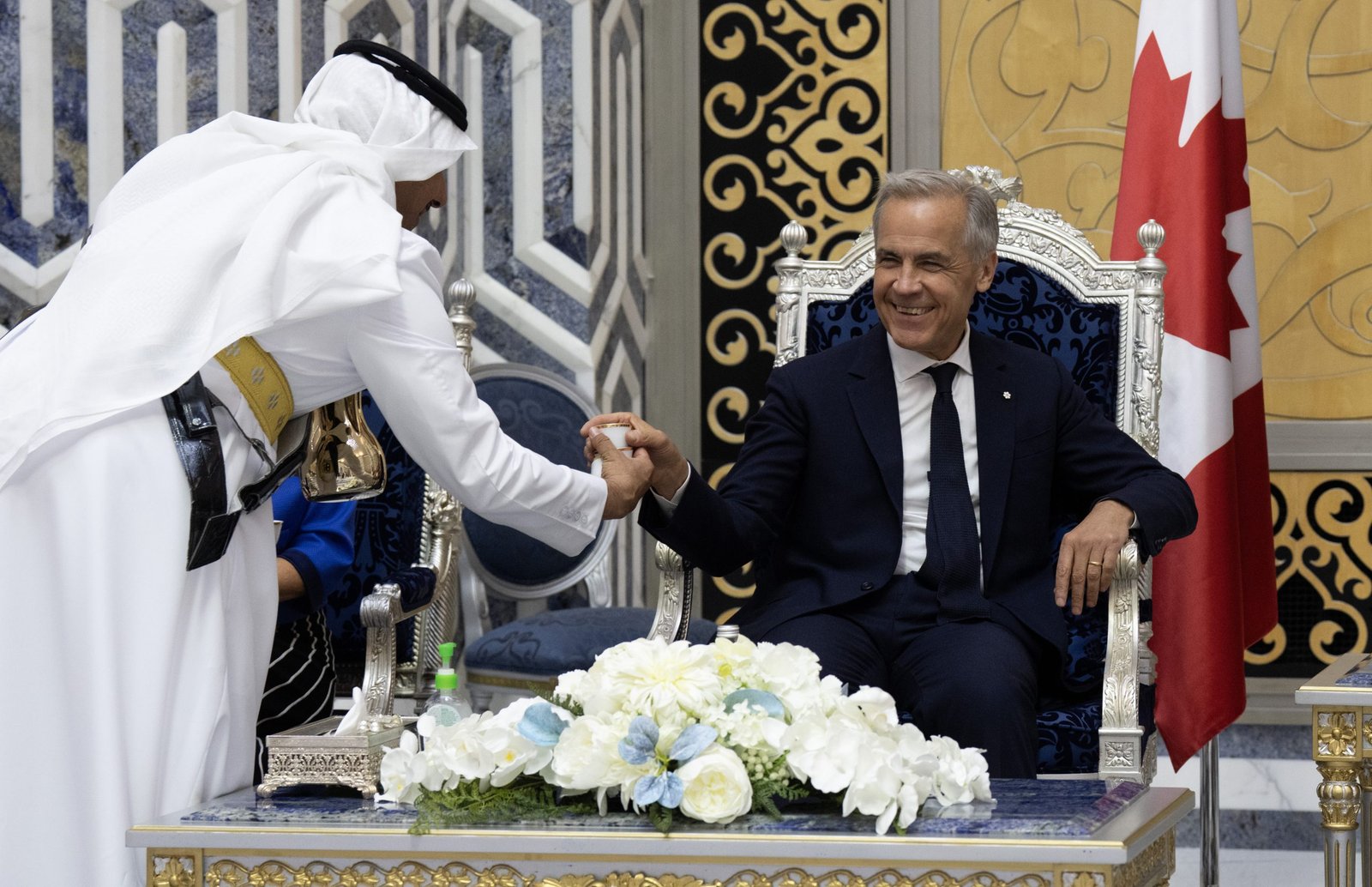
Happy Wednesday! The dog days of summer have arrived… at least for this newsletter writer. With Parliament out and the committee rooms dark, I’m starting to wonder if a photogenic goose might qualify as a lead story for tonight.
That was a joke. Here’s what’s on tap:
Prime Minister Mark Carney has arrived in Saudi Arabia as he seeks economic partnerships with a strategically important country whose notorious human rights record is only getting worse.
Carney is in the city of Jeddah on the invitation of Crown Prince Mohammed bin Salman, in what will be the first visit to Saudi Arabia by a sitting Canadian prime minister in 26 years.
“It’s very significant,” said University of Ottawa professor Thomas Juneau, who specializes in the region.
“There is a willingness to deepen relations with Canada, but we are not high on their priority list.”
Carney’s visit follows a gradual thaw in bilateral relations after what Juneau called “a fairly major diplomatic dispute” in 2018.
The Trudeau government had criticized the kingdom’s justice system and its treatment of women, calling on Saudi Arabia to “immediately release” human-rights activists. Riyadh instead withdrew its ambassador from Ottawa and expelled Canada’s envoy.
The Canadian Press has more.

A document prepared for the federal artificial intelligence minister to use when pitching international investors on Canada’s AI ecosystem identifies a massive proposed increase in Canada’s data centre capacity.
But spokespeople for the government pushed back strongly on the figure, saying it is not a projection of the capacity Canada expects to build, and the total capacity will be much less.
It says Canada currently has about 337 megawatts of AI data centre capacity, and there are more than 20 gigawatts — or 20,000 megawatts — in projects that are “under planning or development.”
The number was included in a presentation prepared by a government department for Artificial Intelligence Minister Evan Solomon to use with international investors. It was obtained by The Canadian Press through access-to-information.
“With AI expected to proliferate in the coming years, crowding out existing markets, more investors are seeking alternative destinations to host data centres,” the presentation says.
CP’s got this one too.

Also, the federal government is investing more than $4 million in Canada’s beef industry as Ottawa looks to expand exports beyond its traditional markets.
Announced Wednesday at the Calgary Stampede, the funding includes more than $3.7 million over two years through the AgriMarketing Program to promote Canadian beef and veal internationally, as well as $300,000 to help the Canadian Cattle Association expand access to key export markets.
“Canadian cattle producers are building on the reputation of quality, reliability and safety to sell over five billion worth of meat every year,” Agriculture Minister Heath MacDonald said.
Canada exports nearly half of the beef it produces, according to the Canadian Cattle Association. Last year, beef exports reached $5.3 billion, with the U.S. remaining the Canada’s largest market.
“We’ll continue to diversify,” MacDonald said, adding that Canada has expanded the market to Mexico.
Sydney Ko has more.
In Other Headlines
Internationally
President Trump said Wednesday he believes the current ceasefire with Iran is over after an exchange of attacks between the U.S. and Iran, the latest escalation straining the agreement to end the war.
“I think it’s over. I don’t want to deal with them anymore. They’re scum,” Trump told reporters in Ankara, Turkey, where he is attending the NATO summit.
The U.S. launched a second round of attacks Wednesday, after striking 80 targets on Tuesday, according to U.S. Central Command.
The stunning turnaround comes just three weeks after Trump celebrated the signing of a memorandum of understanding between the U.S. and Iran to help end the war he and Israel started. Trump insisted the deal would bring “peace and security” to the region. But within just weeks, he’s amped up aggression.
In Other International Headlines
The Kicker
The Economist Intelligence Unit released its latest Global Liveability Index and Vancouver, B.C., is one of the top ten most liveable cities in 2026.
It’s the only North American destination to be named in the top 10, landing in the ninth spot.
Further proof that paying $8 for a latte and staring at mountains still has its perks.
More from the Daily Hive.