dailynewsnblog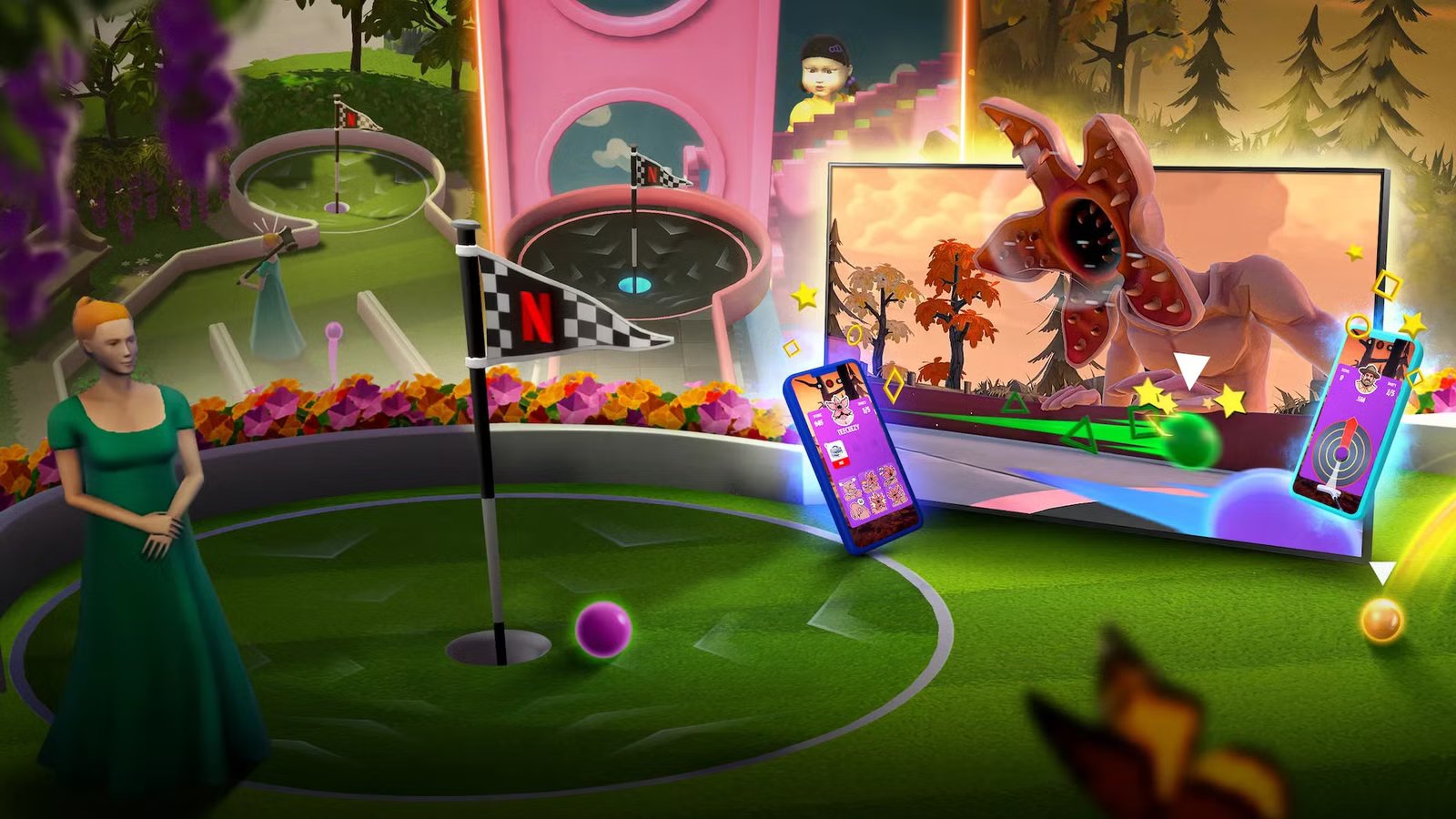
It was five years ago that Netflix announced that it was breaking into video games, and it has been a nonstop whirlwind for the company ever since then. Netflix’s ever-changing gaming strategy put it in a perpetual state of start-and-stop momentum. The breakneck pivots have now culminated in more drastic changes, as the tech giant announced this week that it is shutting down two of its studios: Night School Studio and Moonloot. The former is the acclaimed developer behind Oxenfree, which Netflix acquired in 2021 as part of its initial gaming push. It just released a new game, Unhinged, via Netflix on June 30. Moonlight never launched a game at all under the company’s ownership.
Strangely enough, the move comes at a moment when Netflix feels more invested than ever in making video games work. The last year has seen the company bring games straight into the Netflix app, experimenting with its mobile controller, and scoring a major partnership with FIFA just in time for the World Cup. An upcoming Grand Theft Auto 6 presentation, which will debut exclusively on Netflix, further signals that the streaming service is fighting for gamers’ attention.
So, why shut down two studios at such a crucial juncture? Looking at Netflix Games’ full five-year trajectory, including its unexpectedly busy last few months, will give you a good idea of what direction Netflix is headed in next as it struggles to nail down its niche in a competitive space.

Netflix’s gaming initiative didn’t have the most ambitious origins in 2021. The platform kicked off its plans by adding five games to the platform: Stranger Things 3: The Game, Stranger Things: 1984, Shooting Hoops, Card Blast, and Teeter Up. It wasn’t the most impressive lineup, signaling that Netflix’s immediate sights were set on casual players and fans of its big-ticket franchises. But its acquisition of Night School, an indie darling riding high off the critical success of Oxenfree, suggested that Netflix had its eyes set on prestige down the road.
That pivot began to materialize in 2022. That year, Netflix began launching high-touch mobile games like Poinpy and Desta: The Memories Between, which enjoyed some buzz from the gaming press. That strategy was bolstered when Netflix began dropping mobile ports of critically acclaimed indie games through Netflix; Intro the Breach, Immortality, Before Your Eyes, and more made their way to the platform by the end of the year. A voice was starting to take shape.
For the next two years, Netflix doubled down on its image as a home for award-winning games. Night School launched Oxenfree 2: Lost Signals, Alto’s Odyssey developer Snowman released the excellent Laya’s Horizon, and Yacht Club Games brought Shovel Knight: Pocket Dungeon to mobile via Netflix. More critical darlings, like Hades and The Curse of the Golden Idol, joined Netflix’s growing library. A busy year was capped off by the company’s biggest move to date: bringing Grand Theft Auto: The Trilogy – The Definitive Edition to the service at the end of 2023.

All the while, Netflix made an active effort to get its games in front of the gaming press. It participated in Summer Game Fest’s in-person Play Days event, putting in-development games like Harmonium: The Musical in front of reporters and influential content creators. All of those efforts culminated in the launch of Monument Valley 3 at the end of 2024. Locking down the sequel to two of the most important mobile games of all time felt like a statement victory for Netflix. Or, at least, it should have.
The great games were there, but it was never entirely clear how to find them — or that they existed at all. Netflix Games often felt entirely disconnected from the popular streaming service, with little marketing on the app to drive subscribers to games. You’d see an occasional splash screen for Sonic Mania when the app went idle, but gaming always felt like a second product locked on mobile devices.
The strategy lost its focus in 2025. Netflix Games removed 20 games from its library in June, including heavy hitters like Hades, Death’s Door, and the entire Monument Valley trilogy. Harmonium was quietly dropped from Netflix’s slate of games. Spirit Crossing, a hyped-up MMO from the creators of Cozy Grove, was out as well after Netflix sold developer Spry Fox back to its owners. Squid Game: Unleashed developer Boss Fight Entertainment got shut down outright. Meanwhile, Netflix’s focus was on bringing WWE 2K25 to the service.

That year, Netflix also announced that it was bringing games into its app proper, finally allowing subscribers to play them on a TV. The emphasis wasn’t on prestige indies, but multiplayer party games. Netflix hyped up the announcement with games like Pictionary: Game Night and Boggle Party, alongside an original Knives Out game from the creators of Blaseball.
It started to feel like Netflix might be winding down its efforts altogether in 2026, until the company made another major push in June led by three games. Each one was representative for the style of games Netflix had been pursuing since getting into gaming. The first was FIFA World Cup: Launch Edition, a casual soccer game timed to launch alongside the opening of the real World Cup. Netflix put some proper marketing muscle into it, too, though it was panned by critics. A few weeks later, it surprise-launched Unhinged, a 45-minute horror game by Night School with the presentation of a modern Resident Evil game. And then one month later, it dropped Netflix Minigolf, featuring courses based on Netflix’s TV shows. All three showcased the mobile Netflix Game Controller in different ways, selling a new vision of the streaming service as a Nintendo-like dual-screen platform.
With this week’s studio closures, it’s hard not to feel like the three-pronged approach was designed as a test. If given the choice between a party game, a sports game, and a prestige project, what would subscribers choose to play? There were clear winners and losers, at least from Netflix’s perspective. In a report by Game File detailing the layoffs, a Netflix spokesperson chalked the cuts up to a strategic tightening: “We see an opportunity to be more focused in our execution, so we are making organizational changes to the business to match those priorities.” The company says it will now focus on “kids gaming, party games, story-driven fare and games with mainstream hooks” going forward.
Where does that leave Netflix Games? Back to square one. The direction Netflix describes isn’t all that far off from the five games it initially released in 2021; Stranger Things 3: The Game and Card Blast certainly fit the description. It’s also not all too different from pivots happening at other big companies who tried to break into gaming around the same time. Amazon has also pivoted towards casual party games for its Luna service recently, going all-in on celebrity-led games like Courtroom Chaos. Apple has similarly slowed down its prestige efforts in the past year, with IP-driven kid’s games becoming more of a focus for Apple Arcade. You don’t see Apple courting legends like Sega visionary Yu Suzuki and Final Fantasy creator Hironobu Sakaguchi much anymore.

Maybe this is what companies like Netflix should have been aspiring to all along. Hardcore gaming enthusiasts already have a home on consoles and PC. Why try to gain their allegiance rather than cater to the audience that actually uses Netflix? Netflix finally seems to be accepting a more realistic vision of where it can fit into the gaming landscape. That’s a lot of closed studios and laid-off workers all just to end up where you started.
And even then, it feels like another pivot is inevitable. Netflix’s exclusive Grand Theft Auto 6 presentation will no doubt bring more gamers to the platform than ever, if only for a day. It’s likely to be some kind of success on a raw metrics level, and that’s dangerous for a company that is prone to sudden strategic shifts. Will it try to broker more deals with companies like Sony to become the official streaming partner for State of Plays? Will it leverage its cloud tech to let players stream AAA games from their TV? This current moment may feel like the end of a very weird era for Netflix Games, but as long as there’s a wheel, there will always be someone to try and reinvent it — especially if their pockets are deep enough.