dailynewsnblog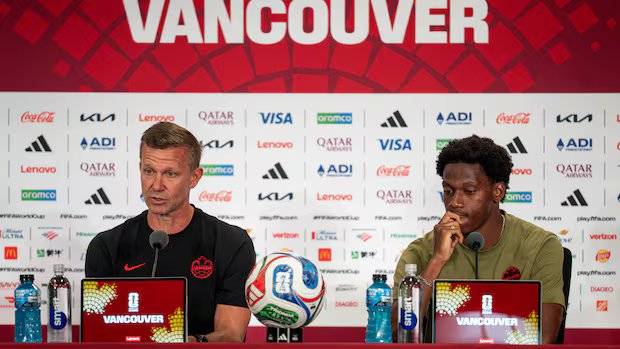
To steal a line from Stephen Eustáquio, Wednesday’s game against Switzerland is the most important in the history of Canada’s men’s program because it is the next one. Each day, each hour, this team has reached a new height, felt the weight of a new expectation.
But it’s almost a truism, in soccer and in life: Our fates turn on slivers, despite our grandest designs. The World Cup is one long, constant lesson in the consequences of small moments.
Steve Nash, the Canadian basketball great and soccer fanatic, sent the team a video message. The players and coaches watched it together on Tuesday morning, crowded onto hard chairs in a stark white room, before they went out for one last practice before the game of their lives.
In it, Nash talked about the delicate internal balance between tension and freedom that wins trophies — the importance of remembering the discipline that greatness demands while not forgetting the joy that helps deliver it.
“I really loved the message,” head coach Jesse Marsch said after. “I think it hit the nail on the head with our team. I want them to understand exactly what their roles are and what the match plan is and why the match plan is important.
“But I want our players, especially our attacking players, to go out on the pitch and be them.”

Canada will reach its first knockout round regardless of the result against the Swiss, and it shouldn’t be forgotten how seismic that is. An expanded tournament makes it impossible to compare eras anymore. This team has still earned its outcomes and the history it has made.
But with a win or a draw at an electric B.C. Place, Canada will win Group B. It will play in the Round of 32 against another group’s third-place team, after a full week of rest, with no need to travel, at home in buzzing Vancouver.
A loss, and it will play a second-place team in Los Angeles on Sunday.
There is a danger in overthinking such a game, of overengineering it, given its rewards and its wider-than-usual definition of a good result.
“Staying here in Vancouver is definitely our number one goal,” Marsch said.
He also suggested, strongly, that he’s not going to ask his team to stray from its relentless, baked-in style — even if a tie, if just this once, would be victory enough.
“I feel like the worst way to get the draw is to play for a draw,” he said. “We are going to start this match, going into it, with the mentality and tactics to win. We’re not going to be overly conservative. We’re not going to be overly aggressive. We’re going to be us.”
Just then, Marsch looked across at Jonathan David, sitting silently beside him.

He broke out in the game against Qatar, scoring a hat trick after he didn’t score in open play for the national team in nearly a year. That happened, at least in part, because David somehow found a way to shed the fears and burdens that lesser players carry with them on their way to defeat.
He bent the narrative by choosing to be its author rather than its subject.
There are always more brutal possibilities, of course. It was hard not to remember who had sat on the same pedestal beside Marsch before the game against Qatar: It was Ismaël Koné, looking every inch the buoyant young man that he was.
The next afternoon, after a needless but otherwise innocuous-seeming tackle, he lay stricken on the grass, marvelling at how broken his leg was. His World Cup was over, and so were his hopes for it. The course of his next six months, and possibly his entire career, was radically altered in an instant. It took so little to take so much away.
There have been more subtle reminders of soccer’s stakes, too.
Early in Canada’s opening draw against Bosnia-Herzegovina, Tani Oluwaseyi, who not surprisingly looked tentative in his first World Cup game, made a bad pass back in the middle of the pitch, just a touch too soft, just a touch wayward.
A Bosnian stole the ball, and Alistair Johnston had to bring him down to prevent a more promising attack. That earned him a yellow card. If he picks up another against Switzerland, he’ll miss the Round of 32 game, wherever it is, a shudder-inducing scenario in play only because of that single bad pass back.
Wednesday’s game, and everything that it will offer, will be decided in its details, too.
Someone will take a shot when he shouldn’t, and it will be blocked and turned into a counterattack. Someone will hold the ball just one half-second too long and lose it. Someone will pass the ball backward rather than forward because of the worry in his stomach.
Someone else — a man and so his country — will win because in one of those same, small moments, he will take his read and see opportunity rather than risk. He will run toward daylight and his childhood dreams, playing the game he loves as though it will only ever love him back. When everyone else on the field will be consumed with doubt, he will break free from it.
He will win because he isn’t afraid to lose.