dailynewsnblog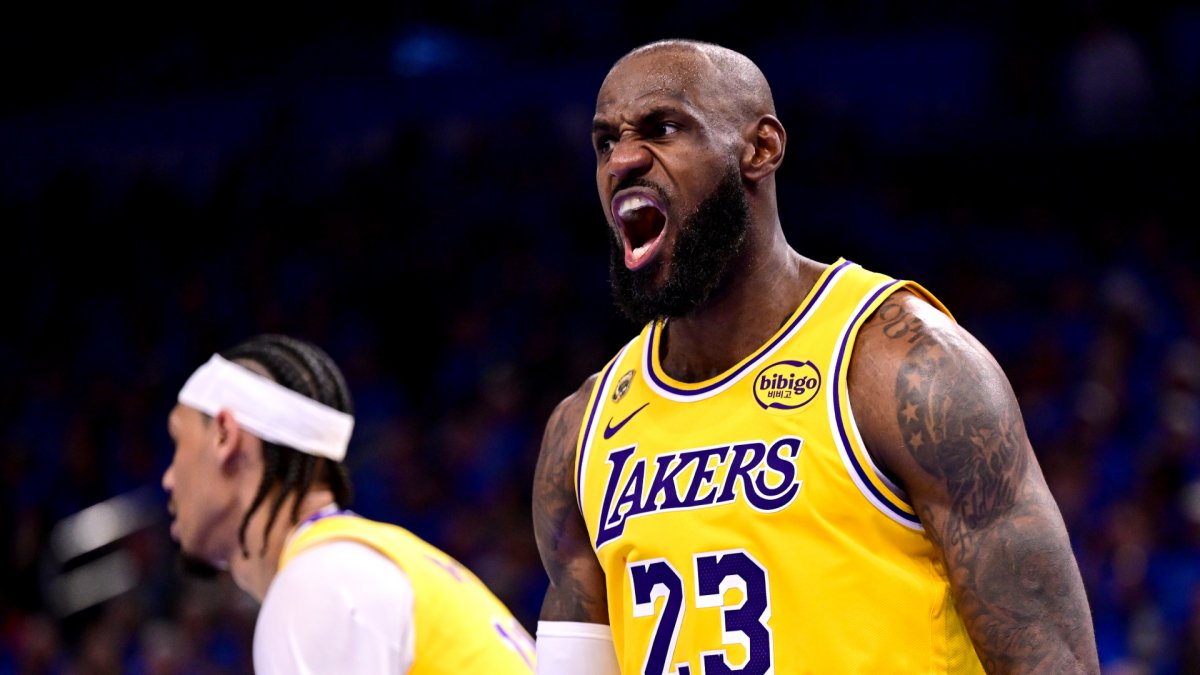
We’re less than a week shy of the NBA Draft, which means rumor season is officially in full swing. Giannis Antetokounmpo is still up in the air. Blockbuster trades are getting discussed. And looming in the background is free agency, which will come at the end of June and resolve the future of perhaps the best player in NBA history, LeBron James.
Sure enough, there are rumors on just about all of these fronts, so let’s dive into the reporting on all of the biggest moves that may or may not take place around the NBA.

Warriors ready to chase LeBron if Lakers falter
For now, the Los Angeles Lakers appear to be in pole position to retain LeBron James. They have his Bird Rights. They can pay him anything up to the max. He’s comfortable there. He can play for a competitive team there, especially after their 15-2 March before injuries derailed a promising season. ESPN’s Brian Windhorst said on Tuesday that he thinks “the focus right now is on making a deal with the Lakers.”
But should the Lakers fail to secure LeBron’s services, the Golden State Warriors are waiting, according to ESPN’s Anthony Slater. Golden State has paths to creating the mid-level exception worth around $15.1 million to James if he is interested in playing for Golden State. James has openly expressed a desire to play with Stephen Curry in the past, and now that he’s nearing the end of his career, it’s now or never.
What’s next for LeBron James? Re-setting the odds for his next team, plus why retirement seems less likely now
Sam Quinn
What would it take to make this happen? There are considerations on both sides of the equation:
- The Lakers can create around $48 million in cap space this offseason. Their cleanest path to retaining James would instead be to operate above the salary cap. This would allow them to retain their Bird Rights on all of their own free agents, re-sign them and run most of last year’s team back. In that world, they could offer James anything up to his max. However, if they elect to stay below the cap and use their money to pursue external players, the amount they could offer James would fall depending on how much they spend elsewhere. In this world, they might not be able to offer James any more than the cap room mid-level exception, which is below $9 million. The exact numbers would depend on what else they do, but essentially, if they prioritize outside players, that makes it harder to keep James.
- The Warriors have questions of their own to consider. If they want to offer the non-taxpayer mid-level exception, they need to stay below the first apron. Right now, they’re looking at about $21 million in space… without Kristaps Porziņģis signed or the roster filled out. If they want to keep Porziņģis (and Slater reports that they do), they’d have to find savings elsewhere. Draymond Green has a player option for $27.7 million, but he could decline it, lower his salary and get a long-term deal in exchange. Slater reports that the expectation for now is that Green picks up his option, but that could change if needed. The Warriors could also save money through a trade. Speaking of which…

Ballmer doesn’t want to trade Kawhi?
The player most commonly linked to Golden State on the trade market is Kawhi Leonard. A deal centered around the injured Jimmy Butler and the No. 11 overall draft pick for Leonard would save the Warriors about $13 million and give them a healthier and perhaps better aging wing superstar with whom to open next season. It’s one of the more sensible trades on this year’s market.
There’s just one problem: Clippers owner Steve Ballmer, according to Slater, “has maintained a firm stance against a Leonard trade.” Now, this could very easily be posturing. The Clippers successfully batted away overtures for Ivica Zubac until they got a monster return for him in February from the Pacers. They also have a history of moving quietly. Most notably, their acquisition of Leonard came with the stunning Shai Gilgeous-Alexander-for-Paul George trade appearing out of thin air. They might just be trying to drive the price up.
But if this is indeed Ballmer’s plan, it is entirely inconsistent with the direction of the rest of the franchise and frankly irresponsible roster management. The Clippers initiated a youth movement at the deadline by trading Zubac for picks and James Harden for Darius Garland. These moves made the Clippers less dangerous in the present, but started them on a far more promising path in the future, especially with several more future first-round picks owed out from their original Harden trade.
The Clippers are not in the same universe as the Thunder and Spurs right now. They’re probably not even a top-six playoff team in the Western Conference, at least based on the rosters as they exist today. Leonard is 34. He is enormously injury-prone and coming off of perhaps the best year of his career. His value will never be higher than it is today. This is a golden opportunity for the Clippers to get assets that could be foundational for their next great team. Leonard could easily regress next season. He could sign a long-term extension and then get hurt again. Keeping him represents an absolutely enormous risk with a fairly minimal reward.

Jazz ‘genuinely torn’ between Dybantsa, Peterson and Boozer
The Utah Jazz are picking at No. 2 overall, and according to The Athletic’s Tony Jones, they are “genuinely torn” between the three top prospects in this draft: AJ Dybantsa, Darryn Peterson and Cameron Boozer. Now, the Washington Wizards, picking at No. 1, will make things slightly easier on them by taking one of those three prospects off the table for them. Nonetheless, there are fascinating ripple effects to consider with each possible selection.
Peterson reportedly will not visit Utah and work out for the Jazz. He wants to go No. 1, but there is also the possibility that he and his agency are directly attempting to avoid the Jazz. He is represented by The Team, formerly known as Wasserman. So is Utah point guard Keyonte George, who is up for a rookie extension. There is potentially some fear there that George and Peterson are duplicative, and that having them on the same team could result in fewer touches and shots for both. Keep in mind, though, that Ace Bailey attempted to steer his draft process towards the Washington Wizards at No. 6 last season, and the Jazz didn’t buckle. They took him at No. 5 and he had a strong rookie season in Utah. The Jazz tend not to get scared off by this sort of maneuvering.
If Boozer is the pick at No. 2, that creates a bit of a logjam in the frontcourt. The Jazz traded for Jaren Jackson Jr. at last year’s deadline and already had Walker Kessler and Lauri Markkanen in the building. Kessler is a restricted free agent, and he reportedly is not happy with the contract offer the Jazz have given him. He is the only traditional center among the four players, but if Boozer can rebound and defend bigger players like a center, perhaps he and Jackson could share a frontcourt successfully.
If Kessler is retained, it’s worth wondering if the Jazz might consider a Markkanen trade. They’ve spent years beating away suitors. Markkanen has lasted an entire four-year rebuild. But both he and Jackson are on max contracts, and George and Kessler are both about to get expensive as well. They’re a few years away from the rookie extensions Bailey and this pick sign, so they have time to figure all of this out, but Utah is going to have a very expensive core if they keep everyone together. If there’s a chance to get younger and cheaper using the Markkanen contract, and Boozer is coming in at his position, it’s something Utah should at least consider.
Dybantsa is the simplest proposition here as a wing who can pretty easily fit alongside most players. The Jazz also know him well, as he has spent the past two years in-state and just thrived playing for BYU, where owner Ryan Smith is a prominent booster. There are still questions there about the starting lineup, as there would only be five slots for George, Bailey, Dybantsa, Markkanen, Jackson and Kessler, but that’s a solvable problem either now or over time. Regardless, Utah has questions to consider with any of its three possible selections.

Jaylen Brown wouldn’t want to play for Bucks; not getting shopped
It’s not quite clear how serious the Boston Celtics are about acquiring Giannis Antetokounmpo. There are two pretty substantial hurdles to their pursuit, according to recent reporting:
- Jaylen Brown would not want to play for the Bucks, according to ESPN’s Marc Spears.
- Veteran Celtics beat writer Gary Washburn of The Boston Globe said that he doesn’t think the Celtics are shopping Brown to other teams around the league.
The Celtics may be trying to figure out if there is a possible Antetokounmpo trade that does not include Brown, according to Washburn. I would categorize such a move as mathematically possible, but not likely to satisfy the Bucks and financially impractical. Boston could technically match salaries in an Antetokounmpo trade with players like Derrick White, Sam Hauser and Payton Pritchard, and they could send all of their available draft picks to Milwaukee, but that offer probably doesn’t even clear what Miami has put on the table, much less what anyone else has.
Further, it would leave the Celtics with three players on supermax contracts and little depth in an era defined by depth. We haven’t really seen teams pursue three-star models lately. The last notable team to do so, Phoenix, crashed and burned. A single injury could doom Boston’s championship hopes.
Realistically, the Celtics only make sense as a Giannis suitor if Brown is headed to a third team. The Bucks presumably want youth and Brown presumably would want to play for a better team. If the Celtics aren’t shopping him to potential third teams, though, it’s not clear how a trade could happen.
Again, this might be posturing, as might be the case with Leonard and the Clippers. The Celtics might be putting this out there defensively. If they are shopping Brown, but fail to acquire Antetokounmpo, the last thing they want is for Brown to believe they want to move him and request a trade himself. Even if Boston wants to make this move, it has to operate cautiously. Nobody right now seems to have a handle on just how involved the Celtics are here, but given their need for rim pressure and their embarrassing first-round exit against Philadelphia, a trade here makes plenty of sense.