dailynewsnblog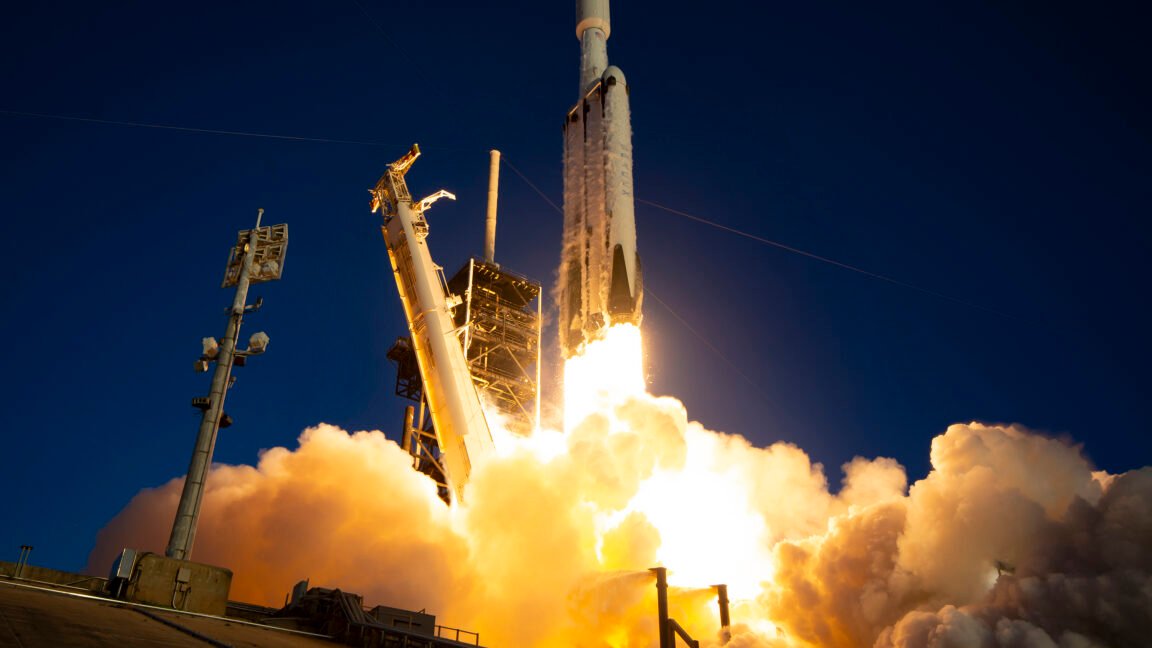
“It certainly wasn’t just plug and play,” said Julie McEnery, senior project scientist for the Roman telescope at NASA’s Goddard Space Flight Center.
Roman passed its NASA confirmation review in 2020, and since then, the mission’s development has proceeded on budget and faster than expected.
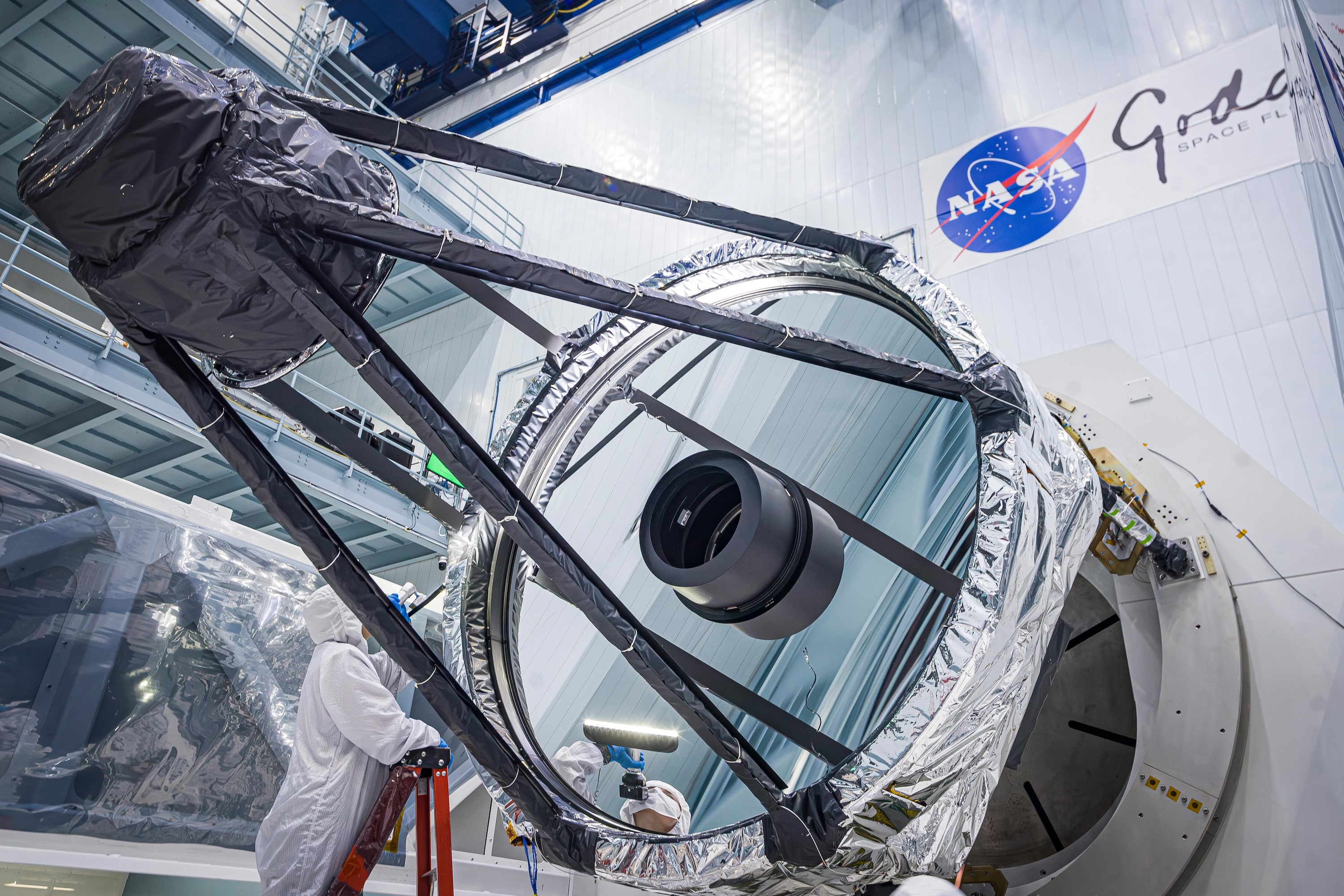
Credit:
NASA/Chris Gunn
The 7.9-foot-diameter polished primary mirror for the Nancy Grace Roman Space Telescope was originally built for a US government spy satellite.
Credit:
NASA/Chris Gunn
Nicky Fox, head of NASA’s Science Mission Directorate, calls Roman the Swiss Army knife of telescopes. It will survey 12 percent of the sky, and while that may not sound like a lot, it is far more than the 0.1 percent observed by Hubble over its 36 years in orbit.
“Roman’s large field of view and fast survey speeds will reveal untold cosmic objects while shining a light on dark energy and dark matter,” Fox said. “During its mission, Roman will discover tens of thousands of new planets, billions of galaxies, thousands of supernovae, and tens of billions of stars. And it will do all of that at a speed about 1,000 times that of Hubble… So to put it into context, what Roman can do in a month would take Hubble a century.”
Who is the fairest one of all?
Cosmologists are eager to learn more about dark energy, an unseen force that, according to the Standard Model of the Universe, makes up about 70 percent of the cosmos and is responsible for accelerating the Universe’s expansion. Dark matter makes up a little more than a quarter of the Universe. The rest of the cosmos is made of regular atoms and molecules that we can see and touch.
But the Standard Model might be wrong. Roman’s untold discoveries “may confirm the current hints that our Standard Model of the Universe is incorrect, and set us on the path to figuring out what’s right,” McEnery said.
“One month of Roman observations could survey our own Milky Way, resulting in the detection of up to half the stars in our own galaxy,” McEnery said. “This would, itself, represent a catalog of astronomical objects much larger than any in existence today.
“Our main survey will take over a year, and it will be really huge,” she said. “We would need over half a million 4K TVs to fully display the single Roman image from our largest survey. To understand the scale, these TVs would cover 45 Manhattan city blocks, or fully cover El Capitan in Yosemite National Park.”