dailynewsnblog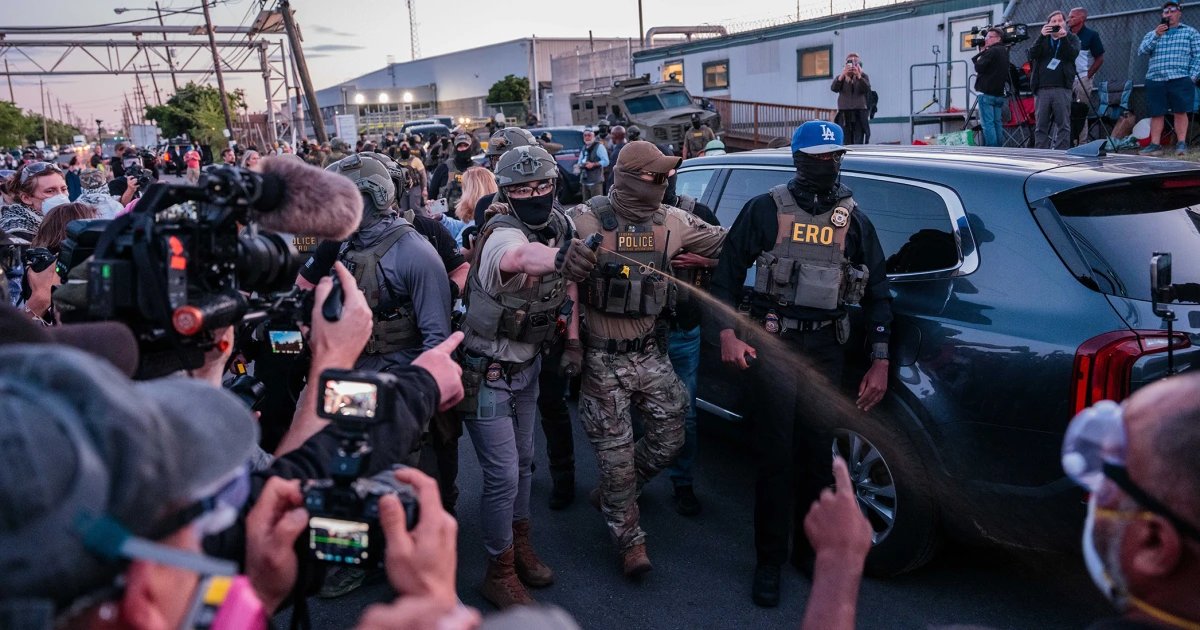
New Jersey’s governor called on federal immigration law enforcement at a detention center in Newark to de-escalate tensions between protesters and “act humanely,” while calling on demonstrators to protest peacefully outside the facility.
Subscribe to read this story ad-free
Get unlimited access to ad-free articles and exclusive content.

Gov. Mikie Sherrill’s announcement Friday follows days of tensions outside the Delaney Hall facility over dueling narratives involving allegations of abysmal conditions and the use of violence against detainees, which the Department of Homeland Security denies. Nine protesters were arrested Thursday.
The governor, a Democrat, announced that the state would establish a protected peaceful protest zone outside the facility, citing safety concerns following the protests in Minneapolis earlier this year where two American citizens were killed by federal agents.
“For days, we’ve heard reports of unsafe, inhumane and unconstitutional conditions there,” Sherrill said at a news conference. “We’ve seen increasing violence, arrest and pepper spray at Delaney Hall, as well as public threats from the Trump administration, and we’ve seen the risk to public safety rising outside of Delaney Hall.”
Sherrill reiterated calls for Delaney Hall to be shut down and said she and others were denied entry to the facility for days, “raising serious questions about what it’s trying to hide from public view.”
DHS did not immediately respond to a request for comment following Sherill’s statements.
Protesters returned to the facility on Friday. There are planned protests for Saturday that include pro-ICE demonstrators.
Families and immigrant advocates allege that last weekend detainees started a hunger strike after being subjected to what they said was expired food and a lack of medical care. They also said they’ve been pepper-sprayed and beaten.
Nearly 900 detainees were being held at Delaney Hall as of early April, according to ICE data.
The Department of Homeland Security and the GEO Group, a private company that operates the facility, have pushed back against the allegations, insisting detainees get proper care and treatment, and the facilities are regularly inspected.
Following the nine protesters’ arrests, DHS Secretary Markwayne Mullin said in a statement Friday that the night before about “100 anti-ICE rioters gathered around the Delaney Hall ICE facility. Rioters bit, kicked, and punched law enforcement officers. Assaulting and obstructing ICE law enforcement is a crime and felony,” he said.
Selenia Destefani, the managing attorney for Nova Law Group, which represents dozens of detainees at Delaney Hall, told NBC News on Friday that her law group had heard from a detainee as well as from family members that on Thursday detainees faced violence, including being pepper-sprayed, and that some detainees had been “beat up.”
Amol Sinha, the executive director of the ACLU of New Jersey, said he also got similar reports. “We’re seeing constitutional violations left and right,” he said.
The Department of Homeland Security said in a statement Friday that “no detainee is being beaten” at Delaney Hall and that staff responded to a fight involving detainees on Thursday.
“In accordance with established ICE policies and their training, staff used the minimum amount of force to safely deescalate the situation. Following the incident, all affected detainees were promptly evaluated by on-site medical personnel and were cleared with no serious injuries,” the DHS statement read.
The agency did not respond to a request for comment on what kind of force was used inside the facility.
GEO Group said in a statement Friday that staff responded to a “physical altercation involving detainees at Delaney Hall” on Thursday and that in accordance with its policies, staff used “control measures to safely resolve the situation, including the limited use of chemical agents.”
They added their response was “carried out in strict adherence to federal standards and comprehensive training,” and that affected detainees were evaluated by on-site medical personnel and “were cleared with no serious injuries.”
Destefani said that detainees were still complaining about being served expired or nearly expired food and that, as a result, did not want to eat. The attorney said earlier this week that her clients also had been given meals containing worms, which prompted some detainees to go on a hunger strike. Some, she said, have since been placed in solitary confinement or transferred to other facilities; DHS didn’t respond to those allegations.
The Department of Homeland Security said Tuesday on social media that “there is NO HUNGER STRIKE at Delaney Hall.” It reiterated the statement in an email to NBC News.
Destefani also said she had a client who was released from the detention center this week who was then hospitalized with a stomach illness “because of the food that he ate at Delaney.” DHS did not immediately respond to a request for comment about this allegation.
Sherrill said that the New Jersey Department of Health had sought a health inspection at the facility, but was only granted access to a limited area.
In a statement, DHS said that four representatives from the state’s health department arrived at 11 a.m. on Thursday, entered the facility and inspected the food service department, adding the inspection was completed and they left at 12:30 p.m.
“ICE is regularly audited and inspected by external agencies to ensure that all ICE facilities comply with performance based national detention standards,” a DHS spokesperson said. “All detainees are provided with proper meals, quality water, blankets, medical treatment, and have opportunities to communicate with their family members and lawyers.”
GEO Group also said it categorically rejected what it called “baseless accusations” against the facility, which it said were “politically motivated,” and added that their services are monitored by ICE and DHS.
It said its support services include “around-the-clock access to medical care,” dietitian-approved meals, religious and specialty diets and access to medical care, the statement said.
The clashes started Monday when demonstrators blocked an entrance to the facility and federal agents in riot gear brought out armored vehicles. The agents fired pepper balls and chemical agents at the crowd, according to politicians at the scene.
Sen. Andy Kim, D-N.J., said on social media late Monday that he “saw chaos inside and outside of the ICE detention center Delaney Hall.”
Around the same time, DHS posted a statement on X saying that “no individuals were directly struck by pepper ball projectiles” and that its use of force was necessary because “rioters obstructed law enforcement from exiting the ICE facility.”
Detainees on hunger strike are not limited to Delaney Hall in Newark.
ICE is required to disclose how many detainees are on hunger strike, but the latest data posted on the issue is three months old. It shows that as of Feb. 11, 2026, there were seven detainees on hunger strike. It doesn’t disclose where they are located.
Emergency records show the effects of a hunger strike can be severe.
NBC News obtained 14 calls to 911 made from two facilities in Texas where multiple detainees were found “unresponsive,” suffering from “acute abdominal pain,” “passed out” and showing “symptoms of starvation.” In one instance, a male had missed 50 meals. In another it was 63.
According to ICE, a detainee is considered to be on a hunger strike when they miss nine meals or don’t eat in 72 hours or more. As per ICE guidelines, once a detainee is considered to be on a hunger strike, they must be medically evaluated every 24 hours and their vital signs documented.
Documents online show that between October and December 2025, one detainee was subjected to forced feeding as a response to their refusal to eat.