dailynewsnblog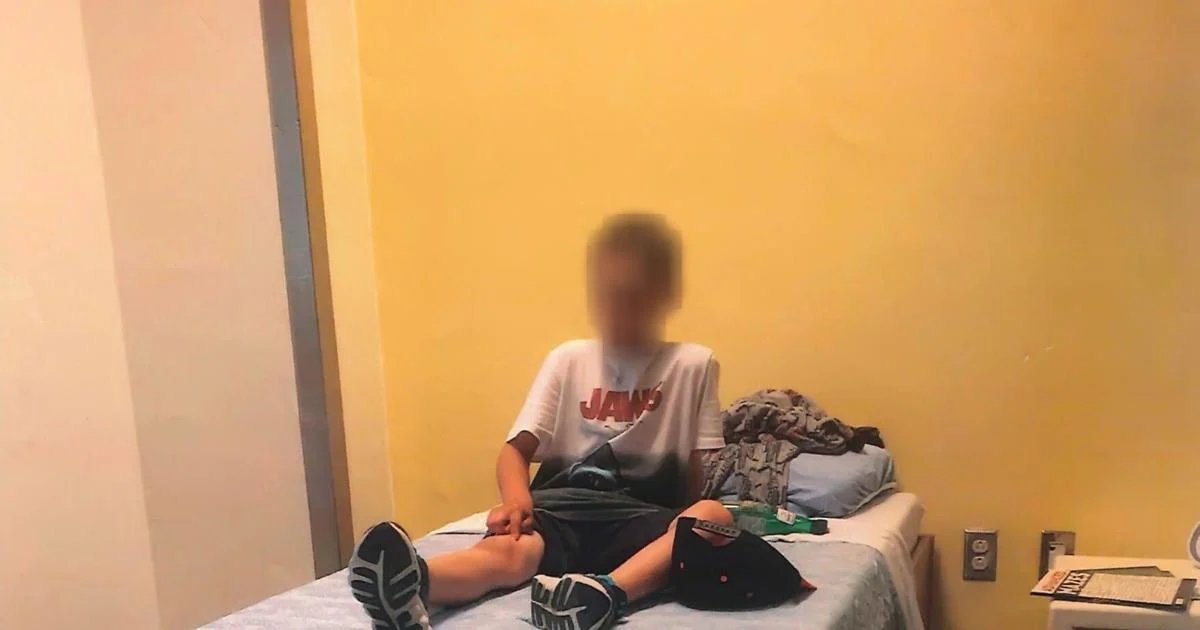
In April 2022, supervisors at the Halton Children’s Aid Society met to discuss the “current struggles” Becky Hamber and Brandy Cooney were having with the two Indigenous brothers who had been living in the couple’s Burlington home for five years — an exceptionally long period for an adoption to remain unfinalized.
A memo from that meeting — cited by defence lawyer Monte MacGregor at their murder trial — included some of the “concerns that have been ongoing.”
The women were insisting the boys wear hockey helmets indoors; there were reports of bed‑wetting; the older boy was living in a sparsely furnished basement bedroom; the children were being home-schooled and had little visibility in the community; and the couple’s parenting style was described as “reactive and extreme at times.”
One of the few “options” available, the memo suggests, would be to make the boys permanent wards of the children’s aid society (CAS).
Eight months later, the 12-year-old boy was dead, and his 10-year-old brother was taken from the home, eventually returned to his birth mother, where he remains today. Hamber and Cooney were arrested, charged with first-degree murder, and neglect, assault and unlawful confinement of the younger boy. (Their identities are covered under a publication ban.)
On Tuesday, Superior Court Justice Clayton Conlan — who presided over their trial in Milton last fall and winter without a jury — will deliver his ruling on whether or not the women are guilty of murder or a lesser charge.
What the judge’s decision won’t answer, however, is the question at the heart of the shocking case: How could a system that’s supposed to protect children allow this to happen?

The fate of Becky Hamber and Brandy Cooney is now in the hands of Superior Court Justice Clayton Conlan.
The fate of Becky Hamber and Brandy Cooney is now in the hands of Superior Court Justice Clayton Conlan.
Kiaras Gharabaghi, dean of the Faculty of Community Services at Toronto Metropolitan University, noted this “horrific case” unfolded over a period of years, and involved two children’s aid societies, doctors, schools, and other institutions. The boys’ steady decline “unfolded as professional systems were watching,” he said. “And yet, once again, we failed.”
“At some point, we have to recognize that we built child and youth services in Ontario across siloed systems that are far more interested in self-preservation and mitigating liability concerns than in the well-being of children and youth,” he wrote in an email to the Star.
“Successive Ontario governments have created the conditions for this ongoing and catastrophic failure, and sadly lack any kind of courage to do anything to change it.”
For his part, Irwin Elman, Ontario’s Child Advocate from 2008 to 2019, described himself as “shocked but not surprised” by the boy’s death. Elman, who has an extensive background representing the interests of children and youth as an educator, counsellor and policy developer, believes an inquest is needed. In an email to the Star, he cited the “many, many” ways the evidence at trial demonstrates “deep, systemic challenges of a child protection system in crisis.” (Since an inquest is not mandatory, any decision related to a discretionary inquest will need to wait until all legal proceedings have been completed and appeal periods passed, a spokeswoman for the Coroner’s Office told the Star.)
The shocking chain of events at the centre of the trial
The trial’s startling revelations included:
• An “attachment therapist,” brought in to work the transition between the boys’ previous Ottawa foster parents and the Burlington women, testified that Hamber reported the boys’ behaviour was “becoming more challenging than they expected,” and that the women were “getting tired of their behaviours, and they’re not getting gratitude from the boys.” By the time the therapist’s involvement with the boys ended in 2018, they seemed scared and were “walking on eggshells.”
• A teacher called CAS four times with concerns about the boys and was told by a caseworker, “It’s too political,” and they need “more evidence and more people to report.”
• A CAS adoption worker recorded in her notes that the older boy didn’t look healthy during a virtual visit on Sept. 22, 2022. “Tired, dark circles under his eyes, cheeks appear sunken, appears pale,” she wrote. The worker was promoted soon after that visit, but her replacement wasn’t notified, leaving neither child with a CAS representative in the final three months leading to the older boy’s death.
• A retired Halton CAS child-protection worker, who reviewed the vast adoption file, noticed documentation was missing. She also identified other gaps, such as adoption workers missing mandatory 30- and 90-day visits. They had also overlooked things that should have triggered investigations — such as the boys being restrained with zip ties and being kept behind locked doors.
• Three Halton CAS workers, including a supervisor, lost their jobs following an internal investigation into the case. One sued the agency for wrongful dismissal, describing herself as a “dedicated, hard-working” employee with no disciplinary issues.” Her lawsuit, which was settled, claims she was not involved with the Hamber-Cooney file at the time of the boy’s death; it pleads she was “made a scapegoat for the failures of other Halton CAS staff.”
• A Burlington doctor who saw the child eight days before he died admitted the boy might still be alive if he had pushed for immediate hospitalization.
Elman doesn’t know for certain why the child protection system and medical professionals failed these children.
Dr. Stephen Duncan saw the severely malnourished boy eight days before his sudden death, but did not recommend the child go to hospital.
Dr. Stephen Duncan saw the severely malnourished boy eight days before his sudden death, but did not recommend the child go to hospital.
However, he suggests part of what took place may have been a type of “confirmation bias” that exists within child protection: once workers form a theory about a placement, new information tends to be interpreted in ways that support it.
It would not have been easy to find a culturally appropriate home for these Indigenous siblings, Elman said, adding that the prospect of a home — with Cooney claiming Indigenous heritage, no less — would be seen as a “win,” adding pressure to make the placement work despite red flags.
Information that arose in the ensuing five years was likely discounted or simply understood in a way that confirmed the agency’s theory of the case, he said.
The birth mother of two boys is suing the Halton and Ottawa CAS, alleging the agencies were negligent in the performance of their statutory duties by failing to adequately supervise the boys during their placement and for failing to remove them. Several medical professionals — along with Hamber and Cooney — are also named in the action.
‘Do we actually have anything better to offer?’
Elman notes that the provincial government is pushing the child protection system to put fewer children in care, which is far more expensive to the government than a child placed in a “forever family,” such as an adoptive home, “ostensibly just dumped there with no community supports.”
In any given month, Ontario’s children’s aid societies have roughly 10,000 children in their care — a term that refers to kids the agency has removed and placed in foster or group homes, supervised kinship care, or, in some cases, unlicensed settings such as hotels. Currently, about 3,500 are moving toward adoption in Ontario, according to the Ontario Association of Children’s Aid Societies.
Michelle Gingrich, a senior manager with the OACAS, said adoption is only one of the “permanency options” children’s aid looks at today, with the majority of placements now occurring with family members or other community caregivers — literature and studies show these lead to better outcomes, “so that is always our first option,” she said this week.
High‑needs children — which the defence lawyers argued these boys were — are difficult to place permanently, agrees Bryn King, an associate professor at the Factor-Inwentash Faculty of Social Work and co-founder of the Youth Wellness Lab at the University of Toronto.
When caregivers express willingness to adopt children with behavioural challenges, adoption workers face a painful dilemma: disrupt the placement, knowing there are few alternatives, or proceed despite concerns. The system rewards “getting kids out of care,” which can overshadow deeper questions about suitability and long‑term safety.
“It’s a really tough call to say, ‘I am going to pull the plug on this when I know I don’t have anything better to offer.’”
King believes the Hamber and Cooney case illustrates that the child welfare system “is calibrated” to fail high-needs children, but not because child‑welfare workers don’t care.
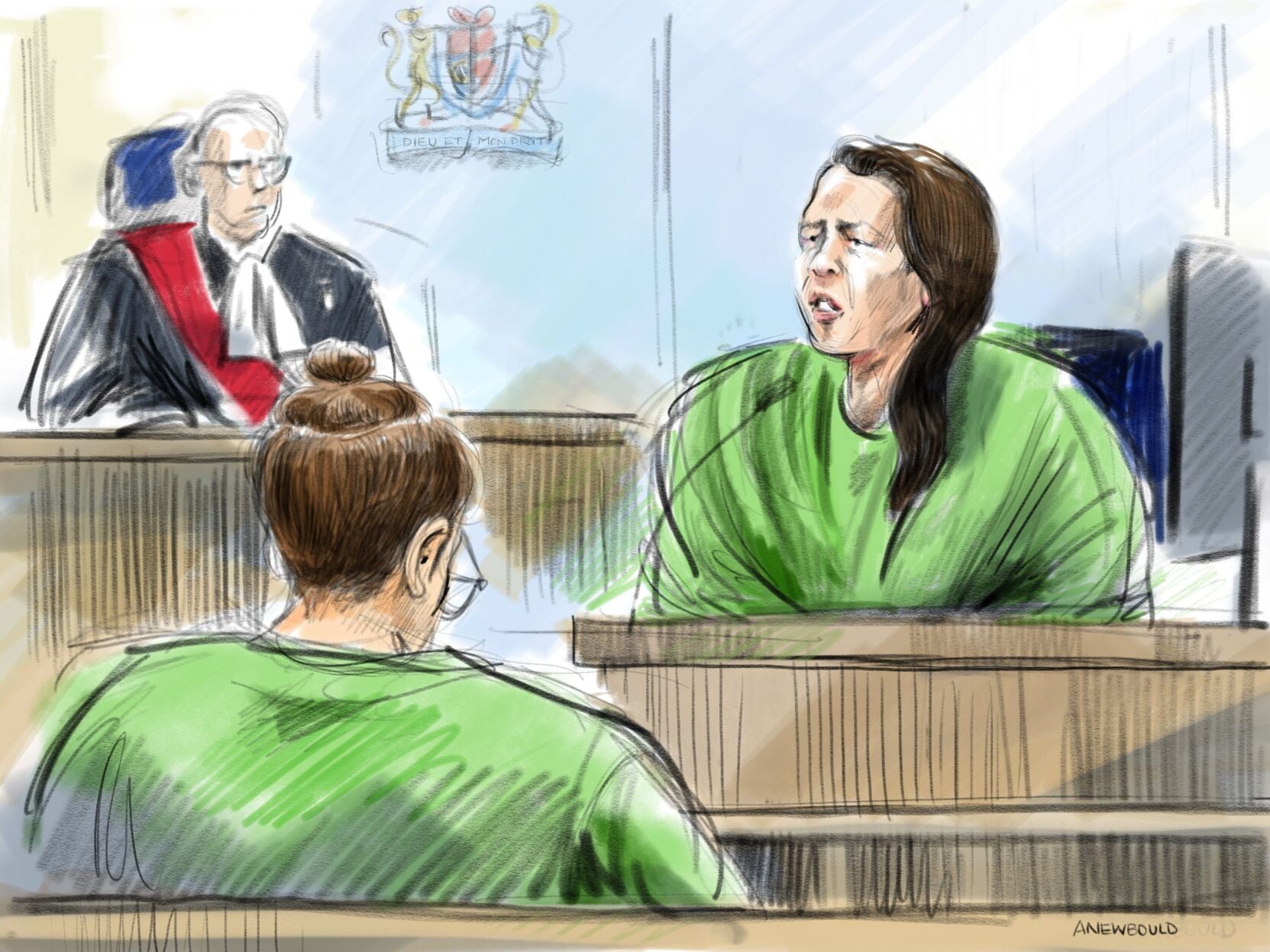
Women on trial for murder of the 12-year-old boy they were trying to adopt have finished
The system is structurally misdesigned, underfunded, and expected to shoulder responsibilities that should be shared across multiple child‑ and family‑serving sectors, she says.
“We keep asking the child welfare system to be solely responsible for the protection of children, and we don’t hold other child and family service systems accountable to the same degree, so when there’s a failure … child welfare is holding the bag,” she said, adding: “I’m not saying there aren’t systemic issues there.”
The current child welfare system in Ontario is designed to meet legal requirements with “minimal intervention,” not to provide the intensive, specialized supports high-needs children require. From what King knows of the evidence, the boys’ trauma, behavioural issues, and developmental needs were profound, yet there was no co-ordinated response.
She also questions whether the boys’ removal from their family was the only or best option, noting that opportunities to keep them with relatives may have been missed. More broadly, she argues Canada has not reckoned with the legacy of Indigenous child removal or invested in creative, community-based alternatives.
“We remove kids because we think it’s the right thing to do to protect them, and sometimes that is the right thing,” she notes, “but do we actually have anything better to offer them?”
Rather than focusing on blame, she calls for a review about how all systems — child welfare, health, mental health, developmental services, and society at large — failed the boys and their family.
What happened in this case did not emerge in a vacuum. There are “so many gaps here,” she says, “but most people who work in the system believe that they’re trying to protect children, and we are not as a society making that easy for them. We have to have a truth-telling that isn’t just about this situation, but it is about how all of these systems failed these kids.”
Gharabaghi makes a dire prediction unless Ontario “fundamentally rethinks” how to support children, youth, families and their communities.
“A boy is dead. Many more have died before him, and many more will die in the coming years. Everyone knows that.”
Children’s ais societies in Ontario are primarily funded by the province through the Ministry of Children, Community and Social Services.
Asked if changes are contemplated to the child welfare system in the wake of the disclosures that emerged during the Hamber-Cooney murder trial, the ministry’s media team stated in an email that the government’s commitment to protecting Ontario’s children and youth “will never waver.”
The email pointed to legislation that took effect on Jan. 1, 2025, raising the required frequency of CAS visits to children in adoptive care from every 90 days to 30 days, a change intended “to better monitor the child’s safety and well-being.”
“As this matter is currently before the courts, we cannot provide further details.”