dailynewsnblog

Muramasa: The Demon Blade originally launched on the Wii back in 2009, a title that we called “gorgeous, engrossing,” and even underrated. We’ve been hoping to see a modern port of this gem for a long time now, and Vanillaware has delivered, with Muramasa: Revenant Blades coming to both Switch 1 and 2 in February next year.
The PS Vita received Muramasa Rebirth in 2013, bringing updated music and localisation, followed by the Genroku Legends DLC, which added four new playable stories in addition to the original two. Revenant Blades combines Rebirth and Genroku Legends, meaning all six stories are available from launch. Think of this as a ‘complete edition’, then, finally accessible on current platforms.
I’d not played either version of Muramasa, so I was very excited to experience it for the first time in its ‘complete’ form. I got hands-on with a PC build for an hour at publisher Marvelous’ headquarters in Tokyo, which was a fitting location for this preview, as the game is set in Japan during the Genroku era.
For this hands-on session, I got to select from Kisuke and Momohime, who both have their own unique combat styles and stories. I went with Momohime, a noblewoman possessed by an evil spirit.
After locking in a character, it’s explained that the main road is currently blocked off, and you should take as many paths as available. Although the game is a 2D side-scrolling affair, you get the option to adventure through different branching paths, containing loot and consumables, plus other discoverables.
As I journeyed through the first few paths, I discovered a glowing spirit and a treasure chest. These are some of the many collectibles I found during my playthrough, which motivated me to travel down extra paths to see what I could find rather than just speeding through to the main objective. I’m not always keen on backtracking, but this felt like a strong enough incentive to keep me hooked and curious about what I might find.
Boom: my first enemy encounter, a group of small imp-like creatures. Muramasa is known for its fast-paced, hack-and-slash style, and its unique weapon system. You have three equipped weapons, each with its own durability bar. You switch between all three during encounters, and whichever two aren’t in current use will recharge and repair. The blades can break if not switched out in time, which thankfully isn’t permanent, but it’s something to manage during combat.
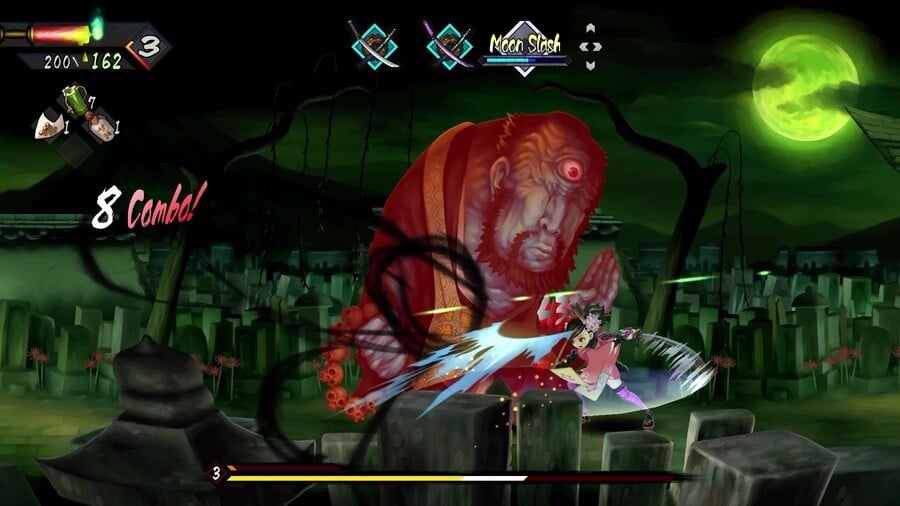
Visually, this remaster is stunning. The overall art design is very striking and vibrant, with every character, enemy and NPC I encountered feeling unique and memorable, dripping with Japanese folklore. The music adds to the overall feel, too, blending traditional instruments with a modern upbeat spin that’s the perfect mix. The music ramps up during combat, which really increases the pressure and intensity.
One aesthetic choice in particular I love is the range of multi-layered backgrounds, creating a sense of depth even though the stages are 2D. They feature environments brushed with an almost hand-painted look, each with its own unique colour palette suited to the locale. Sticking to the original visuals but revamped in HD, making the colours and textures really pop.
The same goes for Momohime’s updated design, too. Staying true to her original model, the sharper details and more saturated colours really bring her back to life.
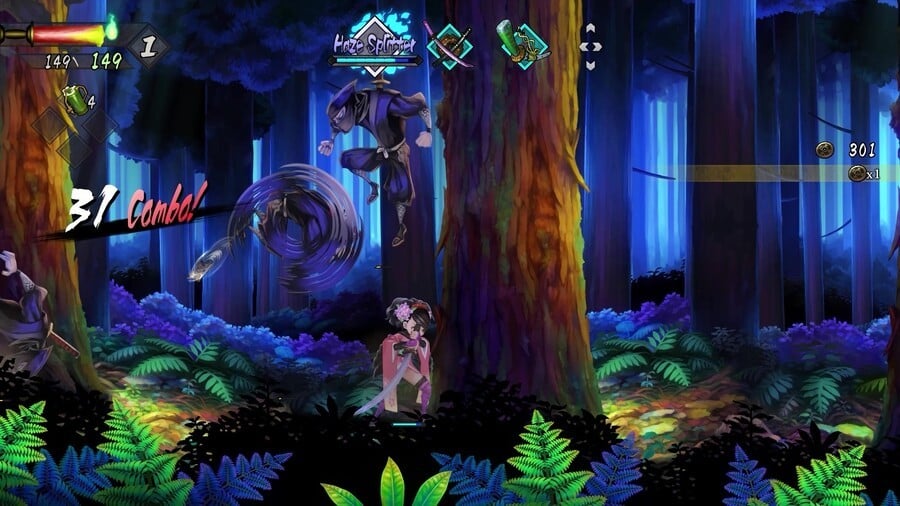
The next bunch of enemies had different battle mechanics. The first were samurai, which could block my standard attacks. To break through their defence, I used a charge attack. After that, a group of ninja threw projectiles at me. If blocked at the correct time, you can deflect, sending them straight back to deal damage. I have to admit, I’m not always the best at perfectly timed parries, but this felt easy enough to pull off and very satisfying.
In the next segment, I was in an ominous graveyard, tasked with speaking to every character to progress. In Revenant Blades, there’s brand-new English voice acting, which adds a lot of character and charm, making each interaction interesting and engaging. Japanese voice options are also available, along with multiple written languages.
While making my way around the area, I encountered a creepy soul named Jinkuro. They informed me that they used a soul transfer skill, allowing them to fully possess my character’s body. From then on, we combined to become Momohime-Jinkuro.
Time for my first boss encounter, a giant Blue Monk. He’s large in size but quite slow, which gave me enough time to read his upcoming moves, one of which is a jump where he slams down hard on the ground, sending a shockwave along the floor which also causes damage if not avoided. His attacks included throwing projectiles and creating huge pillars of fire. This fight was the perfect tutorial for really getting used to the three-weapon system and the general combat mechanics of the game, without being too difficult or overwhelming.
My reward for defeating the Blue Monk was a shiny new weapon. While equipping it, I used this opportunity to have a brief look through the different menus. The skill menu opened up a progression tree with unlockable moves and upgrades. There were six slots total: three for ground and three for airborne combat. I didn’t have the required materials for any at the time, but I’m intrigued to see how much these will affect the combat in the full game and how much you can customise it to your playstyle preference.
Not having played the 2009 original, I was worried I wouldn’t have any nostalgic tie to it; however, I thoroughly enjoyed my time with this. The story left me wanting to know more, the combat was fun and fast-paced, and the visuals were strikingly beautiful. New players like myself and fans of the original will have a blast.
Travel and accommodation for this preview were provided by the publisher. Muramasa: Revenant Blades launches on Switch 1 and 2 on 4th February 2027.