dailynewsnblog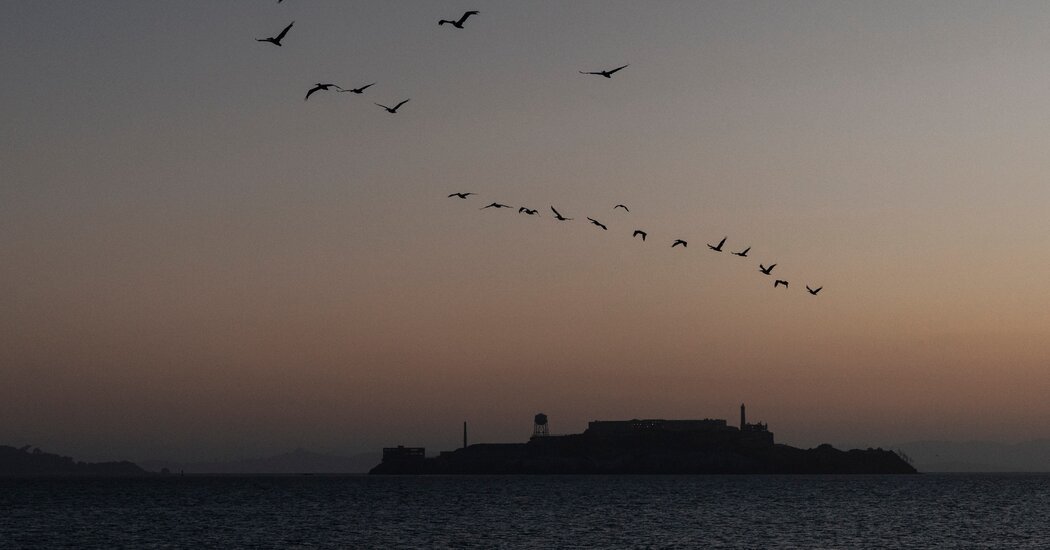
The Boisa family and their friends had finally completed a sad task 11 years in the making.
On Tuesday morning, a lovely, warm day, they had sailed from San Francisco’s northern waterfront, passing under the soaring towers of the Golden Gate Bridge, and into the sparkling Pacific Ocean.
There, they scattered the ashes of one of their own, Maria Boisa, who had died by suicide in 2015 at age 32. Ms. Boisa, an avid surfer, had loved the water, and the ocean seemed like a fitting final resting place.
But just a few hours after the family sought to find closure from one tragedy, a new one struck.
While they were returning to San Francisco on Tuesday afternoon, a wave slammed into their three-deck cruiser, a vessel called Volare, the Italian word for flying. It tilted on its side and began to take on water rapidly. Some of the 20 people on the boat tumbled overboard, while others became trapped inside the main cabin.
Two people died. Two more are officially missing but were last seen in the cabin of the sinking boat and most likely went down with it.
The tragedy struck a Northern California family that had already withstood several unexpected and painful deaths, according to family members.
“Half of my siblings are gone,” said Ralph Boisa, 77. “It just makes no sense.”
Mr. Boisa’s older brother, Clifford, died of his injuries in the boat accident. Their sister, Carol, was in the cabin along with Clifford’s wife, Jackie, and both are presumed to have drowned.
Mr. Boisa said that it was his daughter who the family was on the water to mourn that day, but he had been unable to make the journey from his home in a remote part of Washington State.
Some survivors of the accident declined to be interviewed, and others could not be reached. This article is based on interviews with family members of the survivors and of those who died, as well as accounts from those involved in the rescue and from the authorities investigating what happened.
At the center of the group on Tuesday’s trip were the Boisa siblings, who grew up in the 1950s and 1960s on a dairy farm near Sacramento.
John Boisa, 62, the youngest, was the captain of the boat. A political consultant and former naval officer who lived in Stockton, about 80 miles east of San Francisco, he owned the 50-foot fiberglass cabin cruiser, built in Taiwan in 1980, with his wife, Miriam Lyell, who was also on board.
His sister, Carol Boisa, 74, known for her easy laugh, had joined the trip, along with her two adult children.
And their oldest sibling, Clifford Boisa, 79, an outgoing man with a large circle of friends who lived on a prune orchard north of Sacramento, was on the vessel with his wife, Jackie, 77.
Ralph Boisa said that he and his two brothers had endured the untimely deaths of several children. John’s daughter, Sophia, died of an accidental drug overdose at age 22. One of Clifford’s children, Cheryl, died at age 13 in 1994. In addition to Maria, Ralph lost another daughter, Andrea, in 1995 at age 22.
“It’s been a lot of tragedy,” Ralph Boisa said.
On Tuesday, after the family spread Maria’s ashes and visited Angel Island, a scenic state park, the boat headed past Alcatraz Island, the site of the infamous former prison, on its way back to the harbor.
The morning’s calm conditions had deteriorated. Winds had picked up, gusting to about 30 miles per hour, and the waves may have reached about four feet high in the middle of the San Francisco Bay, said Brian Garcia, a meteorologist with the National Weather Service.
Around 3:20 p.m., the boat was slammed by a wave and began tilting heavily, the authorities said. Water rushed in. Several passengers were thrown overboard, while others were trapped inside a cabin on the vessel’s middle level.
Mike Montoya, 38, was driving a small commercial fishing boat a few miles away with a friend when he saw what looked like smoke billowing in the distance. The two sped over. “It was like a scene out of the Titanic,” Mr. Montoya said in an interview.
One man, bobbing up and down in the waves, clung to an inflatable ring and shouted that he could not swim. A few feet away, a woman grasped onto a kayak. A man who appeared to be the captain, wearing a corduroy hat that read “Volare,” hung onto the bottom of the vessel, which was already halfway submerged.
People trapped inside the cabin of the boat scrambled as water flooded in around them, Mr. Montoya said. Among them was Yvonne Thatcher, Ralph Boisa’s oldest daughter, who had been pushed to one side of the cabin as furniture and chairs went flying. She was able to reach a door while the boat was sideways and climb out, her father said.
Outside, Mr. Montoya and his friend maneuvered their small, 22-foot boat around the wreckage, past life jackets, wooden ladders, couch cushions, purses and speakers floating in the waves. One by one, they pulled people from the water.
One was an older woman, who had apparently organized the gathering of friends and family. “She kept saying, ‘I’m sorry, I’m sorry — I got all these people together for this memorial,’” Mr. Montoya recalled.
Denee Payne, whose husband is part of the extended Boisa clan, and her childhood friend, Tondra Miller, had been retrieving their jackets from the boat’s cabin when the rogue wave struck the boat. They were able to run back up to the top deck, holding hands, but soon were tossed into the choppy bay waters. People were clutching one side of the boat, making it tip even more, so they decided to spread out.
The longtime friends treaded water and encouraged each other to “keep kicking,” recalled Ms. Miller’s sister-in-law, Kira Madruga, who was not on the boat but learned what had happened later from Ms. Payne.
The whitecaps were tall. At some point, Ms. Payne turned around to look for her friend. Ms. Miller was gone.
Inside the boat, it took only a few minutes for water in the cabin to rise up to the shoulders of the people stuck inside, Mr. Montoya said. Just a small air pocket remained.
Mr. Montoya and his friend lobbed fishing weights, lead balls that weigh about a pound, at the glass windows. A young family member pounded on the windows to try to crack them to free people. Inside the cabin, the passengers pressed their fists to the glass.
Within minutes, only the maroon top of the ship was still above the water. And soon, it had sunk entirely, on its way down to the bottom, 120 feet below.
Rescue crews, which had arrived from cities across the Bay Area, began ferrying people to shore. Clifford Boisa was first, as he wasn’t breathing and needed cardiopulmonary resuscitation. Paramedics soon pronounced him dead.
All of the survivors were soaked. Some were missing shoes. Others had scrapes on their heads and cuts on their legs. One woman repeatedly cried out for her mother, who was missing.
The following day, on Wednesday, family and friends of the passengers gathered at a Coast Guard debriefing in the city. A chaplain said a prayer. Quin Madruga, the brother of Ms. Miller, who was still missing, said he left the gathering certain of the worst.
The next day, the authorities found a body floating in the water west of Treasure Island. Mr. Madruga was able to provide the coroner with details about his sister’s tattoos — a chili pepper and a sun — that confirmed it was her.
“I lost my breath when they told me,” he said.
Ms. Miller lived in the city of Folsom in the Sacramento region and had an adult son. She loved boating and used to motor to McCovey Cove, the waterway outside the Giants baseball stadium, where she would wait for homers sailing over the outfield fence.
“She was fearless,” said Ms. Madruga, her sister-in-law.
Clifford Boisa’s wife, Jackie, and his sister, Carol, were believed to be trapped in the boat’s cabin and remain missing. A family dog also died in the accident.
It’s unclear exactly why the boat sank, and officials say it could take longer than a month to finish investigating. The authorities located the wreckage of the boat on Friday and might try to bring it to the surface.
Several boating experts said the boat may have already had a leak, or that its portholes may have been open, allowing in a deluge of water when it rocked. They said that its sudden tilting could have pushed all the passengers to one side, making matters worse.
“Usually it takes a combination of those kinds of things just at the wrong time to cause something like that to happen,” said Randell Sharpe, a marine accident investigator in the Bay Area.
John Boisa did not respond to requests for comment. A local news outlet reported that he had shared a statement that said he saw Clifford as “a mentor and role model to me growing up. I cherished him, and much of the person I am was formed by his example. The loss of him is a crushing anguish.”
He asked for privacy while his family processed their grief: “We and several families have suffered a horrific loss.”
Ralph Boisa said he couldn’t wrap his head around how such a tragedy had happened. John was an experienced captain, his brother said, and often took relatives out for summertime excursions under the bridge.
“He knows what he’s doing on the water,” Ralph Boisa said. “I just can’t imagine what could’ve done this.”
Amy Graff and Jacey Fortin contributed reporting and Kirsten Noyes contributed research to this report.