dailynewsnblog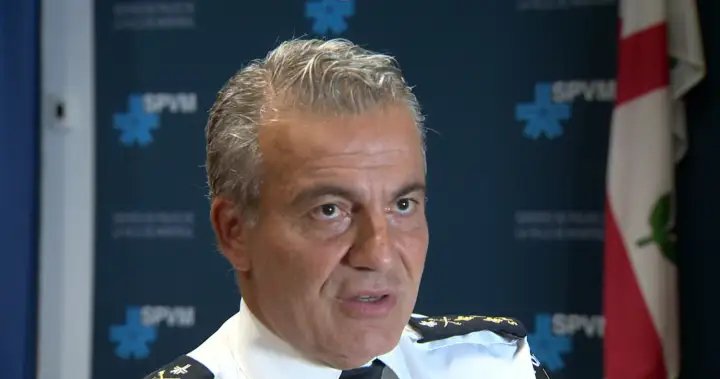
Montreal police Chief Fady Dagher says there is a sentiment of “shame” within the force as it responds to serious allegations of racism, discrimination and harassment.

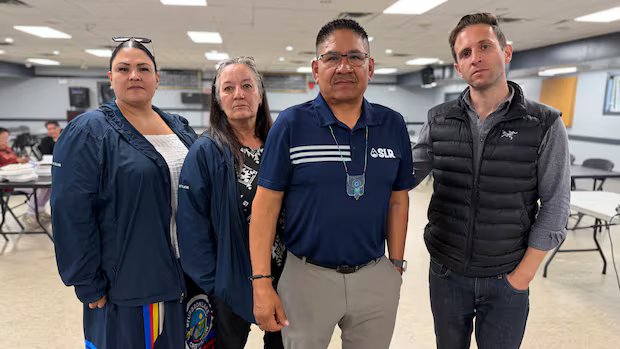
The public had a chance to question Dagher for the first time at a special meeting Tuesday night at Montreal City Hall. For over a decade, residents of Montreal North have expressed discontent with the city’s police force over concerns about racism and discrimination.
That came to a head in June, when Dagher dismantled a 16-member patrol unit in Montreal North after allegations of racist and abusive conduct by some officers, including claims that officers cut the hair of racialized citizens and kept it as trophies. Two officers were suspended in relation to that incident. A third officer was suspended in an unrelated incident.
“That, for me, was shocking. Extremely disappointed, humiliating,” Dagher told Global News. “I always say that I recognize that racial profiling and discrimination exist. What surprised me is the gravity of the behaviour of those two police officers in the case. And that, to be honest with you, I didn’t expect to see this in 2026.”
But many are concerned the events that played out in June are just the latest in a long line of mistrust between law enforcement and the multicultural community of Montreal North.
“People are sick and tired of being sick and tired,” Erika Alneus, chief of the official opposition at city hall, told Global News.

While many agreed the meeting was an important first step, all parties agreed it was a difficult one.

Get breaking National news
Get breaking Canada news delivered to your inbox as it happens so you won’t miss a trending story.
“It was a very difficult but necessary conversation,” Fo Niemi, executive director of the Centre for Research-Action on Race, told Global News. “It was open, it was honest.”
“[It was] difficult, tough, very emotional,” Dagher said.
Dagher said it is difficult to understand what is driving the animosity between police and the community, but said he cannot rule out extremism and white supremacy.
“It’s a tough question because we are the mirror of society,” he said.
“This is a very important moment for the police department to rethink where did we miss, what went wrong with those two police officers.”
Those who attended the meeting also said the issue is one that the entire city needs to consider in its operations.
“The police can’t do it alone,” Niemi said. “The police being one of the services of the city, the city politicians and the boroughs should be involved in these solutions.”
Montreal Mayor Soraya Martinez Ferrada did not attend the meeting.
Dagher also said bad habits like random street checks — which are forbidden within the Montreal police force, although the chief admitted some officers still perform them — will take time to root out.
“It’s going to be difficult. It’s going to be long. But we have to stick together,” he said, adding it could be seven to 10 years before the community regains trust.
Others say outside institutions may need to get involved.
“We know already that one of the reasons why we have an independent arc, which is the BEI, is because of this kind of issue,” Fernanda Belton, executive director of the Legal Clinical Centre, told Global News.
An internal investigation remains underway.
Dagher also confirmed two files involving three officers have been sent to Quebec’s prosecution service.
—with files from Phil Carpenter, Global News
© 2026 Global News, a division of Corus Entertainment Inc.