dailynewsnblog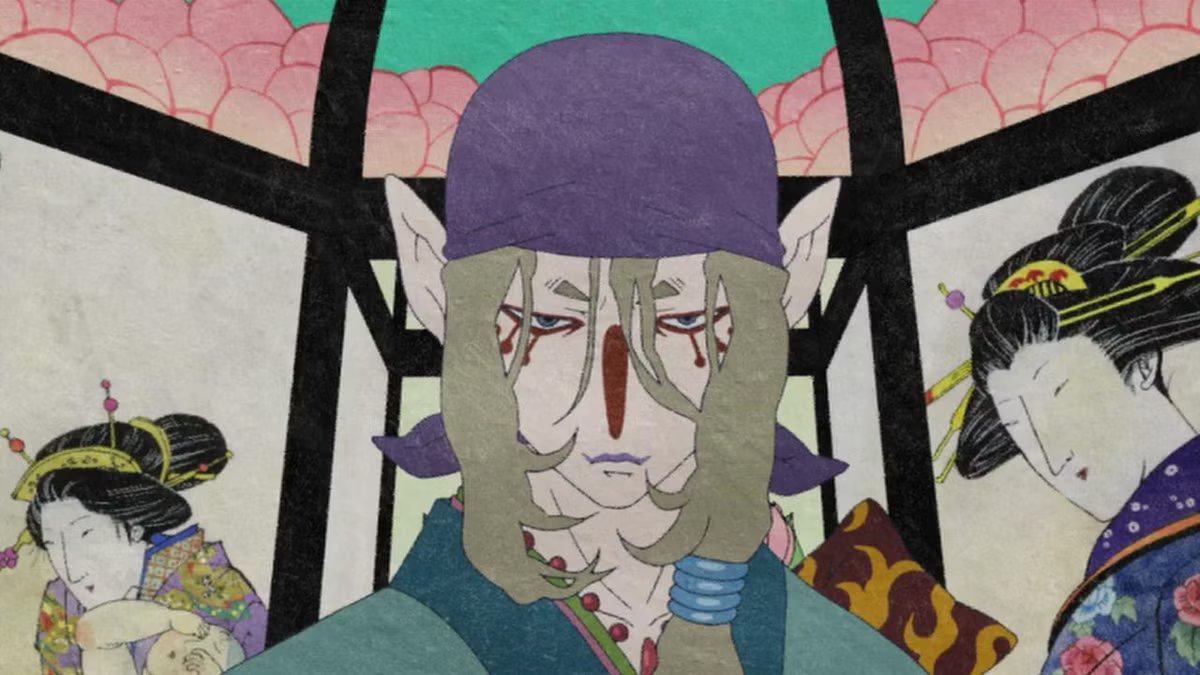
Have you heard of the 2006 anime anthology, Ayakashi: Samurai Horror Tales? It’s a collection of three stories that draw from the well of Japanese myth and cultural tradition. The first and second stories, “Yotsuya Kaidan” and “Tenshu Monogatari,” adapt classic kabuki plays about betrayal and forbidden love. The third entry, “Bakeneko” — loosely translated to Demon Cat — is an original tale about a mysterious cat monster with a vendetta.
Out of the three stories, “Bakeneko” is the most compelling with its engaging three-act play structure and vivid Ukiyo-e art style (a genre of Japanese woodblock prints). Perhaps this is why “Bakeneko” birthed the 2007 spin-off anime Mononoke, whose impressive 12 episodes are perfect for your next binge-watch.
Act One of “Bakeneko” introduces a nameless Medicine Seller whose mission is to encounter, fight, and annihilate various mononoke, or spirits born from the pent-up emotions of humans. Mononoke weaves interconnected tales about these encounters, where the Medicine Seller banks on his supernatural expertise to methodically exorcise these unnatural spirits.
This rinse-and-repeat strategy fits neatly into the rhythm of eccentric mystery-of-the-week episodes that draw from supernatural folklore with a touch of an inverted detective story (or howcatchem). Think of the Medicine Seller as the anime equivalent of John Constantine, but with the show’s impetus being the mystery surrounding his true goal or purpose.

Mononoke uses clumps of episodes to dive into the Medicine Seller’s varied adventures, allowing the 12-episode structure to maintain an engaging cadence. For instance, the first two episodes, titled “Zashiki-warashi,” focus on Shino, a pregnant woman who encounters spirits inside a haunted room at an inn. These spirits, however, protect Shino instead of harming her, prompting the Medicine Seller to get to the bottom of this mystery. This two-episode arc highlights that not all mononoke are inherently evil, and that some inexplicably bring about tragedy despite the instinct to remain benevolent. Our protagonist, however, must carry out his duty to exorcise, which morphs into the emotional heft of this arc.
The world of Mononoke has proven to be intriguing enough to warrant a trilogy of films. The first two installments, Phantom in the Rain and The Ashes of Rage, are breathtaking expressions of visual maximalism where competent storytelling doesn’t take a backseat. These movies, with a third playing now in Japan and on its way to international release, operate on the assumption that you’re intimately acquainted with the Medicine Seller and his modus operandi. The only way to avoid the feeling of being plunged headfirst into such a disorienting world is to explore the foundational Mononoke, which also serves as the aesthetic blueprint for the franchise.

Speaking of aesthetics, Mononoke builds its avant-garde visual identity by referencing the rich history of Japanese art and theater (primarily kabuki). This translates into elaborate makeup that draws attention to exaggerated features, intricate costumes, and dramatic exorcisms. A kaleidoscope of colors invades our senses while the escapades of the Medicine Seller unfold, making it difficult to look away from the screen. The result is a surreal anime that is unlike anything you’ve ever seen within the medium, which is reason enough to dive into this unique experience.
Mononoke is best suited for anyone with a taste for experimental anime, especially those who appreciate a murder mystery setting that indulges in the supernatural. Even if you’re just looking for something short to binge-watch, this beautifully stylized horror spin-off won’t disappoint.
Mononoke can be streamed on Netflix and Crunchyroll.
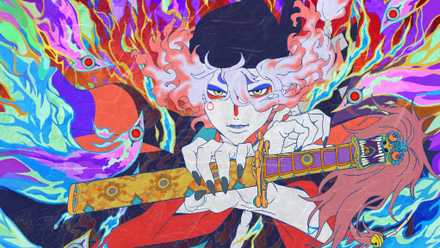
Netflix’s new Mononoke movie The Ashes of Rage puts the phantom in phantasmagoria
The Medicine-Seller returns for an even more epic and haunting mystery