dailynewsnblog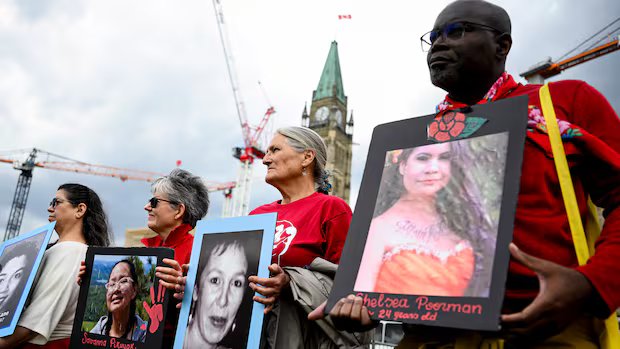

Listen to this article
Estimated 3 minutes
The audio version of this article is generated by AI-based technology. Mispronunciations can occur. We are working with our partners to continually review and improve the results.
A vigil on Parliament Hill Tuesday called for more action into the crisis of missing and murdered Indigenous women, girls and two-spirit people (MMIWG2S+).
Bridget Tolley, Families of Sisters in Spirit founder, led the event to mark the national day of awareness, or “Red Dress Day,” after the work of Métis artist Jaime Black.
“We as families, we want action,” Tolley, who is from Kitigan Zibi Anishinabeg, told attendees.
“No more studies, no more recommendations, no more inquiries, no more commissions. It’s time for action.”
According to a 2022 Statistics Canada report, more than six in 10 (63 per cent) Indigenous women have experienced physical or sexual violence in their lifetime.
This year also marks 10 years since the National Inquiry into Missing and Murdered Indigenous Women and Girls began and seven years since the release of its final report.
“We’ve been here for 20 years and we’re still calling for truth and accountability,” Tolley told reporters.

Tolley’s mother Gladys was killed in 2001 when she was hit by a police cruiser near her home in Kitigan Zibi in Quebec.
“I don’t want to be here, but I have to be here because somebody needs to be a voice for our missing and murdered Indigenous women,” Tolley said.
Tolley was also one of 400 people who signed an open letter last week to members of the government, saying they don’t believe increasing funding to national MMIWG2S+ organizations will meaningfully address the crisis.
National organizations for MMIWG2S+ held a news conference April 8 calling on the federal government to provide sustained long-term funding.
“We were all shocked to find out they were asking for more money without even addressing or talking to us, or speaking to us,” Tolley said.
Tolley said families, who are doing a lot of the work searching for lost loved ones on their own, often without support from local authorities, should have a say in where funding for MMIWG2S+ goes.
The letter was addressed to Prime Minister Mark Carney, the ministers of Indigenous Services and Crown-Indigenous Relations, Conservative Party Leader Pierre Poilievre and Conservative MP and Indigenous Services critic Billy Morin.
Rebecca Alty, minister of Crown-Indigenous Relations, told CBC News that the government had received the letter and is reviewing it.
Other family members of MMIWG2S+ and local advocates also spoke.
Mercedes Côté, youth representative for the Algonquin Anishinabeg Nation Tribal Council, said she wants to see more immediate action taken when women go missing.

“[I want a] quick response and to be taken seriously in this situation, because a lot of the times I feel like we’re swept under the rug, or we’re kind of like a second thought,” she said.
Côté, 20, said missing and murdered Indigenous women from her own community of Kitigan Zibi have had an impact on her.
“Growing up in a First Nations community, we’re like a big family,” Côté said.
“We’re close, tight knit, like you see everyone every day. So when one family experiences a loss, the whole community also feels that loss. To be able to speak as an Anishinabeg Algonquin woman, I want to be able to share my voice and hopefully make an impact.”