dailynewsnblog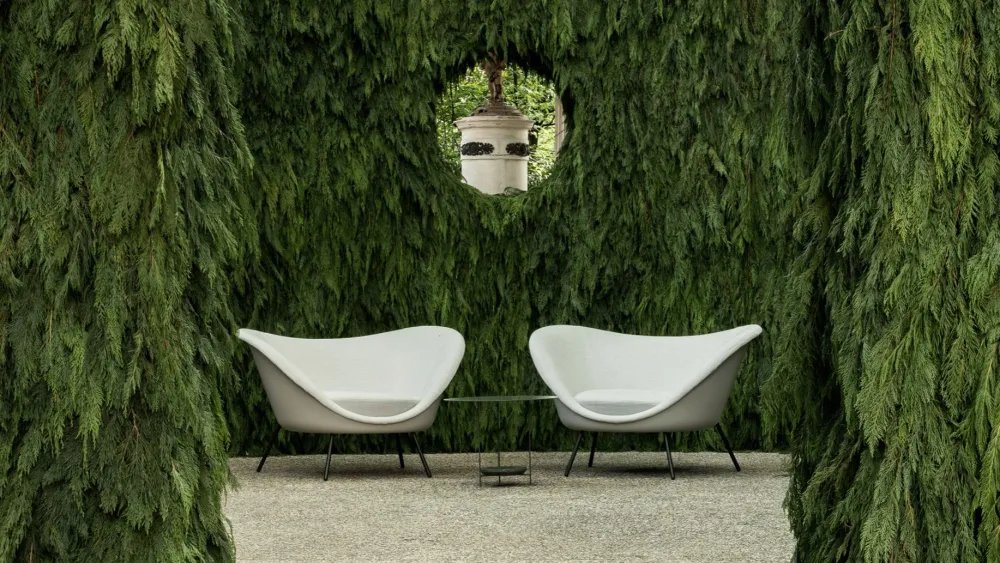
MILAN — Despite the shadow cast by war, and the increases in airfare and lodging, more than half a million people flocked to Milan to catch a glimpse of the latest in luxury design.
“This is the worst fair for people with ‘FOMO’. If you went to something you were always worried you missed something,” said Adrian Duenas, chief executive officer of Houston’s home decor concept firm BeDesign, who said the decision to start after collectible contemporary art fair Miart and end before the Venice Biennale is underway made Milan Design Week an essential stop on the art and design calendar.
“Finally the design woke up after being dead. Milan Design Week has become the most important design event of the world,” he said.
On Sunday, Milan Design Week and anchor event of Salone del Mobile.Milano wrapped up with over 1,900 exhibitors. The city hosted more than 1,000 events between April 20 and Sunday. Italian press reports cited over 500,000 visitors to the city in total, while the trade show recorded a 4.5 percent uptick and unexpected rise in visitors to 316,342 versus 302,000 in 2025 from 167 countries. Sixty-eight percent of the attendees were from abroad, dominated by representation from China. The number of visitors from the U.S. was up 8.8 percent versus 2025.
“It was one of the most exciting design weeks and it just keeps getting better and ever more important to attend. It’s far bigger than ‘the show’ itself of course; a continuation of great exhibits on and off show sites,” Mick de Giulio, founder of de Giulio design and acclaimed American designer, told WWD.
The Not to Be Missed Factor
Notable events included the star-studded opening of the RH Milan, The Gallery on Corso Venezia; the opening of Molteni&C’s garden installation named “Responsive Nature” by Elisa Ossino Studio; Poliform’s takeover of Palazzo Clerici; Louis Vuitton’s Objets Nomades showcase, and Demna’s first design exhibition for Gucci, which unfolded in the 16th century Chiostri di San Simpliciano. There was also a monumental deconstructed yurt designed by Kulapat Yantrasast and placed in the courtyard of Palazzo Citterio around the exhibit “When Apricots Blossom,” an artful but solemn recognition of the decades of drought that have plagued Uzbekistan since the 1960s.

Bethan Laura Wood’s textile installation inspired by nomadic Uzbek yurts for the “When Apricots Blossom” exhibit.
Courtesy of the Uzbekistan Art and Culture Development Foundation (ACDF)
Another major draw to Milan Design Week are the private homes that open their doors, ranging from the grandiose settings of the private apartment designed by Osvaldo Borsani, which hosted the Interni Venosta installation by Emiliano Salci and Britt Moran, and the Artemest L’Appartamento that spanned the Palazzo Donizetti, to even more intimate, niche settings like the Alcova showcase set inside a forgotten World War I military complex, as well as the home of Mexican designer José María Balmaceda the inside of which he cleared out his own furniture to showcase his new rugs, tapestries, vases and other objects.

A rug by Balmaceda.
Omar Sartor
The Convivial Home
Inside the fair and beyond, both de Giulio and Duenas noted a continuation of the lifestyle theme with kitchens, where the kitchen was imbued and in conversation with the rest of the home.
Top new kitchens were characterized by soft edges, as was evidenced by Antonio Citterio’s latest Kora design for Arclinea and Vincent Van Duysen’s Physis model, which introduced an elegant and contemporary vision, innovating kitchen shapes with rounded edges for Molteni&C.

The Physis kitchen by Vincent Van Duysen for Molteni&C.
Courtesy of Molteni&C
Sculpted and Rounded Forms
Houston-based interior designer Lauren Rottet said rounded edges dominated. “I thought this has been a trend in kitchens for about four years now….the big commercial lines are catching up for large run production,” she noted. Other standouts included Sebastian Herkner’s sculpted Stock’n Roll console for Poltrona Frau, which functions both as a vanity table with an adjustable round mirror and as a small desk.
Soft, rounded curves were also prominent among furniture designs like the Acerbis Palla armchair created by Claudio Salocchi in the 1960s and this year reinterpreted in new comfort-driven materials by Francesco Meda and David Lopez Quincoces. Meda also designed the Palma seating system composed of a sofa and an armchair for Meritalia defined by winged arm rests.

Palla chair by Acerbis.
Acerbis
Dadaist designs envisaged for comfort first included Patricia Urquiola’s Ardy sofa system for Cassina, outfitted with soft, voluminous shapes, featuring visible stitching that creates a graphic pattern and the typical texture of a duvet.
In the same vein, artist Faye Toogood’s latest Lie Low bed for Poltrona Frau was also influenced by organic forms and her own drawings. Her latest marks the extension of a partnership that began with the Dadaist squash chair.

Lie Low Bed by Faye Toogood for Poltrona Frau.
Courtesy of Poltrona Frau
Hospitality and Contract-born Projects Abound
To capitalize on the boom in hospitality and contract projects worldwide, hotel-native companies and projects were on the rise, evidenced both at the fair and around town.
Italy’s Oniro Group, which owns the licenses to produce Roberto Cavalli Home Interiors, Gianfranco Ferré Home and Etro Home Interiors, dedicated extra space this year to its Interior Design Service unit, which is devoted to its in-house Jumbo line that creates bespoke solutions. The firm also showcased the new designs for Jacob & Co., its latest partner.
The company said the design service is well positioned for contract and hospitality projects because it combines a global project approach with strong customization capabilities. “It works alongside architects and interior designers, supports both monobrand and multibrand solutions, develops samples and renderings for presentation, and coordinates a wide network of partner firms and Italian craftsmen through to installation,” the unit’s general manager Thomas Munafò told WWD.
Last year the New York City-based jewelry and watchmaker and Oniro Group teamed for the development of Jacob & Co. Beachfront Living by Ohana, a project curated by Ohana Development, a major player in the Middle East’s luxury real estate sector. In 2024, Etro unveiled its collaboration with Oniro for the entire manufacturing and supply of customized products for its first residential project, a tower in Istanbul.

Etro Home
Courtesy of Oniro Group
Imperfettolab showcased its designs for the luxury Magistero five-star hotel in Malta for the Iniala Group that will be launched in the fall of 2026.
With Magistero, designer Verter Turroni introduced his first holistic vision of hospitality, translating his sculptural language into habitable spaces. Developed with the Iniala creative team-Greta Apap Bologna, Keith Pillow and Mark Weingard, the project was enhanced by lighting design from Davide Groppi.

Imperfettolab showcased its designs for the luxury Magistero 5 star hotel in Malta for the Iniala hospitality group.
Imperfetto Lab
Across town, hospitality project specialist brand Extra Ordinario, which was originally founded in 2019, debuted its first collection, “Elemento,” in collaboration with New York and Toronto-based studio Yabu Pushelberg.
Founded by Alessandro Toni and Matias Alexis Baldassarri Aragona in the Marche region, the firm bridged the gap between international design and culture, evolving from a production-based firm into an integrated platform where design, engineering, and execution align.
“For Extra Ordinario’s first collection, Elemento was born from this notion of stripping an idea back to its truest essence. The name is a reflection of that clarity. Each piece is composed of a few, very intentional design elements — nothing superfluous, nothing extra. The result is a collection that feels quiet, grounded, and incredibly easy to live with,” said George Yabu, cofounder of Yabu Pushelberg.

Elemento by Yabu Pushelbergo for Extra Ordinario.
Courtesy of Extra Ordinario
Yabu explained that Elemento explores essential forms and techniques and incorporates materials like wood, leather, textile, stone, and glass — and from refined construction, where form and material engage in dialogue through carefully studied proportions and precisely defined spaces.
Nilufar gallery founder Nina Yashar finally showed off the capacity of her in-house line Nilufar Editions collection with the Nilufar Grand Hotel concept, an exhibit that transformed Nilufar Depot into a hotel space where collectible design redefines the art of hospitality. Nilufar Editions was initially launched in 2023 and this season involved sleek furnishings and accessories interwoven with collectible vintage and contemporary designs.
“Deep rich ’40s colors from greens to blues to yellows and reds all with that yummy irresistible ’40s look where pure color is combined with a touch of gray to give that ‘years of age’ look – deep and dreamy,” Rottet commented after visiting the Depot. Her firm Rottet Studio is designing the interiors for the Ritz-Carlton Houston — the brand’s first branded residences in the city and hotel, which the studio said are slated for completion in the fall of 2029. Rottet Studio has also worked on the Ritz-Carlton Dallas and the Ritz-Carlton Los Angeles in addition to a global roster of projects like the spa, ballroom and other meeting spaces for the new Wynn Al Marjan Island in the United Arab Emirates.

Furnishings from Nilufar Editions from the Nilufar Grand Hotel installation.
Ejandro Ramirez Orozco
The collectible design space within the fair, Salone Raritas, introduced Zaza Maizon, a contemporary Saudi-based furniture brand by A1 Architects, showcasing impactful pieces fit for hospitality spaces.
One of them was Gem of the Peninsula, a metallic aqua-colored sculpture that conjures the mountains and valleys of the Arabian desert.
“We are the first Saudi company since the beginning of Salone to participate in the fair,” contended architect and designer Abdulaziz Khalid Al Tayyash, who said members of the royal family are among the clients for his pieces — which are produced in small quantities of under six a year.
Functional Meets Artful
“Everybody made a huge effort; a lot of lacquer and shiny finishes, and earth tones. Functional art was a big surprise, lighting and chairs and things that can be part of an environment,” Duenas added, referring to B&B Italia’s stand at Salone del Mobile 2026, which featured the reissue of Richard Sapper’s Nena foldable and hangable armchair. This year B&B Italia returned to the fair after a 25-year absence, in celebration of its 60th anniversary, alongside new contributions from Ronan Bouroullec and Jasper Morrison, Antonio Citterio, Vincent Van Duysen, and Michael Anastassiades, along with and the limited-edition Catilina chairs by Luigi Caccia Dominioni.

Richard Sapper’s Nena armchair for B&B Italia.
Courtesy of B&BItalia
The 64th edition of the fair, which opened at the Fiera Milano Rho trade grounds on April 21 and closed Sunday, included two biennials — kitchen expo Euro Cucina and the International Bathroom Exhibition. The bathroom show, which extended beyond the fair and into awe-inspiring exhibitions across town, also conveyed the bath’s spa potential within the home and in hospitality spaces.
The Outlook

Versace Home’s Hestia chair.
Courtesy of Versace Home
The 65th edition of Salone del Mobile.Milano will take place April 13 to April 17, 2027, with its new project Salone Contract 2027 meant as a way to engage with a global market worth 68 billion euros. Italy’s federation of woodworking and furniture industries FederlegnoArredo said the value of the wood supply chain, which includes most Italian furniture firms, reached 52.3 billion euros in 2025.
Feltrin, like leaders of many firms here, is cautious on the outlook for 2026 and performance in the Middle East. Many are closely monitoring the situation with the ongoing war still unresolved.
“If the crisis subsides or is resolved, we could consider 2026 to be on track and more or less aligned with 2025. However, it’s clear that for now, we’re just observing, as there’s very little we can do to influence it,” Feltrin told WWD.