dailynewsnblog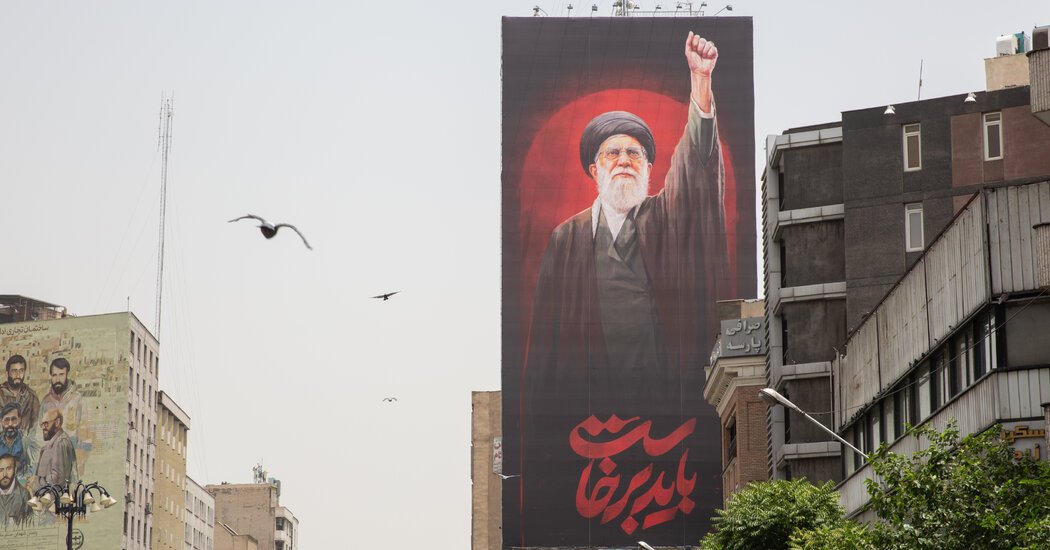


Iran’s armed forces on Wednesday said that they had attacked U.S. military sites in Bahrain and Kuwait, after the United States carried out airstrikes against several targets in Iran and reimposed sanctions on Iranian oil sales.
The Pentagon said its strikes were in response to Iranian attacks on three commercial ships in the Strait of Hormuz. The renewed hostilities put extreme pressure on negotiations between Washington and Tehran for a broader end to the fighting, and again threatened to disrupt the resumption of energy supplies transiting the strategic waterway.
The Khatam al-Anbiya Central Headquarters, part of the Iranian military, called the U.S. strikes in Iran’s south an “overt act of aggression” and warned that Iran would “deliver a crushing response.” In remarks carried on Iranian state media on Wednesday, it also warned the United States against interfering in Tehran’s management of the Strait of Hormuz.
Hours later, Iran’s Islamic Revolutionary Guards Corps said that it had targeted 85 U.S. military sites in Bahrain and Kuwait. The Iranian military also shot down an American MQ-9 drone in the attack, the Guards Corps said in a statement published on state media.
The Kuwait Army said its air defenses were intercepting hostile missiles and drones, without specifying the origin of the attack.
U.S. Central Command had earlier said on social media that it had hit more than 80 targets in Iran, including air defense systems, command and control networks and anti-ship missile capabilities.
The U.S. military said it had also targeted more than 60 Islamic Revolutionary Guard Corps small boats in and near the strait “to degrade Iran’s ability to continue attacking international commerce flowing through the international trade corridor.”
Tehran has not claimed responsibility for Tuesday’s attacks on commercial ships, including a Saudi oil tanker and a Qatari liquefied natural gas carrier in waters off the coast of Oman.Mohammad Bagher Ghalibaf, Iran’s top negotiator and the speaker of its Parliament, on Wednesday accused the United States of major violations of the preliminary accord between Washington and Tehran that had reopened the Strait of Hormuz. “The era of bullying and extortion is over. It leads nowhere. We don’t fold,” he wrote on social media.
Negotiations between Iran and the United States have been paused until after the dayslong funeral ceremonies for Ayatollah Ali Khamenei, the supreme leader who was killed on the first day of the U.S.-Israeli attack on Iran.
President Trump, who is in Turkey along with more than 30 other world leaders for a NATO summit, on Tuesday again accused the United States’ European allies of not doing enough to support Washington in its war against Iran.
Here’s what else to know:
Energy prices: The cost of oil rose nearly 5 percent after the U.S. and Iranian strikes, to above $76 a barrel, its highest level in two weeks. That is significantly down from its peak during the worst of the fighting, but above its prewar price of around $72 a barrel. Read more ›
Iran Sanctions: The Trump administration on Tuesday revoked a waiver allowing the sale of Iranian oil after the ship attacks. The sanctions exemption was a major concession in the temporary cease-fire reached last month. Read more ›
Khamenei’s Funeral: The body of the slain supreme leader was taken to Qom, the center of Shiite religious education in Iran, for official prayers and a street procession, after three days of public mourning in Tehran. Read more ›