dailynewsnblog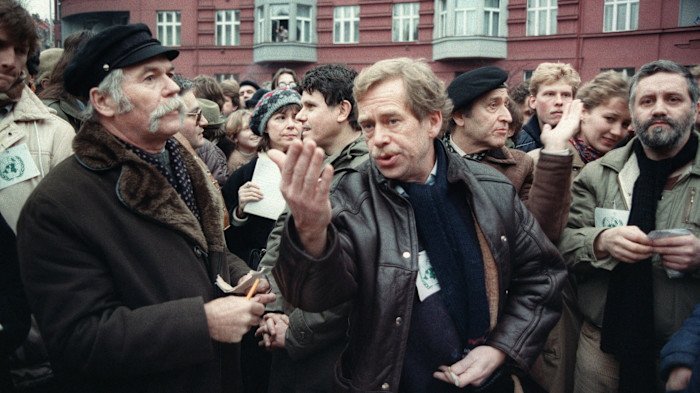
Stay informed with free updates
Simply sign up to the Geopolitics myFT Digest — delivered directly to your inbox.
Václav Havel’s essay “The Power of the Powerless” is probably not a set text in many, if any, high schools around Europe. It should be. A study of the importance of truth and reason in the face of reality-denying forces, it is a buttress to the edifice of Europe’s Enlightenment tradition. It is also a powerful reminder of half-forgotten political memories of those who lived behind the Iron Curtain and whose role in enriching Europe’s politics has yet to be given its due.
At the World Economic Forum in Davos, Canadian prime minister Mark Carney invoked Havel’s parable of the greengrocer who displays a “Workers of the world, unite!” sign in his shop window — not because he believes in its political message, but to live a “tranquil life”. Havel’s point is that when everybody pretends to consent, they give reality to the system that oppresses them. This is the case for dissent: to make the system vulnerable like a little boy does a naked emperor.
Many have applauded Carney’s plea “for companies and countries to take their signs down” — that is, to stop the pretence. But we are likely to see very different interpretations of what this entails. In rich countries, it will be to admit that they and the US are no longer on the same team, and must find ways to protect liberal democratic values without America.
For much of the so-called global south, however, and in particular for emerging middle powers, no longer “living within the lie” may mean something quite different. Many of them have long chafed against a “rules-based” order they felt made some countries more equal than others. There were good reasons to feel that way, from the rich world’s early devil-take-the-hindmost approach to Covid vaccine distribution to the wildly inconsistent application of international law to different conflicts.
From this perspective, ending the pretence means dropping one’s restraints. In addition to relief at the end of hypocrisy, some countries may welcome an amoral take on the global order. Rather than pushing for the rules to be applied with truly equal force to all, they will be tempted by the immediate freedom that comes with unashamedly pursuing one’s national interests.
This is understandable. But they risk finding that that freedom is worth little if another, stronger country has views about how they should exercise it. In the absence of a hegemon to co-ordinate or enforce the rules of the game — however selectively — the naked pursuit of national self-interest is at best inefficient, at worst a recipe for conflict or subjugation. Even if you are not interested in the superpowers, they will sooner or later be interested in you. Without even the veneer of rules to appeal to, all that is left is power.
Canada itself illustrates the difficulty. Carney’s Havelian appeal came the week after he signed a partnership with China. There are good reasons to have one. But in the context of China’s support for Russia against Ukraine, it is hardly “calibrating our relationships so their depths reflect our values”, as he put it in Davos.
Disorder or superpower dominance are both likelier outcomes than a “spontaneous order” of middle powers organised by occasional and varying overlaps of interest — unless such coalitions can be firmed up by institutional arrangements and a strong community of values. Only these make long-term relationships so obviously beneficial as to overcome the yearning for seemingly unfettered sovereignty — the flames of which the Trump administration is energetically fanning.
Such an alternative — a reconstructed but still liberal and rules-based order — can only be offered by the EU. It alone is big enough to be a pole of attraction. It still cares for the values the old order aspired to, at least in name. It embodies the order in how its members share their sovereignty.
But it will never serve as such a global anchor until it takes seriously the effort that this would entail. It means offering more tightly integrated relationships with countries that still think a liberal rules-based order — one that works — is their best hope.
Instead, the EU itself is tempted to give up the pretence without taking responsibility for the system. Just in the past week, the European parliament triggered a judicial review to delay a new trade deal with South American countries, and the commission suggested it would abandon the most-favoured-nation principle at the core of the world trading system.
The point of telling the truth is not to throw real values out with the pretence, but to start taking them seriously again. Havel, who became his country’s post-communist president, knew that dissent is essential but only the start.
martin.sandbu@ft.com