dailynewsnblog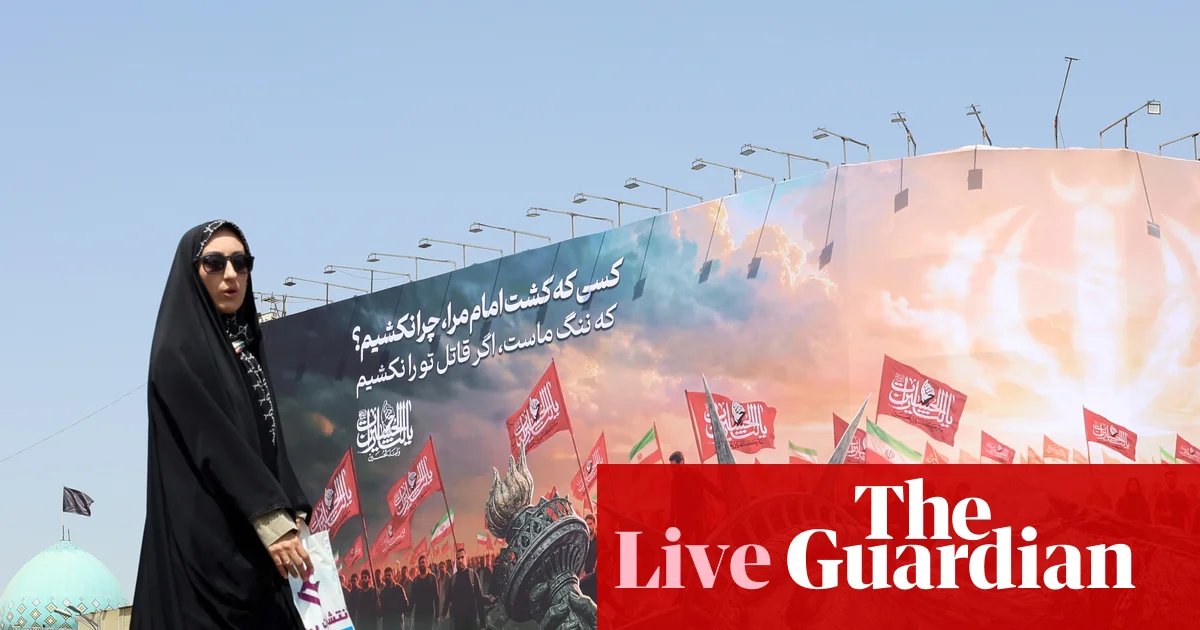
Iran and Oman make progress on a deal to reopen the strait of Hormuz, officials say
Iran and Oman have made progress toward a deal to reopen the strait of Hormuz, a potential breakthrough that could help end the war in the Middle East, regional officials have said.
Under the emerging agreement, ships would enter the Persian Gulf through an Iranian-controlled route and exit through a route controlled by Oman, with service fees charged for providing security and preserving the maritime environment, two regional officials told the Associated Press.
They said negotiations are still underway and that the final agreement could take a different form. They said any deal would be linked to lifting the US blockade on Iran’s ports.
The officials spoke on condition of anonymity to discuss the sensitive negotiations unfolding behind closed doors.
Key events
The US military has exhausted almost 80% of its interceptors for a key missile defence system as senior US military commanders are warning that the Pentagon’s munitions stockpile is “dangerously low”, CNN is reporting, citing multiple sources familiar with the matter.
Two sources familiar with the latest inventory report have told CNN that stockpiles of key air defence systems have been particularly depleted during the war against Iran, and the US military has burned through nearly four-fifths of its THAAD missile inventory and roughly half of its Patriot interceptors since the start of the war.
The US military has also used “virtually all” of its highly accurate long-range, surface-to-air weapons during the conflict, a source familiar with recent internal Pentagon reports told CNN. Reuters first reported on those concerns about US stockpiles of long-range strategic missiles.
Per CNN’s report:
The recent warnings about munitions shortages – coupled with other intelligence presented to Trump about the potential negative effects of striking Iran’s critical infrastructure, including energy-related targets, and concerns voiced by Gulf countries – have been compelling enough to convince some of Trump’s most hawkish advisers there were was reason to call off planned operations over the weekend, the sources said.
Trump on Friday was planning to move forward with massive strikes, and defense secretary Pete Hegseth received the final ‘go ahead’ order on Friday, according to a senior Trump official.
But Trump decided to back off after talking with Middle East allies on Saturday, who told him they were afraid of Iranian retaliation, specifically retaliatory attacks on their energy infrastructure, according to the official. Trump agreed to hear them, and Iran, out. He subsequently told Hegseth to stand down, for now, but is not taking the planned strikes off the table for a future date.
Donald Trump and Qatar’s emir Sheikh Tamim bin Hamad al-Thani discussed efforts to narrow differences between Washington and Tehran and improve the prospects for a lasting settlement during a phone call, Qatar’s emiri office said.
It said the emir stressed the importance of dialogue and adherence to the US-Iran Memorandum of Understanding of mid-June that provided for the immediate cessation of military operations.

Patrick Wintour
Masoud Pezeshkian, Iran’s president, has been forced to deny claims that he has repeatedly threatened to resign as he battles hardline factions opposed to reaching a settlement with the US over the strait of Hormuz.
The US and Europe hope a deal is imminent to reopen the strait and they are putting pressure on Oman to accept a temporary agreement that officials in Muscat fear will leave Iran retaining near permanent dominance of the vital oil shipping channel. Ships would enter the strait in a route close to Iran, but leave on a route that passes through Iranian and Omani waters.
But far from being feted over an imminent diplomatic victory, Pezeshkian was instead forced to deny that he had repeatedly offered to resign, verbally and in writing, during a television interview marking his second anniversary in the job.
Pezeshkian accused some of wishing to create a rift inside Iran and said: “If I want to resign, I will officially announce that I have resigned. I will not resign, I will stand.”
Coast guards rescued the crew of an Indian-flagged commercial ship that sank in the Red Sea on Tuesday after an attack, a local official in the Yemeni city of Mokha said.
Yemen’s internationally recognised government blamed the Iran-backed Houthi rebels for the attack, according to the official Saba news agency.
Last month, the Houthis declared a Red Sea maritime blockade of Saudi Arabia, the world’s largest exporter of crude, and have since claimed several attacks on oil tankers and infrastructure.
All of the MSV Faize Noore Oliya’s crew members, comprising 13 Indian nationals and one Yemeni, were rescued after the vessel came under attack south of the port city of Hodeida, the official from Mokha said.
Indian shipping minister Sarbananda Sonowal said on X the vessel was “hit by a projectile near Yemeni waters”.
“India strongly condemns this unprovoked attack”, he added.
Qatar’s Emir and president Donald Trump discussed efforts to reduce escalation and converge viewpoints between the US and Iran, the Emir’s office said.
Netanyahu: No Israeli withdrawal from Gaza until Hamas disarmed
Israeli PM Benjamin Netanyahu said Israeli forces will not withdraw from their current lines in Gaza until Hamas has completely disarmed.
In remarks on social media, Netanyahu suggested there were differences between Israel and the Trump administration over a recent deal announced to disarm the militant group.
The agreement called for Hamas to begin disarming and for Israel to halt its strikes and begin withdrawing from Gaza. It was part of an October ceasefire agreement that ended major military operations but has stalled on other fronts.
Netanyahu, who faces a tough battle for re-election in October, said that disarmament should come first, and that Israeli forces would continue to “do whatever is necessary to protect themselves, our territory, and our citizens.”
He added the Trump administration “sent us a draft. We did not agree. It is not our draft. We sent our comments.
“This is our position. We stand firm on our interests, I believe both wisely and resolutely.”

Haroon Janjua
“It doesn’t matter who gets the credit for making the deal; all we ask is that the sea be safe again. Our only means of earning a living is fishing, and each day that the sea remains tense is another day without an income,” Ahmed, a 52-year-old fisherman near the strait of Hormuz, told the Guardian.
“The sea has provided livelihood for our families for generations. We hope that the politicians make a quick decision so we can resume our fishing without fear of attacks, limitations, or being caught up in the middle,” he said.
It’s not only the large oil companies that get hurt when the strait is closed or dangerous, Ahmed said. “Fishermen such as ourselves have everything taken away from us. We hope that this deal will restore peace in the strait.” He added: “Our fishing nets have been empty not because there aren’t any fish, but because many of us are afraid to go out into the sea.”
Any agreement formalising Iran’s control of the strait of Hormuz would mark a significant strategic victory for Tehran. For that reason, the United States could seek to block a deal by refusing to lift its blockade of Iran’s ports.
A reminder that the critical waterway was an open international waterway before the US and Israel attacked Iran on 28 February.
A US official familiar with the negotiations told the Associated Press on Tuesday that any “temporary” routes established through the strait would not involve approvals by Iran or charges.
The official, who was not authorized to comment publicly and spoke on condition of anonymity, said the US remains committed to returning to the status quo in which “no party controls the lanes or the ability to transit through them”.
That’s in line with what Donald Trump said on Monday. The US president told reporters in the Oval Office that he’s opposed to tolling in the strait (unless it’s the US). “I’m not going to let them charge,” Trump said. “Anybody’s going to charge, we’ll charge.”
Further to our earlier post citing regional officials, Iran’s foreign ministry spokesman Esmaeil Baghaei has said that Iran is continuing negotiations with Oman aimed at ensuring the safe flow of traffic through the strait of Hormuz.
As cited in Iranian state media, Baghaei said discussions focused on designating safe inbound and outbound lanes while protecting both countries’ sovereign rights and national security interests.
“Iran is working with Oman to develop the necessary mechanisms for future arrangements governing the management of maritime traffic through this strategic waterway,” he said, adding that the talks have been assessed positively at both technical and political levels.
New round of US-facilitated Israel-Lebanon talks have begun, says US state department
The latest round of US-facilitated talks between Israel and Lebanon began on Tuesday in Rome and will continue through Thursday, US state department spokesperson Tommy Pigott has said.
“These discussions bring together technical teams from both governments to advance full implementation of the Trilateral Framework, including the pilot zone process, verified disarmament of Hizballah and other Iran-backed security threats, redeployment of Israeli forces from southern Lebanon, and laying the ground for a comprehensive peace and security agreement,” Pigott wrote in a post on X.
He added: “The United States remains fully committed to supporting both governments as they carry this process forward in a manner that delivers lasting security for both countries, eliminates security threats to Israel, and restores Lebanese state authority throughout the south.”
A reminder that at negotiations in Washington in June, Israel and Lebanon agreed to a framework deal that involves the disarmament of Hezbollah, a gradual withdrawal of Israeli forces from Lebanon’s south and the deployment of the Lebanese army to the region, starting in test areas known as “pilot zones”.
This week’s negotiations are the seventh round of US-mediated talks since Hezbollah drew Lebanon into the Middle East war in March with rocket fire at Israel in support of its backer Iran.
Israel responded with heavy airstrikes and a ground invasion that has killed more than 4,300 people in Lebanon.
The day so far
Iran and Oman have made progress toward a deal to reopen the strait of Hormuz, a potential breakthrough that could help end the war in the Middle East, regional officials have said. Under the emerging agreement, ships would enter the Persian Gulf through an Iranian-controlled route and exit through a route controlled by Oman, with service fees charged for providing security and preserving the maritime environment, two regional officials told the Associated Press.
US secretary of state Marco Rubio said there has been progress made in discussions with Iran and Oman on getting more ships through the strait of Hormuz but no final agreement has been reached. “There’s been progress made in those talks, but not finality yet. We’re hoping that will happen very shortly,” Rubio told reporters at the State Department.
The US treasury secretary, Scott Bessent, said Washington could reach a deal with Iran by tomorrow to reopen the strait of Hormuz. “We are in talks with the Iranians, and I think there is a chance we may have a deal today or tomorrow to open the strait and move towards a more normalised position in this conflict,” Bessent said in an interview with CNBC.
Qatar’s foreign ministry said efforts to reach a diplomatic solution between the US and Iran were “ongoing”, despite conflicting statements from Tehran and Washington over whether negotiations had resumed. “We can confirm that the efforts are still ongoing with all parties,” the ministry spokesperson, Majed al-Ansari, told reporters at a briefing today.
Iraq exported over 30 million barrels of crude oil in one month through the strategic strait of Hormuz, data from the maritime tracking firm Kpler showed on Tuesday. Before the Middle East war, which choked shipments through the vital waterway, Iraq produced around four million barrels per day, and exported an average of 105 million barrels per month, mostly from its Basra oil terminal via Hormuz.
Donald Trump has criticised oil companies for “making too much money” from the global energy market disruption caused by his war on Iran. Brent crude had been trading at about $70 (£52) a barrel before the first US-Israeli strikes at the end of February, but by the end of April it had soared as high as $126 and is now trading at about $85 a barrel.
Lebanese and Israeli negotiators have resumed direct talks in Rome, marking the seventh such meeting since the war between Israel and Hezbollah began in March. In televised remarks, Hezbollah’s leader, Naim Qassem, criticised the talks, saying they would bring “shame, humiliation and disappointment” to Lebanon and “successive concessions”.
A mass funeral was held in Gaza City on Tuesday for 112 Palestinians whose bodies were recovered nearly three years after Israeli warplanes flattened a residential block. Hundreds of people gathered as the bodies wrapped in Palestinian flags were laid in rows near the destroyed buildings before being carried on stretchers through a narrow street for burial in a nearby cemetery.