dailynewsnblog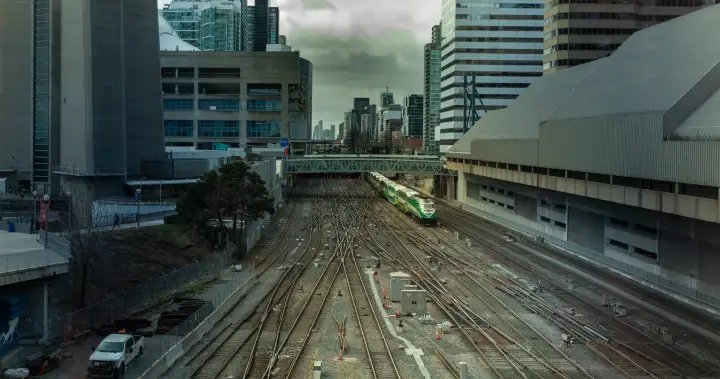
Ontario’s transit agency is writing off more than half a billion dollars it spent upgrading signalling infrastructure on the tracks around its main station in downtown Toronto after it overhauled its vision for how to expand GO train service.

As part of its annual report, Metrolinx said it would write off $504 million spent on signalling work for the Union Rail Corridor section of its track, which began in 2013.
The work had originally been designed to modernize and upgrade the key downtown Toronto portion of its commuter train network but, as its plans to expand train service evolved, the half-a-billion investment became redundant.
“The project was paused in 2023 when the risk of incompatibility was identified and while advanced layouts for the tracks were still being developed,” the Metrolinx annual report explained.
“Therefore, there was material uncertainty in prior years as to which specific assets would no longer have permanent service potential as this was dependent on the advancement of the GO Expansion track design.”
By 2026, the report said Metrolinx had finally gotten a better understanding of how it would expand the GO network and realized that large portions of the signal work it had done previously were effectively of no use.

Get daily National news
Get daily Canada news delivered to your inbox so you’ll never miss the day’s top stories.
The annual report said a “usable portion of the work” that had already been finished would be incorporated into the new expansion plans.
“The rapid progress of GO Expansion has fundamentally changed how Metrolinx plans to operate the GO Network going forward,” a spokesperson wrote in a statement.
“As planning advanced for the broader GO Expansion plans, it became clear that the approach to modernizing the legacy signalling system would not support the signalling requirements for the higher-frequency, two-way, all-day service in the most important corridors of the GO Network.”
The agency’s promise of two-way, all-day GO train service across Toronto and the surrounding area has been in flux for years.
In January 2024, Metrolinx announced it had accepted a proposal from ONXpress — made up of German train operator Deutsche Bahn and Canadian Aecon Concessions — to plan and run its rail system.
ONXpress was set to begin operating and maintaining GO train systems beginning in January 2025. The group was also tasked with offering better, faster train service as Ontario converts the GO network to run a more efficient, electric fleet.
The Ford government said the agreement with ONXpress — which was unveiled in 2022 — would “modernize and transform” the rail network.
Just months after they were supposed to have taken over GO operations, however, Deutsche Bahn and Canadian Aecon Concessions parted ways with Metrolinx.
The contract was supposed to run for 23 years.
Current Metrolinx CEO Michael Lindsay was appointed last year and has indicated a major shift in how the agency runs its work away from consultants and toward full-time staff.
He has also overseen increasingly common closures across the network, construction work he says is key to delivering the new, more regular GO train service.
The $500-million writeoff represents roughly one per cent of Metrolinx’s capital asset balance.
© 2026 Global News, a division of Corus Entertainment Inc.