dailynewsnblog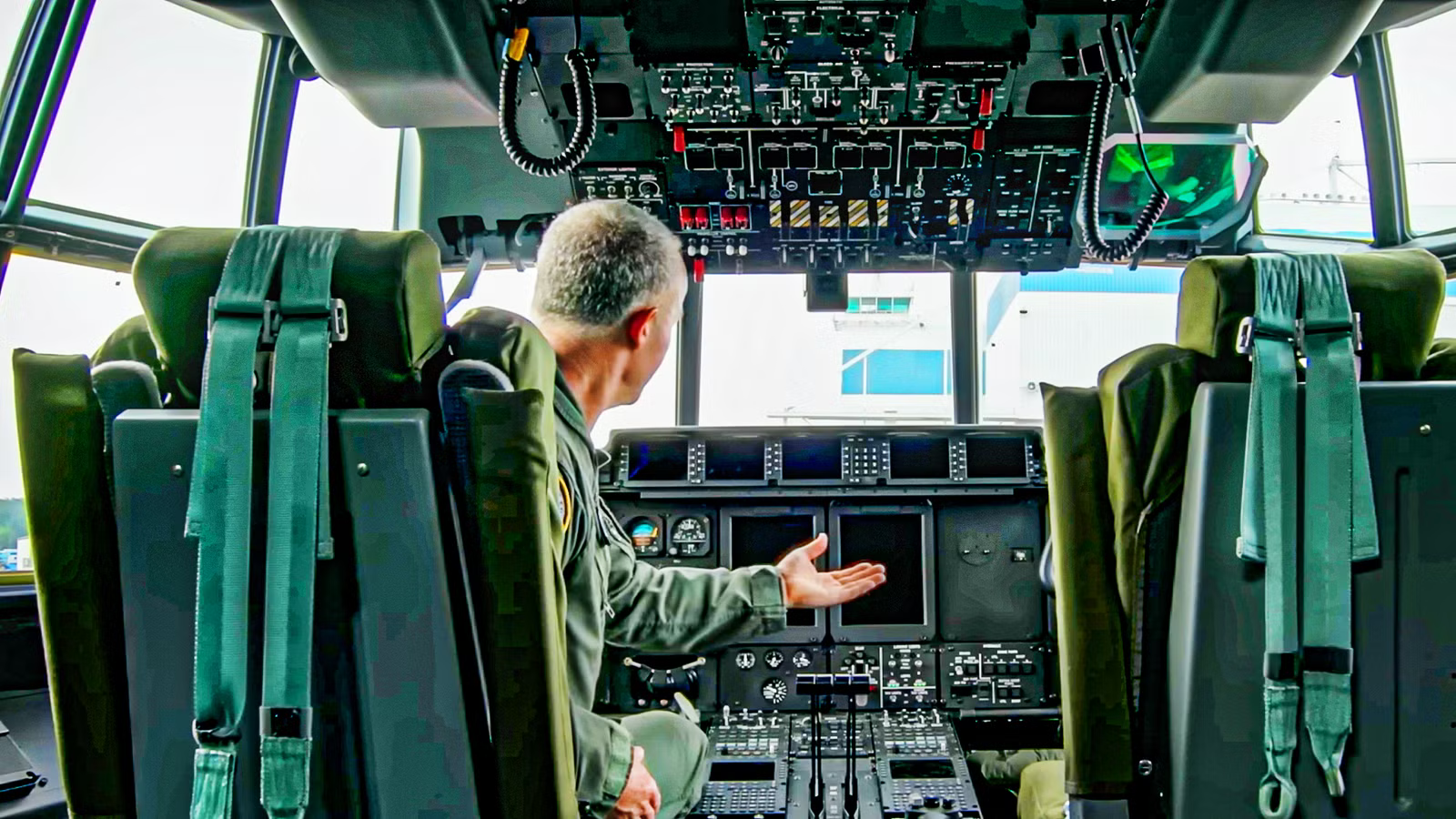
Merlin Labs is a US-based company developing systems that promise to solve the widely reported global pilot shortage in the form of autonomous flight systems. Its flagship product, the Merlin Pilot, is an artificial intelligence system that promises to safely operate aircraft from takeoff to landing using onboard software coupled with onboard sensors. It’s designed to be aircraft-agnostic, meaning that it can be integrated on any aircraft type in service, and it’s now headed straight for the United States.
Merlin has been testing the Pilot in New Zealand with the hope of introducing autonomous commercial flights by 2027 in the country. More recently, however, it withdrew its small aircraft Supplemental Type Certificate (STC) to instead focus on equipping large aircraft with Pilot, and it’s aimed squarely at the US market. The company has already won a contract from the USAF for AI co-pilot systems in collaboration with General Electric, so it will be coming to USAF cockpits. How much further Pilot will go is what remains to be seen.
Merlin, New Zealan & The US Air Force

The Merlin Pilot is an AI-powered system that is designed to fully operate aircraft from takeoff to touchdown. In addition to simply flying the plane, Pilot is also capable of managing aircraft systems, monitoring external environments, and even handling communications with air traffic control. The hardware and software that Pilot uses can be easily installed on any aircraft type, using onboard sensors and equipment without requiring a remote link to the ground, and it can hypothetically operate flights without any human intervention.
Merlin has been testing its Pilot system in New Zealand, partnering with Textron to evaluate Pilot on Cessna Caravans and Beechcraft King Airs. It’s logged hundreds of autonomous flights over the past few years and has been seeking certification from the New Zealand CAA. Using data from the testing, Textron is developing a fully autonomous version of the relatively new Cessna SkyCourier with no cockpit and a nose cargo door called the SkyCourier UX, and Merlin has been targeting 2027 for full certification in New Zealand.
Merlin Labs has secured a contract from the United States Special Operations Command (USSOCOM) for up to $105 million to integrate the Pilot into the Lockheed C-130J Super Hercules, as well as a separate contract to test the Pilot on the Boeing KC-135R Stratotanker. The project is proceeding through integration and initial testing, with flight testing to come soon. If the results are successful, then the company will install the system on the Super Hercules and Stratotanker fleets.
Moving Towards Large Aircraft

On September 9, 2026, Merlin made an unexpected announcement that it will be withdrawing its small aircraft STC application with the CAANZ. This is a deliberate change in strategy because Merlin is now pivoting its focus towards large aircraft, building upon its experience with the United States Air Force (USAF) programs. In addition, it will continue to use New Zealand as a base for testing and demonstrations, while commercial operations in the country are still a goal. However, Merlin’s new target is military transports, freighters, and airliners.
Merlin has specifically called out that there are over 7,000 large commercial transports in the US, and that the country could be short of over 30,000 pilots by 2032. It therefore argues that Pilot is necessary to safely address the pilot shortage and that the system will deliver massive cost savings for airlines. As it stands, the Pilot’s integration with the US military will see it serve as a co-pilot, while the planes will still feature one crew member onboard. However, the long-term goal is for these planes to be flown fully autonomously.
The purpose of Merlin’s system today within the USAF’s operations is to reduce crew workloads so that pilots may easily operate large aircraft on their own. The Pilot system is already flying today onboard smaller aircraft, and Cessna is actively working on a new derivative of the SkyCourier that fully takes advantage of the Merlin autonomous flight system. It’s a real product that will soon be flying on large USAF aircraft, but this also doesn’t mean that we’ll soon see single-pilot or autonomous airliners.
Merlin Pilot On Large Freighters

In May 2026, Merlin announced Condor, which is the Pilot system adapted specifically for commercial operations. It’s targeting the cargo market specifically, and the company has secured an MOU with World Star Aviation on commercial development frameworks while also signing an agreement with Israel Aerospace Industries (IAI) to advance autonomous technologies for Part 25 aircraft. While these are still very recent announcements, Merlin is serious about bringing its AI systems to commercial flight decks.
Hypothetically, these systems can be installed on any large commercial airliner, and Merlin itself is targeting in-service Airbus/Boeing types as potential opportunities. At first, Condor would work alongside full flight crews, but could then be used to eliminate the need for augmented crews on longer flights. Merlin aims to eventually enable single-pilot crews and for its systems to be capable of fully autonomous flights. Compared to a two-crew cockpit, Merlin’s systems would be far more economical for airlines, while integration costs would be surprisingly low.
Merlin Pilot Targeted Commercial Transport Types (Pipeline Opportunities) | |
|---|---|
Airbus A320 | Boeing 737 |
Airbus A321 | Boeing 767 |
Airbus A330 | Boeing 777 |
Of course, Merlin’s ambitious goals depend on the technology actually performing safely as promised. More importantly, however, Merlin’s autonomous systems can only be effective in achieving their full goals if regulators approve them, and that’s a major ‘if‘ considering that agencies like EASA and the FAA have generally been very resistant to the idea of trimming down flight crews any further. While this doesn’t prohibit aircraft from featuring Merlin systems, the main selling point of the product is that airlines can cut pilots out of the flight deck.
Regulators And Trimmed Flight Crews

FAA regulations require at least two pilots to be present onboard commercial flights using large aircraft, and it also prohibits extended Minimum Crew Operations (eMCO), which essentially has planes take off and land with two pilots while only one is present in the cockpit during cruise on long-haul flights. These flights currently require three or four pilots, with at least two always in the flight deck. The US has codified this regulation into law, essentially killing single-pilot operations in the country.
EASA, which also prohibits single-pilot operations in commercial airliners, recently performed a study on eMCO, and concluded that it would be unsafe with current cockpit technologies. This was particularly notable because Airbus was pushing for eMCO with its upcoming A350F freighter, which is set to enter service in the second half of 2027. However, EASA has shut the door on this for now, instead pivoting focus on boosting safety in existing two-pilot cockpits.
Upcoming Commercial Aircraft Types/Variants | Expected Certification Year |
|---|---|
Boeing 737 MAX 10 | Late 2026 |
Airbus A350-1000ULR | Early 2027 |
Boeing 777-9 | Early 2027 |
Airbus A350F | Second quarter 2027 |
Boeing 777-8F | 2029 |
Airbus NGSA (Next Generation Single Aisle) | Late 2030s |
Boeing NSA (New Small Airplane) | Late 2030s |
Airbus and  Boeing are both planning new narrowbody airliners to debut in the 2030s, but it’s less likely that they will prioritize single-pilot technologies for these programs since crew costs are lower on short-haul flights. As such, Merlin and its autonomous systems won’t result in crew size reductions for the foreseeable future. While we could certainly see the technology be integrated into modern airliners to improve safety, true single-pilot operations will remain a military test idea for now.
The Problems With AI Co-Pilots And Autonomous Aircraft

There are, of course, ethical concerns about placing more reliance on automated systems and artificial intelligence in the cockpit. In addition, aviation safety is fundamentally structured around redundancy, and using AI to replace one or both pilots creates a single point of failure. Beyond public acceptance and pushback from pilot unions, companies like Merlin arguably have to prove to regulators that their autonomous systems significantly improve safety compared to a two-man cockpit, rather than being ‘just as good’. Thus far, this hasn’t occurred.
Proponents for single-pilot operations like Merlin state that these technologies can alleviate the effects of the pilot shortage and deliver tremendous cost-savings to airlines. However, while a single-pilot airliner would be less expensive to operate, one factor that’s often overlooked is insurance. There are several aircraft types in service with FAA Part 135 operators that are certified for single-pilot operations, and yet, operators often staff them with two pilots anyways because insurance rates are significantly higher for single-pilot operations due to the added risk.
Single-pilot and autonomous aircraft systems are already here, but the real questions are whether they’re safer than a two-person crew for large commercial operations, if such an operation would even be cheaper for commercial operators, and if Merlin’s systems can deliver on their promises. As of now, regulators have said no to the first question, insurance providers have given mixed answers to the second question in the Part 135 world, while the USAF is testing the third question.