dailynewsnblog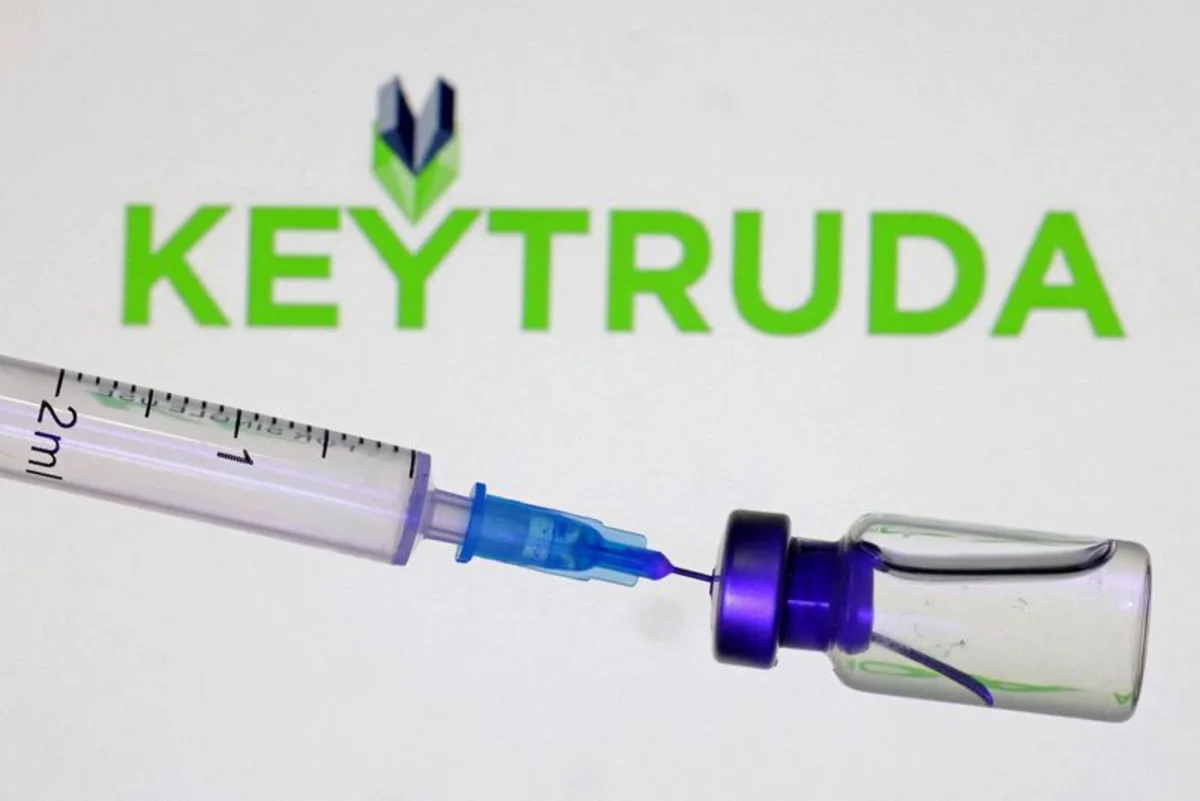
By Michael Erman and Christy Santhosh
Aug 4 (Reuters) – Merck reported higher-than-expected second-quarter sales on Tuesday and raised its full-year revenue forecast on the strength of its top-selling cancer treatment Keytruda.
The U.S. drugmaker reported quarterly revenue of $16.61 billion, up 5% from a year earlier and above analysts’ average estimate of $16.36 billion, according to LSEG data.
Merck reported a loss for the quarter due to a $5.7 billion charge from its acquisition of cancer drug developer Terns Pharmaceuticals.
The company’s reported loss in the quarter was 13 cents per share, including the $2.31 per share charge from the deal. Analysts had expected a larger adjusted loss per share of 27 cents, and Merck shares rose 0.6% to $128.54 in early trading.
Sales of immunotherapy Keytruda, the world’s top-selling prescription medicine, rose 5% to $8.37 billion in the quarter, including $463 million from its newer subcutaneous formulation, Keytruda QLEX. That exceeded analysts’ estimate of $8.07 billion.
CEO Rob Davis said the loss-of-exclusivity period for Keytruda would be “more of a hill than a cliff,” with a shallow dip followed by a rapid return to growth.
Keytruda is set to lose key patent protections starting in 2028, exposing the company to competition from potentially less expensive biosimilar versions of the drug, although other drugmakers have maintained large market shares when faced with biosimilars.
Stronger-than-expected QLEX uptake contributed to the Keytruda beat, Chief Financial Officer Caroline Litchfield said in an interview.
“We’re at double-digit of QLEX as a portion of the total business in the United States, and we are very much on a path that takes us to the 30% to 40% adoption by the end of 2027,” she said.
Gardasil, Merck’s cancer-preventing HPV vaccine, generated sales of $1.17 billion, slightly above the $1.15 billion analyst consensus.
Sales of its measles, mumps, rubella and chickenpox vaccines fell 3% to $592 million in the quarter, below analysts’ estimates of $608 million. The company said the decline was due primarily to lower U.S. demand.
“The data that we access suggest that the overall vaccines market in the United States has declined,” Litchfield said, adding that the mix of vaccines the company makes is faring quite well within that declining market.
Animal health sales rose 8% to $1.78 billion, slightly ahead of Wall Street projections of $1.75 billion.
Separately, Merck said its experimental drug, tulisokibart, met the main goal in a mid-stage trial for hidradenitis suppurativa, an inflammatory skin condition, but failed in another trial involving patients with a type of lung disease.