dailynewsnblog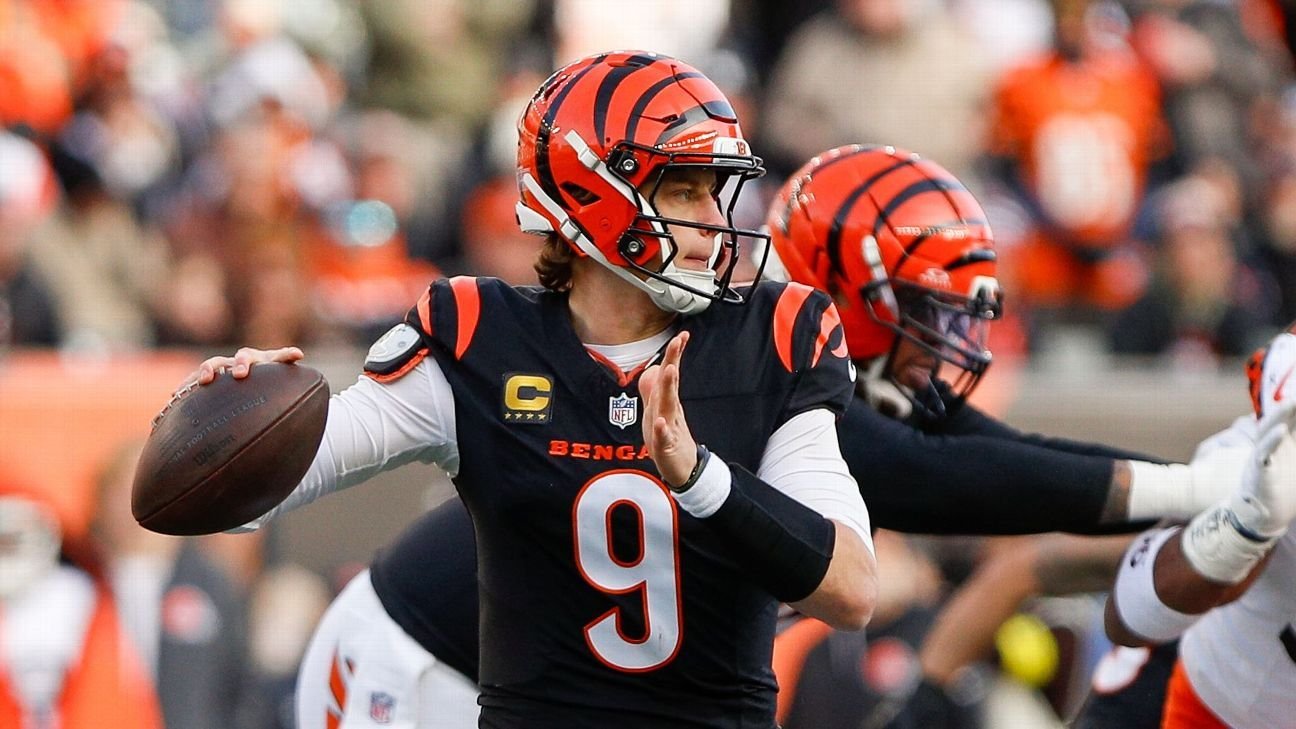

Matt Bowen

Multiple Authors
I build a fantasy football draft board every summer. Mocks, film study, scheme trends, the numbers that translate to production, I look at it all. It’s all part of the process. I draft players I like. Their traits, playmaking ability, the system fit. That includes the high-floor targets I can count on in my lineup, as well as the upside plays. You can take some risks here, too. Plus, everyone has their late-round fliers, the dart throws when the clock is running out in the 14th round. Take a shot.
So, let’s go through my board by position, focusing on some of my favorite targets in redraft formats heading into draft season later this month. (I play in four home leagues.) We’ll do this in multiple tiers based on current ESPN average draft position (ADP). I’ll also give you five targets to put on your radar for the later rounds.
Have a great fantasy season. Let’s win some leagues.
Jump ahead
Quarterbacks | Running backs | Wide receivers
Tight ends | Later-round targets

Quarterback
Landing Burrow as a mid-tier QB1 fits my philosophy on getting value at the position. Sure, there are availability concerns with Burrow (he missed at least seven games in two of his past three seasons). But in playing the full 2024 season, Burrow scored 21.9 fantasy PPG and threw 43 touchdown passes. That’s who I’m drafting here, the league’s best pocket passer, with two premier targets in WRs Ja’Marr Chase and Tee Higgins. I think Burrow will produce top-three QB numbers this season.
I’ll take Williams all day as a fringe QB1. In 2025 (Williams’ first season under head coach Ben Johnson), he scored 18.7 fantasy PPG and we saw how his natural playmaking ability leads to winning weeks (eight games with 20 or more points). With another year of development paired with Johnson’s elite playcalling, I expect Williams to show even more growth as a rhythm passer. A big-time breakout looms here.
Drafting Shough as an upside QB2 fits if you carry two quarterbacks or play in a superflex format. In Weeks 13-18 last season, Shough had 117.5 fantasy points (QB4) and he scored at least 17 in each game. He’s a timing-and-location thrower in Kellen Moore’s system, plus he can create as a runner (186 yards rushing, 3 TDs). With a boost from the addition of rookie wide receiver Jordyn Tyson to play opposite Chris Olave, Shough has the skill set — and the coach — to push the QB1 line.
Running back
1:24
Why Jonathan Taylor’s extension should put fantasy managers’ minds at ease
I’m taking Taylor (21.3 fantasy PPG in 2025) over both Christian McCaffrey and De’Von Achane if I’m picking in the middle of the first round. Taylor gives you high-end volume and scoring upside, as he led the league in both carries (323) and rushing touchdowns (18). Plus, Taylor can create explosive plays (36 carries of 10 or more yards), and his pass-game usage elevated last season (career-best 46 receptions). With QB Daniel Jones expected back for the start of the season, I’m all-in on Taylor as my RB1.
An ankle injury limited Hampton to nine games as a rookie in 2025, and that Chargers offensive line was beat up. Still, Hampton had three games of 20 or more fantasy points and finished with 15.1 PPG. With a healthy and upgraded front in a new system under Mike McDaniel that uses heavy 21 personnel (2 RBs, 1 TE, 2 WRs) to create numbers and blocking angles, this Chargers run game can roll in 2026. I see breakout potential here for Hampton.
Price is expected to share touches in Seattle’s backfield with George Holani, Emanuel Wilson and Zach Charbonnet (once he’s back from his ACL tear), but Price has the traits to emerge quickly at the start of the season. Price has the vision and instincts to find a downhill path, and he showed contact balance at the point of attack on his Notre Dame tape. Price averaged almost 6.0 yards per carry last season, and he can find the end zone (11 rushing TDs). He has the physical profile and speed to handle NFL volume.
With Aaron Jones Sr.’s injury history (he missed at least five games in two of the past three seasons), Mason is on my board as a high-end insurance back. I’ll try to land him in all my leagues. Mason had 23.6 fantasy points in the Week 3 game versus the Bengals last season, and he posted double-digit points in four of five starts. Plus, he’s a strong fit for the zone run game in Minnesota. Draft Mason with the expectation that he starts some games for the Vikings this season.
Wide receiver
The best receiver I saw on tape last season, Smith-Njigba scored 21.2 fantasy PPG in 2025 (second most among WRs) and led the league with 1,793 receiving yards. A true multilevel target, JSN can uncover at the short-to-intermediate areas of the field, plus he has third-level juice. Last season, Smith-Njigba’s 18 receptions and 6.9 fantasy PPG on throws of 20 or more air yards led the league. The unquestioned No. 1 receiving option for QB Sam Darnold, Smith-Njigba gives you consistent volume and playmaking upside.
With Mike Evans now in San Francisco, the door is open for Egbuka to emerge as the top target in Tampa Bay’s offense. A detailed route runner who can create separation, Egbuka had four games with 20 or more fantasy points as a rookie, finishing with 68 receptions for 938 yards and 6 TDs. With the aggressive throwing mentality of Buccaneers QB Baker Mayfield, don’t be surprised if Egbuka finishes as a top-10 wide receiver in 2026.
Burden had double-digit production in three of his final four games last season, including the 27.8 points he scored in Week 17 versus the 49ers. With DJ Moore now in Buffalo, Burden should see a major boost in target volume, and coach Ben Johnson will deploy him as a playmaker. Burden suffered a groin injury in early August, which will sideline him for the preseason, but I’m still buying his outlook this season. You can draft Burden as a WR2/flex. You should expect some WR1 breakout weeks, too.
 Jordyn Tyson, New Orleans Saints (ADP: WR35)
 Jordyn Tyson, New Orleans Saints (ADP: WR35)
Tyson will elevate the Saints’ pass game playing opposite of the team’s No. 1, the aforementioned Chris Olave. With inside/outside versatility, Tyson can get down the field vertically, using his 6-foot-2 frame and big-time ball skills to win matchups. Plus, Tyson can create separation on middle-of-the-field throws in Moore’s offense, leading to catch-and-run opportunities. With the development we saw from Shough over the second half of last season, Tyson should be targeted as a WR3.
Robinson scored a career-best 13.6 fantasy PPG in 2025 and produced two games of 28 or more points. Robinson displayed more big-play ability, too, catching 13 passes of 15 or more air yards (after totaling four over his first three years as a pro). He should be a reliable slot target in Tennessee for QB Cam Ward and carries WR3 value in deeper leagues.
Tight end
I rarely jump at a tight end early in drafts, but Loveland is the one player I would make an exception for. Over his last five games as a rookie in 2025, Loveland scored 15.1 fantasy PPG (including 21 or more in two games) and his production continued in the Bears’ two playoff matchups (12 receptions, 193 yards). With his formation flexibility and receiving traits, Loveland wins on schemed throws, plus he brings one-on-one ability to Johnson’s offense. He can be a star in the league.
Ferguson has been my go-to in summer mocks, as it allows me to wait until the later rounds to draft a tight end. Ferguson scored 11.1 fantasy PPG last season, plus he’s going to see the ball in scoring position. Ferguson had 23 red zone targets last season (including 10 end zone targets), and he finished with eight TDs, catching six on throws inside the 10-yard line. It has been a pattern, as Ferguson has 51 red zone targets (and 22 end zone targets) over his past three seasons. With that type of touchdown/scoring upside in an explosive Dallas offense, Ferguson is a quality starter for fantasy lineups.
Likely fits in deeper leagues as a sneaky sleeper candidate based on his skill set and projected usage with the Giants. Now removed from the shadow of Mark Andrews in Baltimore, Likely projects as the “move” player in New York’s offense — a versatile, multilevel target who can also be schemed on screens and unders. For his career, 47.4% of Likely’s receiving yards have come after the catch. He has the ability to post low-end TE1 numbers this season if he sees consistent volume.
Five late-round targets to put on the radar
Coker missed time to start last season due to an injury, but from Weeks 11-18, he averaged 11.0 fantasy PPG and had four games of double-digit production, posting a touchdown reception in three. Coker has the vertical stretch ability to win down the field, plus he can run the deep in-breakers or see the ball on three-step quicks underneath.
Nailor is more than willing to work the middle of the field, and he has the quickness to separate on out-breaking routes. Nailor scored an impressive 10 TDs on 57 receptions over the past two seasons with the Vikings in a limited role, and someone must emerge as the perimeter No. 1 in the Las Vegas offense.
If Black wins the No. 2 role behind McCaffrey, managers can target him late as an insurance play. A rapid accelerator, Black has the short-area speed to dart through daylight, rushing for over 1,000 yards and scoring 10 TDs last season at Indiana. Black had only eight receptions over his final two college seasons, but he can be utilized as an underneath outlet in the 49ers offense. Keep an eye on the competition in the San Francisco running backs room.
The slot receiver in Mike McCarthy’s system will see the ball, and while Bernard is not a vertical blazer, he showed the ability to uncover on his Alabama tape. Yes, Bernard has real competition for targets in Pittsburgh with DK Metcalf and Michael Pittman Jr., but he can be viewed as a bench stash, especially in 12-team leagues. There’s potential upside here as a chain-mover for QB Aaron Rodgers.
I’d take a shot on Allen late in drafts. If the rookie out of Penn State can get some early-down carries — and win the role as the primary goal-line back in Washington — he’ll have value in all scoring formats. Allen runs behind his pads, and his physical style shows up in tight quarters. That works when you need to get the ball into the end zone. He’s a name to monitor through the rest of the preseason.