dailynewsnblog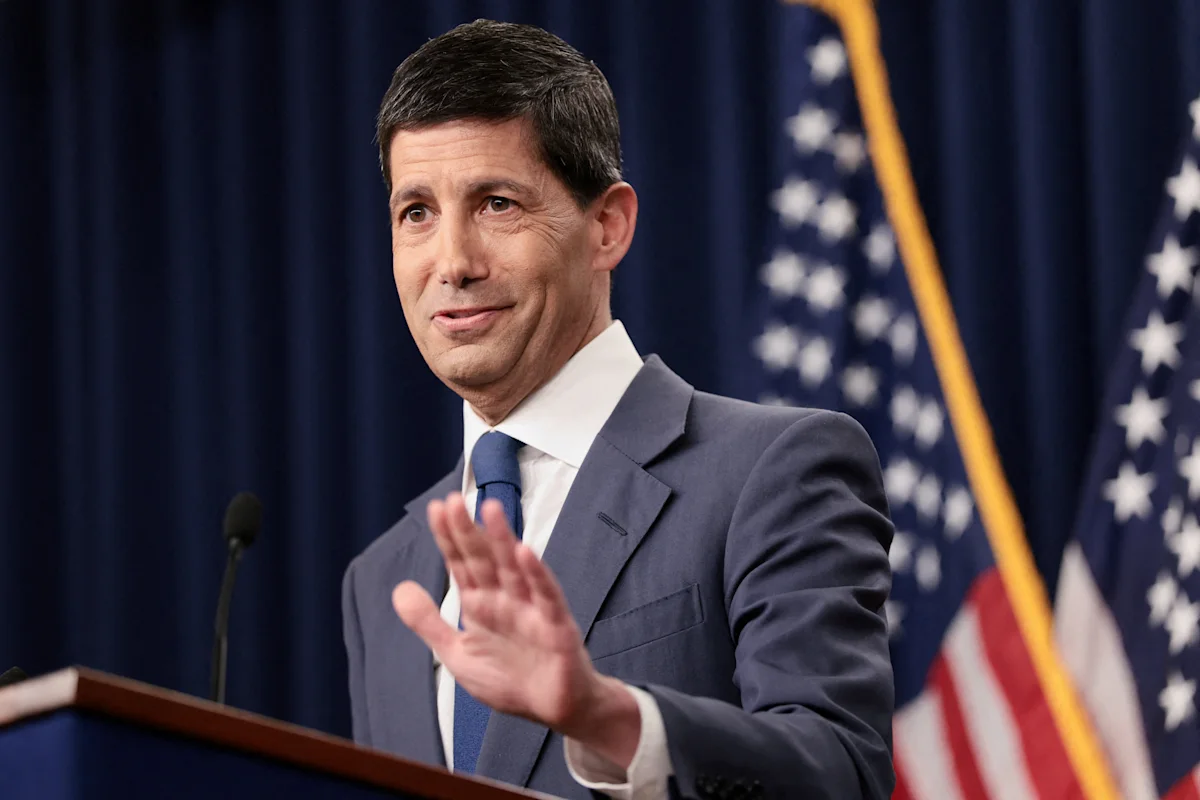
Only two weeks ago, Fed Chairman Kevin Warsh said markets had done “quite a bit” of the Fed’s tightening. Wall Street has since taken it all back — and then some.
A gauge of US market conditions published by Bloomberg rose Thursday to its easiest level since 1996, capping a remarkable reversal from late July.

“Financial conditions” is Wall Street shorthand for how easy or hard markets are making it to take risk and raise money. Rising stocks, calmer markets, and cheaper corporate borrowing make them easier. Falling stocks and rising borrowing costs tighten the screws.
The index in the chart is especially geared toward those market signals, so this isn’t saying mortgages or credit cards are suddenly cheap. It’s saying Wall Street itself is unusually loose.
Between Warsh’s first Fed meeting on June 17 and his next on July 29, Treasury yields rose, stocks slipped, volatility jumped, and corporate borrowing got more expensive. The Fed left its benchmark rate untouched at 3.5% to 3.75%, but markets tightened around it.
“The markets have done quite a bit,” Warsh said.
Then Wall Street hit the gas.
Since July 29, the S&P 500 has jumped nearly 7%, the VIX volatility gauge has dropped six points to the lows of the year, and junk-bond borrowing costs have fallen. The Fed’s benchmark rate hasn’t budged.
The appetite for risk is already showing up across the market. Wall Street’s riskiest trades are suddenly back on top, from Cathie Wood’s ARK Innovation ETF (ARKK) to IPOs and other speculative corners that had been left behind.
And here’s the twist. This isn’t happening because long-term interest rates suddenly collapsed. They remain high.
Since Warsh’s first meeting, the 10-year Treasury yield (^TNX) has actually risen. The Fed has stayed put. Yet the chart’s measure of market conditions has raced to a 30-year extreme.
Risk-free money is still expensive. Wall Street has made risk cheaper anyway.
That could complicate Warsh’s job. If stocks keep climbing, volatility stays low, and borrowing costs keep falling, Wall Street could keep adding fuel to an economy the Fed is still trying to cool.
That gets at something bigger than this latest rally. The Fed controls a crucial short-term interest rate, but markets can reinforce what policymakers are trying to do — or pull hard in the opposite direction. The hotter Wall Street runs, the less help Warsh gets from it — and the more work may fall back on the Fed.
Warsh has made it clear that he’s listening to that signal. On July 29, he rejected the idea that holding the Fed’s rate steady meant nothing had changed.