dailynewsnblog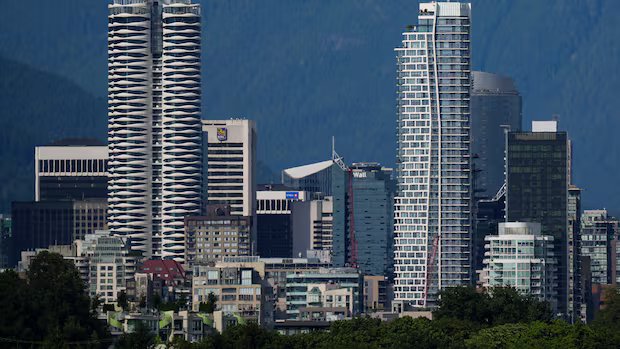
People need affordable homes, and thousands of empty condos in British Columbia are waiting to be sold.
The federal government has an idea to help with both: Prime Minister Mark Carney is partnering with the B.C. government to convert vacant condos into affordable housing.
Speaking in Ottawa on Thursday, Carney said that under the program he laid out in Vancouver last week, the government would “potentially” put up 10 per cent of roughly $1.45 billion in total spending to convert some 2,200 empty units into rent-to-own homes, with the B.C. government footing the rest of the bill.
The prime minister had said last week that he’s “leveraging financial tools” to increase the housing supply, while Opposition leader Pierre Poilievre later skewered the scheme as “bailout” for big developers and “a transfer of wealth from the have-nots to the have-yachts.” And he’s not the only critic.
Responding to that criticism, Carney insisted Thursday that the proposal is about supporting aspiring homeowners.
But the public doesn’t know enough about how the government plans to acquire the unsold units, said Mike Moffatt, founding director of the Missing Middle Initiative at the University of Ottawa. And without the finer details, he said the door is left wide open to criticism and skepticism.
“I do think this can be a win-win if structured correctly,” he told CBC News this week. “But I also understand why people are skeptical.”

Prime Minister Mark Carney held a press conference in Vancouver alongside B.C. Premier David Eby today, announcing new measures to create affordable housing in the province. As the CBC’s Michelle Ghoussoub reports, it promises to address vacant condos and reduce the charges paid by developers.
How do you sell condos if no one can afford to buy?
There are issues with housing affordability and home sales across the country, but other cities don’t have the volume of unsold condos that you have in Metro Vancouver and the Greater Toronto Area, said Andy Yan, director of the City Lab at Simon Fraser University in Burnaby, B.C.
Market analyst Urbanation reported in April that a record-high of 4,295 newly completed condos in the GTA were unsold in the first quarter of 2026, more than double a year before.
Recent data from the Canada Mortgage and Housing Corporation shows that, as of last month, there were 4,376 completed condos sitting empty in Metro Vancouver — a 76 per cent increase from the same period a year ago.
Even with the glut of empty new homes and prices dropping, many Canadians remain priced out of the market.
Yan said there need to be “surgical responses” to dealing with housing sales and affordability, rather than “blanket approaches.”
“These are units that have been built, but we don’t know why they haven’t been absorbed by the market,” he said, questioning who may be best served by this condo-conversion plan, and how it may ease affordability.
A lot has changed in the past decade, Brad Jones, chief development officer for Wesgroup Properties, told CBC Vancouver’s The Early Edition on Wednesday — including inflation and changes to immigration policy that contributed to declining population growth.
Still, he said that if the industry “wanted a bailout we would have asked for it.”
Jones said developers wanted something similar to the deal the federal government struck with Ontario in March to eliminate the GST for first-time homebuyers, while also reducing municipal development charges.
The other aspect of the B.C.-Canada partnership is $1.6 billion from the federal government over 10 years, matched by the province, in order to lower development charges for multi-unit housing in priority communities.
Those fees can increase the cost of constructing condos by as much as 30 per cent, said Wendy McNeil, CEO of the Homebuilders Association Vancouver.
She said she does not see that as a “bailout” but as “supporting an industry that delivers necessary housing” while shouldering a heavy financial burden.

Ottawa and B.C. are partnering to convert 2,200 empty condo units into affordable homes in B.C. — a move critics have called a bailout for developers. For perspective from the development industry, CBC’s Stephen Quinn spoke with Wendy McNeil, CEO of the Homebuilders Association Vancouver, and Brad Jones, the Wesgroup Properties chief development officer.
Is this a bailout?
The lack of information from the government may have homebuilders and homebuyers scratching their heads, but Moffatt said there’s an important distinction to consider.
“If this was something that the government wasn’t going to purchase anyway, then I think … this is a bailout,” he told CBC News.
But, he said, the Carney government’s Build Canada Homes agency would have been turning to developers to construct new homes. Instead — in B.C., at least — they’ll be acquiring finished condo units.
At this point, it’s not clear how much the federal and provincial government may ultimately spend on purchasing these empty units, Moffat said in an interview on Tuesday, and we don’t know how much of a discount they might be sold for compared to the listing prices.
“If they’re paying something close to full price, then yeah, I think it would be fair to characterize that as a bailout,” he said.
“But if they’re coming in and … forcing companies to take a steep discount, and at the same time acquiring homes that they were going to build anyway, then I think this can make sense.”

Housing Minister Gregor Robertson said a plan by the federal and B.C. governments to buy and convert vacant condo units in the province into affordable housing is just one tool in ‘the broader toolkit,’ with Build Canada Homes being the main approach to increase the stock of affordable homes.
How do you buy more for less?
This Ottawa-B.C. government partnership is actually just following the lead of private investment companies that are already bulk-buying condo inventory at discounted prices in both Vancouver and Toronto, Moffatt said.
But Yan suggested it could raise some eyebrows among buyers and owners who already purchased their homes.
“You can imagine what happens when you bought a unit in one of these buildings and then the government buys the same unit next door,” he said.
“What happens to the pricing of that unit for the government, but also for that particular owner who bought into that building?”
He said the spike in unsold condos is recent enough that it may be better to allow the market to correct itself rather than “the government jumping in.”

Vancouver condo developers are struggling to sell units, and some are now turning to a strategy borrowed from Toronto: bulk sales to investors. CBC’s Stephen Quinn spoke with commercial real estate broker Megan Johal on what this strategy is — and whether it could take hold here in B.C.