dailynewsnblog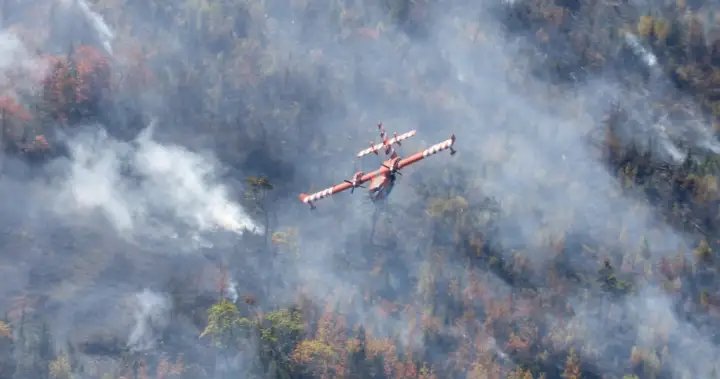
National projections show it could be a “challenging” wildfire season for Canada.

According to federal ministers, who provided an update on Thursday, there have been more than 3,100 wildfires so far this year and nearly 800 are currently burning. Sixty of those fires are considered out of control.
Emergency Preparedness Minister Eleanor Olszewski said that despite it being a “challenging” season, this year’s wildfire season has “not reached the scale seen in 2025.”
Whether it be camping, barbecuing or just enjoying the great outdoors, local officials in the Maritimes say people should exercise caution.
“The risk is increasing due to the temperatures this summer,” said John Lowe, Halifax Fire’s District 5 chief.
This year, Lowe says the municipality has been on par with previous years.
Throughout Nova Scotia, 92 fires have been reported with none currently burning.
And despite an early start to wildfire season in New Brunswick with 300 fires reported so far, the provincial dashboard shows only one currently burning.
August forecast
The national forecast shows the Maritime provinces are expected to fare better than most other regions in the country. Quebec, Ontario and the Northwest Territories are projected to receive the most intense fire weather conditions in July and August.

Get daily National news
Get daily Canada news delivered to your inbox so you’ll never miss the day’s top stories.
Nova Scotia will be at a slightly higher risk, with Halifax, Cumberland, Colchester, and Cape Breton “above normal” this month and rising to “well above normal” in August.
“We’re well prepared. There’s been huge investments over the last number of years,” said Natural Resources Minister Tory Rushton.
“We have four new helicopters, water bombers, we also now have an agreement with the fixed wing that are stationed and are our fixed wing for the season.”

The Maritimes will also benefit from above-normal precipitation in July. However, temperatures are expected to remain high, and officials say things can take a turn quickly.
Last summer’s devastating wildfire in the Annapolis Valley burned though 8,500 hectares, destroyed 20 homes and forced the evacuation of hundreds.
“I know that it’s in the back of my mind whenever I drive up to West Dalhousie,” said Annapolis County Deputy Warden Dustin Enslow.
“It’s been definitely devastating, especially for the 20 families that lost their homes, but our county came together.”
Wildfire precautions
Human activity is a main factor in wildfires, but when provincial restrictions allow for it, Lowe says there are ways to burn safely.
“When you are having a fire, make sure you use seasoned dry wood to keep down sparks,” he said.
“Make sure you have buckets of water or a garden hose handy, a responsible adult to extinguish if need be. And before you finish at the end of the night, make sure your fire is completely out.”
Enslow echoes the importance of being responsible, because his community knows the impact of wildfires too well.
“It only takes one spark,” he said.

© 2026 Global News, a division of Corus Entertainment Inc.