dailynewsnblog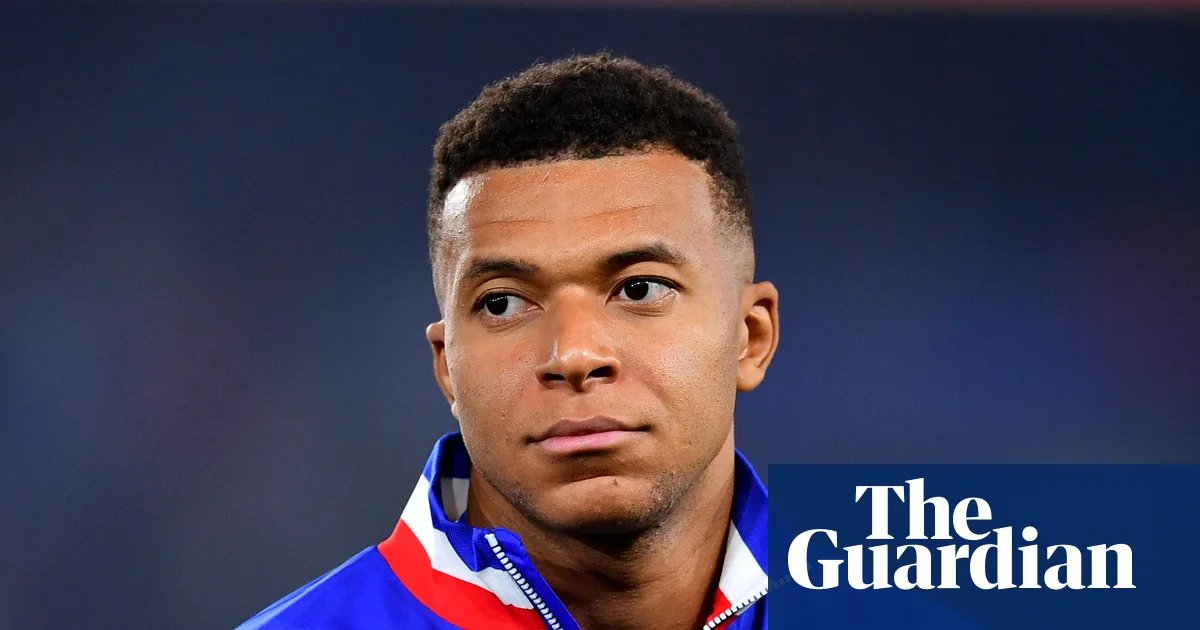
The French football captain, Kylian Mbappé, has angered Marine Le Pen’s far-right party after expressing concerns about it winning next year’s presidential election.
Mbappé, 27, who grew up in Paris’s northern suburbs in a family with Algerian and Cameroonian heritage, told Vanity Fair this week: “I know what it means and what consequences it can have for my country when people like them come to power.”
Jordan Bardella, 30, the president of Le Pen’s anti-immigration National Rally (RN), which is polling high ahead of the spring presidential race, immediately shot back at the football star. He made a dig at Mbappé, who left the Paris Saint-Germain club in 2024 to play for Real Madrid, only for PSG to win the Champions League the following year.
“I know what happens when Kylian Mbappé leaves PSG: the club wins the Champions League! (And maybe soon a second time),” Bardella wrote on social media.
Le Pen told RTL radio on Wednesday she found it reassuring that Mbappé did not want her party to win, because his own strategy of leaving PSG in order to win at Real Madrid had not worked. “Frankly I think football fans are free enough to know who to vote for without being influenced by Mbappé,” she said.
Julien Odoul, an RN MP and party spokesperson, said that, as the captain of the French team, Mbappé must represent all of France, including the millions of RN voters, and should not become a “political activist”.
Bardella, who could become the party’s presidential candidate this summer if an appeals court upholds Le Pen’s ban on running, has a longstanding feud with Mbappé.
At the time of France’s snap parliamentary election in 2024, Mbappé, who has worked to dismantle the stereotypes often applied to Paris’s diverse suburbs where he grew up, said electoral gains made by the RN were “catastrophic”. Bardella hit back, saying it was embarrassing to see deep-pocketed athletes “give lessons to people who can no longer make ends meet, who no longer feel safe”.
Asked by Vanity Fair about the allegation that he was too rich to discuss French politics, Mbappé said: “Even as a footballer, you’re foremost a citizen. We’re not disconnected from the world … or from what’s happening in our country. People sometimes think that because we have money, because we’re famous, these kinds of problems don’t affect us.” But, he said, footballers “have our say, like everyone”.
He said the RN’s gains in parliament in 2024 had shocked him and other footballers. “We’re citizens and we can’t just sit there saying all will be fine and go and play. We have to fight this idea that a footballer should just be content to play and keep quiet.”
Mbappé is the face of a national team often celebrated as a symbol of diversity, and which many tip to win this summer’s World Cup. He was born in 1998, the year that France’s World Cup-winning team starring Zinedine Zidane was mythologised as “Black-Blanc-Beur” (Black-White-Arab) and presented by politicians as able to solve France’s deep-seated identity issues through their triumph.
William Thay, from the thinktank Le Millénaire, told Reuters that Bardella’s response to Mbappé this week was politically shrewd because the player’s popularity in France had weakened since his PSG exit, with perceived arrogance and underwhelming results at Real Madrid.
But Thay said the RN risked undermining its electoral strategy by attacking one of France’s biggest sporting stars while doing little to address moderates who fear the party seeks to deepen social divisions.