dailynewsnblog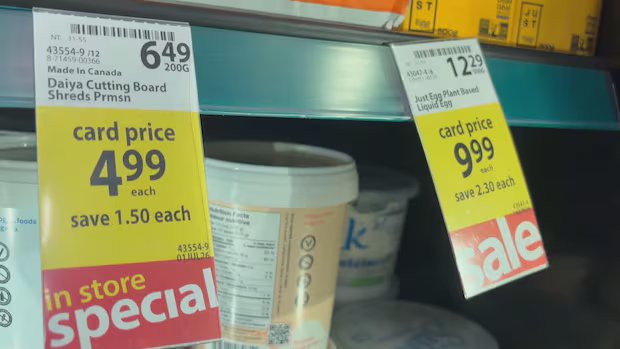
Making it easier for customers to spot “shrinkflation” — through mandatory unit pricing across Manitoba grocery stores — is among the ways the province plans to tackle high food prices.
Targeting “predatory pricing” by grocers and a possible new grocery store in Winnipeg’s core are also among the interventions and potential policy options laid out in a new grocery price study commissioned by Manitoba earlier this year and released Monday.
“The new measures in this study build on our previous work to lower costs,” Finance Minister Adrien Sala said at a news conference on Monday.
“When you add all these changes up, they start to make a real difference to lower your grocery bill.”
The 40-page Manitoba Grocery Price Study announced in February attempts to put into context some of the increasing challenges associated with putting food on the table amid soaring inflation.
It suggests a plurality of factors are contributing to high prices in the grocery store aisle — from supply chain issues to rising energy prices, climate change impacts, transportation cost increases, competition barriers, “geopolitical instability” and inflation.
The province’s plan to combat “shrinkflation” won’t force producers directly to end the practice of making customers pay the same amount they used to for a smaller volume of food, but by ensuring customers “know when you’re paying more for less,” Sala said.

Instead, Sala says the NDP will introduce legislation that would require unit pricing at grocery stores, such as the price per hundred grams, so customers can compare items and better discern when they’re being charged more for smaller volumes than previously.
“What this will require will be a much higher level of transparency, allowing Manitobans to be able to compare prices,” he said.

The Manitoba government plans to introduce legislation that will force grocery stores to reveal the price of items per standard unit of measurement, such as 100 grams or 100 millilitres. The practice allows for easier price comparisons among similar products in different size containers.
Manitoba would join Quebec, the European Union and other international jurisdictions to mandate unit pricing.
Winnipeg Food Fare owner Munther Zeid doubts mandating unit prices will save customers much on grocery bills.

He has already begun labelling items with unit prices but doesn’t think customers read them.
“Ninety per cent of the people don’t care about this unit pricing,” Zeid said.
The New Democrats also committed $2.5 million to Harvest Manitoba’s planned Manitoba Food Transformation Centre, which will take in food donations from grocers and agricultural producers to create nutritious meals for food bank users.
Manitoba will also measure food prices based on how much it costs to feed families a nutritious meal and release that data to the public, Sala said. The practice of sharing that information was phased out by the previous provincial government, he said.
Prof. Sylvain Charlebois said the report suggests Manitoba is developing a vision for food security over the long term in a strategic way.
Charlebois, the director of the Agri-Food Analytics Lab at Dalhousie University, said the most important feature in the study is the provincial commitment to collect price data on items that constitute the “nutritious food basket,” something the report itself doesn’t define.
“Nutrition security is, in my view, as important as food security in general,” he said. “If you start looking at specific products, making sure that they’re affordable … that, to me, is the key.”
Manitobans have seen among the highest grocery inflation increases over the past year, which was up to 4.4 per cent as of last month compared to May 2025.
That’s half a percentage point lower than it was in April, when Manitoba’s year-over-year grocery inflation rate was the highest in the country.

The NDP have already taken some steps they say will address affordability in the province, including through the Business Practices Amendment Act introduced in March.
That legislation makes “personalized algorithmic pricing,” both online and in store, an unfair business practice. That practice — also called predatory pricing — is mentioned in the report as a vulnerability facing consumers.
Predatory pricing, which the province has yet to publicly demonstrate is occurring in Manitoba’s grocery sector, involves retailers pricing some of the same items differently for different customers based on purchase history, income data, credit history, geographic location or socio-economic status.
The study also identifies how grocery store parent companies have undergone a widespread consolidation in recent decades, resulting in less competition in the sector.
New Democrats already adopted legislation last year designed to spur more competition by preventing grocery stores from striking new restrictive covenants or exclusivity rules. They have in the past created geographical buffer zones around stores where competitors weren’t allowed to set up shop.
The study also echoes past calls to address food insecurity and food deserts, in part through the creation of a grocery store in downtown Winnipeg.
Sala said building such a store is something the private sector, not the NDP government, would ultimately have to do.

Progressive Conservative Leader Obby Khan suggested the report is likely to “let down” Manitobans who were expecting more “tangible, measurable, real changes to how groceries are being purchased by families.”
“Unit pricing … is already being done in lots of retailers, but the unit pricing doesn’t drop the price of groceries,” he said.
“That doesn’t really make life more affordable, it just tells you what you’re paying per unit.”
Sala also pointed on Monday to the coming PST cut on all ready-made and packaged food items at grocery and convenience stores as an affordability measure by New Democrats.
That takes effect July 1.