dailynewsnblog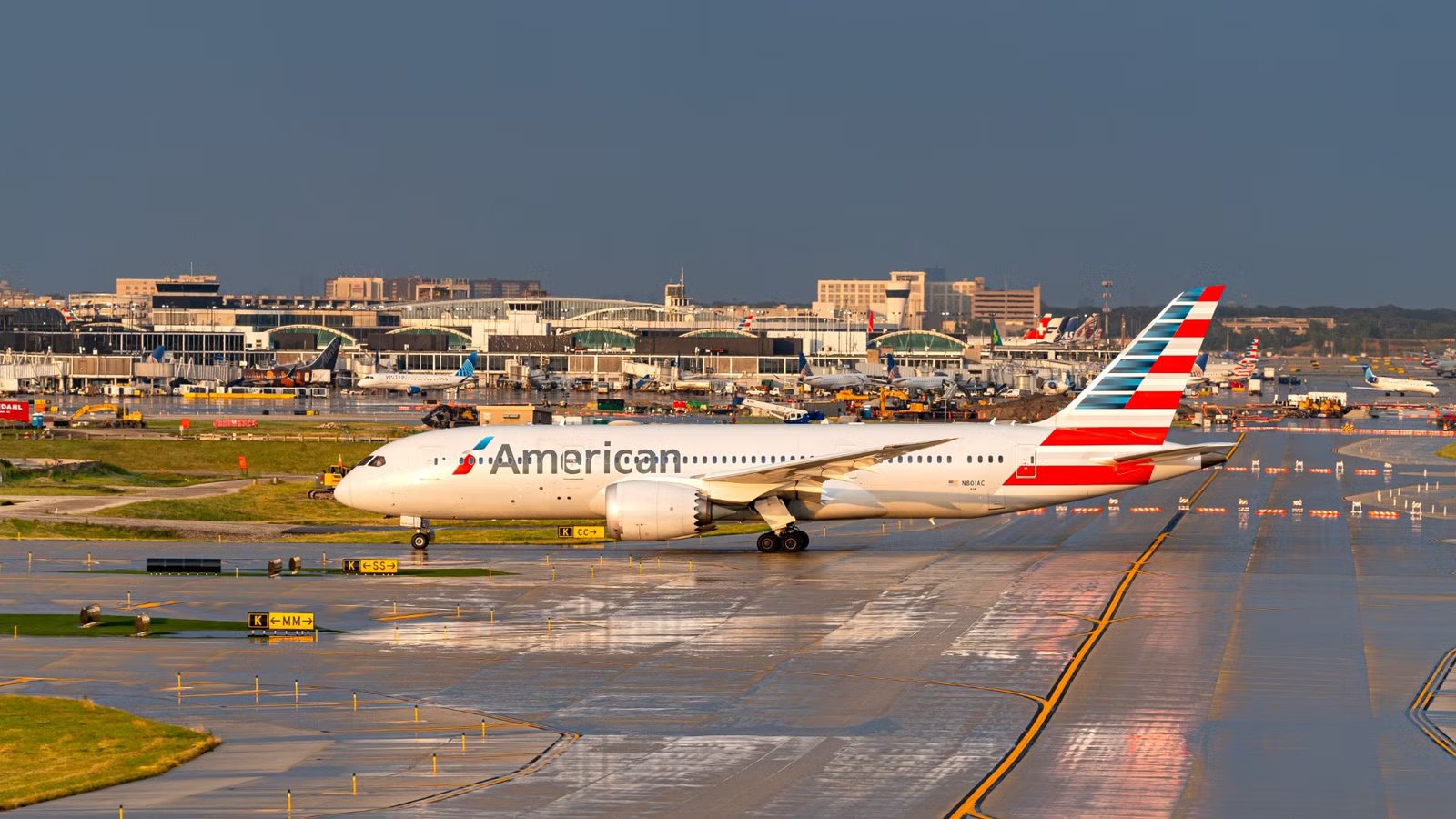
While  Hartsfield-Jackson Atlanta International Airport (ATL) has long been the world’s busiest airport by passenger numbers,
  Chicago O’Hare International Airport (ORD) takes the top spot when ranked by aircraft movements. A key reason behind this paradox is the increased use of regional jets at O’Hare, with feeder services allowing passengers from the Midwest and beyond to connect onto mainline flights operated by major US legacy carriers.
Of late, two of the ‘big three’ US legacy carriers,  American Airlines and
  United Airlines, have been aggressively increasing their capacity at O’Hare in a rivalry that has seen the pair fight for supremacy at the hub. Now, however, the FAA is forcing operators at O’Hare to make schedule cuts in order to reduce operational disruption as we head into the summer. This has seen American and United collectively shelve nearly 2,700 May flights.
FAA Enforces Chicago O’Hare Flight Cuts To Reduce Disruption

These cuts are being enforced by the FAA, which announced earlier this month that it would be “[taking] action to prevent endless delays [and] cancellations at Chicago O’Hare.” According to the agency, “less than 60% of arrivals and departures were on time last summer” at O’Hare, and, as we approach the peak summer season this time around, Transportation Secretary Sean Duffy is keen for the airport to perform much better in 2026.
Indeed, Duffy says that “if you book a ticket, we want you and your family to have the certainty that you’ll fly without endless delays and cancellations.” However, with O’Hare set to see almost 15% more flights on peak days this year than in the summer of 2025, the potential for overscheduling (and subsequent disruption) to rear its ugly head again is high. As such, airlines have been told to cut flights, and FAA Administrator Bryan Bedford has commended them for complying.
“We appreciate the airlines working together with us to reach a responsible level of operations that strengthens safety and delivers a more reliable travel experience for the American public.”
A Grand Total Of Nearly 2,700 Flights Cut

According to data from Cirium, an aviation analytics company, week-on-week schedule changes show that United and American alone have cut atotal of 2,696 roundtrip flights at ORD in May. This equates to 87 a day on average, which is, of course, a drop in the water compared to O’Hare’s overall operations, but it will still have some operational impact on its flyers.
United accounts for the bulk of these, with 1,909 services having been shelved, as its May presence at O’Hare drops from 43,271 scheduled roundtrip flights to 41,362. All in all, 53 routes have seen 10 or more May departures cut from United’s schedules at ORD, with Des Moines being the hardest hit.
Even United’s largest US hubs aren’t safe from the cuts. Indeed, airports such as  George Bush Intercontinental Airport (IAH),
  Los Angeles International Airport (LAX), and
  San Francisco International Airport (SFO) have seen 10 or more May cuts. In terms of airports that aren’t United hubs, Grand Rapids, Milwaukee, Nashville, Phoenix, and Raleigh-Durham are among the hardest hit.

2,442 Daily Movements: Chicago O’Hare Is The World’s Busiest Airport For Flights
Of course, Atlanta ranks first in passengers and seats for sale.
American Represents The Minority

American hasn’t had to cut quite as many flights at ORD, with its May total having dropped by 787 from 32,410 to 31,623 roundtrips. This represents a proportion of around 2.43%, compared to approximately 4.41% for United. All in all, it has had to cut at least 10 rotations on 24 of its routes out of Chicago in May 2026, as shown on the map above.
The cuts are entirely domestic, with most being routes to airports located relatively close to Chicago; indeed, on a visual level, Albuquerque is the only real outlier. Unlike United, American has managed to avoid its main hubs with these cuts. Instead, the hardest-hit routes serve Chattanooga, Green Bay, Memphis, Oklahoma City, Omaha, Richmond, and Rochester.