dailynewsnblog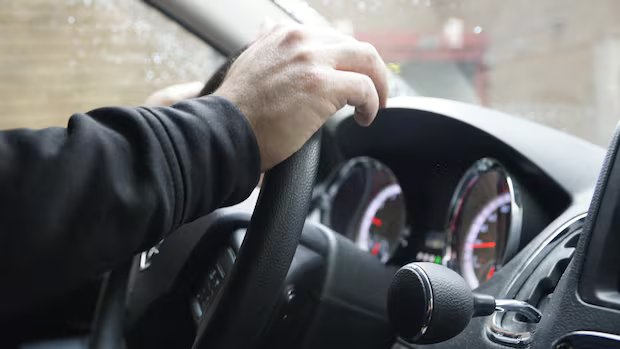

Listen to this article
Estimated 5 minutes
The audio version of this article is generated by AI-based technology. Mispronunciations can occur. We are working with our partners to continually review and improve the results.
The man told police he had a glass of wine at lunch and a sample of Screech rum at the liquor store before getting behind the wheel. Officers had stopped him on Lemarchant Road in St. John’s in the early evening, after receiving an anonymous tip from the public.
He politely accepted the Royal Newfoundland Constabulary officer’s breathalyzer test — and failed.
The 61-year-old man was charged with impaired driving and driving with a blood alcohol level exceeding 80 milligrams. He pleaded not guilty.
Last summer — two years after the man was charged — he still hadn’t gone to trial. His lawyer filed a so-called Jordan application, saying the driver’s rights had been violated because of those delays, and asked for the charges to be stayed. Additionally, they wanted evidence excluded, if the trial went ahead.
After reviewing the application and proceedings up to that point, the Crown decided to call no further evidence and asked the judge to enter an acquittal.
That impaired driving case is one of four that CBC News has identified in the province within the last 18 months as ending due to R v. Jordan — a 2016 Supreme Court of Canada decision that ensures an accused person has the right to be tried in a timely manner.
In one of those cases, charges had been laid 52 months before court proceedings were finally halted.
“Sadly, it’s not surprising,” said Steve Sullivan, CEO of Mothers Against Drunk Driving Canada.
“I think what’s happening in Newfoundland and Labrador is just indicative of what’s happening across the country. And it just keeps happening and it’s hard to see what’s being done to address the issue.”
Sullivan said having cases dropped based on trial timelines and not merit is a concern to the victim and the accused, and can shake the public’s faith in the justice system.
“If someone isn’t facing any consequences for that, then, you know, sadly, I think we are all left to question what’s the point of the process?”
Sullivan said he is worried about the message that sends.
“If we’re not addressing people’s criminal behavior and hopefully giving them the tools and the accountability to make sure they don’t do it again, then sadly, we might see that person back with the same offence or… even something more serious,” he said.

And according to court filings reviewed by CBC Investigates, a situation like that already seems to have occurred.
In 2023, the RNC charged a 51-year-old man with dangerous driving following a serious collision on Topsail Road in St. John’s.
Video surveillance entered at the man’s trial showed a black Audi slam into a minivan turning from Topsail Road onto Cowan Avenue, sending his own car spinning and crashing into a nearby light pole.
Police alleged the driver was street racing and was travelling in excess of 130 km/h before the collision.
More than two years later, the driver of the minivan testified at the man’s trial that she suffered numerous injuries and a concussion.
However, partway through the trial, the defence filed a Jordan application. The Crown conceded that the case was well past the Jordan timeline and there was no point to proceed any further. The charges were stayed.
While awaiting that trial, the accused was picked up again — this time for impaired driving. That case is still making its way through the courts.
Alternative approach needed, MADD CEO says
Sullivan said he will be visiting St. John’s next month and will meet with government officials to discuss immediate roadside prohibition.
That process would see first-time impaired drivers shirk criminal prosecution and instead face immediate penalties, like licence suspensions, vehicle impoundments and ignition interlock devices that require breath samples before starting the car.
“They don’t go through the criminal process. You don’t have to worry about stays of proceedings. And they get meaningful sanctions,” Sullivan said.
“We avoid the criminal process and it allows police officers to make better use of their time to get more impaired drivers off the road, which I think is what we all want.”

He said British Columbia was the first in the country to do it. Since then, Alberta, Manitoba, New Brunswick and Yukon have come on board.
“It can help reduce injuries and crashes. It makes more effective use of police time. But also for a province that is facing significant court issues, this can still hold people accountable, but alleviate a lot of pressure on the process.”
Currently there are administrative sanctions in Newfoundland and Labrador that allow for temporary driving suspensions and vehicle impoundment, but Sullivan said that applies to drivers who are found to have a blood alcohol level below the criminal limit.
He said roadside prohibition would act as an expansion of those administrative sanctions.
Download our free CBC News app to sign up for push alerts for CBC Newfoundland and Labrador. Sign up for our daily headlines newsletter here. Click here to visit our landing page.