dailynewsnblog
While consumers and retail companies have been holding up surprisingly well through a world of trouble — from war to inflation to political uncertainty — the fashion industry is still vulnerable to shocks on Wall Street.
Think of it as a reminder of how quickly trends can change.
On Wednesday, it was a sell off of luxury and fashion stocks as the U.S.-Iranian cease fire appeared to crumble as well as a warning from the International Monetary Fund that global economic growth would slow to 3 percent this year, down from an average of 3.5 percent over the prior two years.
The Dow Jones Industrial Average fell 1.1 percent , or 576.76 points, to 52,348.39 and fashion went along for the ride.
Among those falling the hardest in the global fashion industry were Capri Holdings, down 7.8 percent to $17.90; Bath & Body Works Inc., 6 percent to $19.39; Kohl’s Corp., 5.2 percent to $15.89; Kering, 5 percent to 239.65 euros; Hermès International, 4.2 percent to 1,570.50 euros; Tapestry Inc., 4.2 percent to $140.14; Inditex, 4 percent to 54.16 euros, and Brunello Cucinelli, 3.8 percent to 78.82 euros.
The war in Iran, what will happen if it really flares back up and how the oil shock that’s already reverberated out of the conflict will translate into the broader economies is almost the definition of an “uncontrollable” for a fashion chief executive officer.
The corporate bigwigs prefer to look past the big macro changes and focus instead on the “controllables” they can influence.
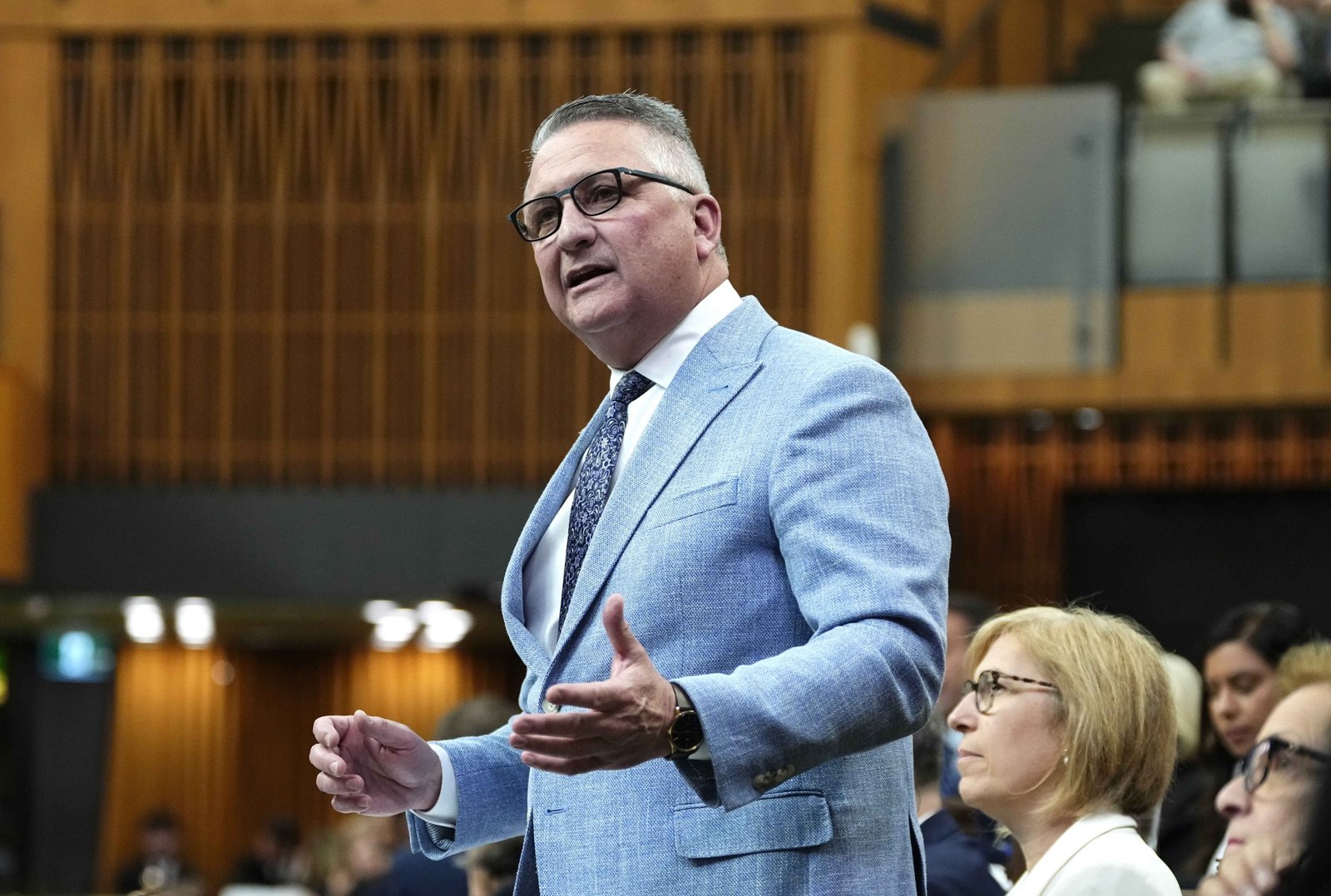
So it was with John Idol, chairman and CEO of Capri Holdings, who was at a Bernstein investor conference in New York talking about all the change at his company.
Capri, which was set to become part of Tapestry Inc. before the deal was hung up by an antitrust challenge, sold Versace last year, dramatically cleaning up its balance sheet and ending the year with just over $200 million in debt.
That has helped Capri zero in on its Michael Kors and Jimmy Choo businesses.
“Brands go through cycles,” Idol said. “They go up and down at various points in time. And when we really looked at our portfolio, we thought that we had an incredible opportunity to focus on Michael Kors. And that’s when we made the decision to sell Versace.”
Idol is looking to get Michael Kors’ sales from about $3 billion back to $4 billion, while Jimmy Choo builds from $600 million to $800 million.
It’s a multipart plan, with investments into stores, a marketing push, a reduction in stock keeping units, more emphasis on trend-focused styles and, crucially, a pricing reset.
“We looked at our pricing architecture and our sell-throughs had gone down, our markdowns had gone up, and we saw it was a result of our raising prices, coming out of COVID-19, some 20 to 25 percent,” Idol said. “So we went back and we got closer to our traditional historical pricing for the brand. And what’s happened subsequently from that — and this is in our full-price channel, both our own stores and wholesale — is that we’ve seen our full-price sell-throughs go up dramatically and our [average unit retail prices] are going up because we’re taking less markdowns.”
And that is all stuff that Idol can control.
The bigger things will just have to sort themselves out, but the CEO said consumers are still buying, even if they need a little something more to get them to spend.
“Whether they’re at the very top echelon of luxury or whether they’re at a different income level that’s lower than that, everyone’s just being a little bit more thoughtful in their purchase,” Idol said. “They’re still buying, but they’re just making sure that obviously something is exciting first from a design standpoint [and] that it has quality.”
He said the North American customer was still “relatively healthy” despite “concerns around rising costs on everything from fuel to groceries to rent.”
But Idol added that Capri has become “a little bit more cautious about where Europe is going” over the past three months, although it’s been “relatively steady.”
“There’s definitely an issue around tourism,” the CEO said. “In particular, the Middle East tourists are not traveling to Europe. We have a substantial business in both Jimmy Choo and at Michael Kors with Middle East tourists. So we’re feeling the impact of that in Europe and we’re clearly seeing people hesitating on shopping in the Middle East area.”
Idol said he was “optimistic about China. We definitely see the consumer starting to improve. And I don’t think that the economy’s going to be rip roaring, but I think that you see consumers who are coming out.”