dailynewsnblog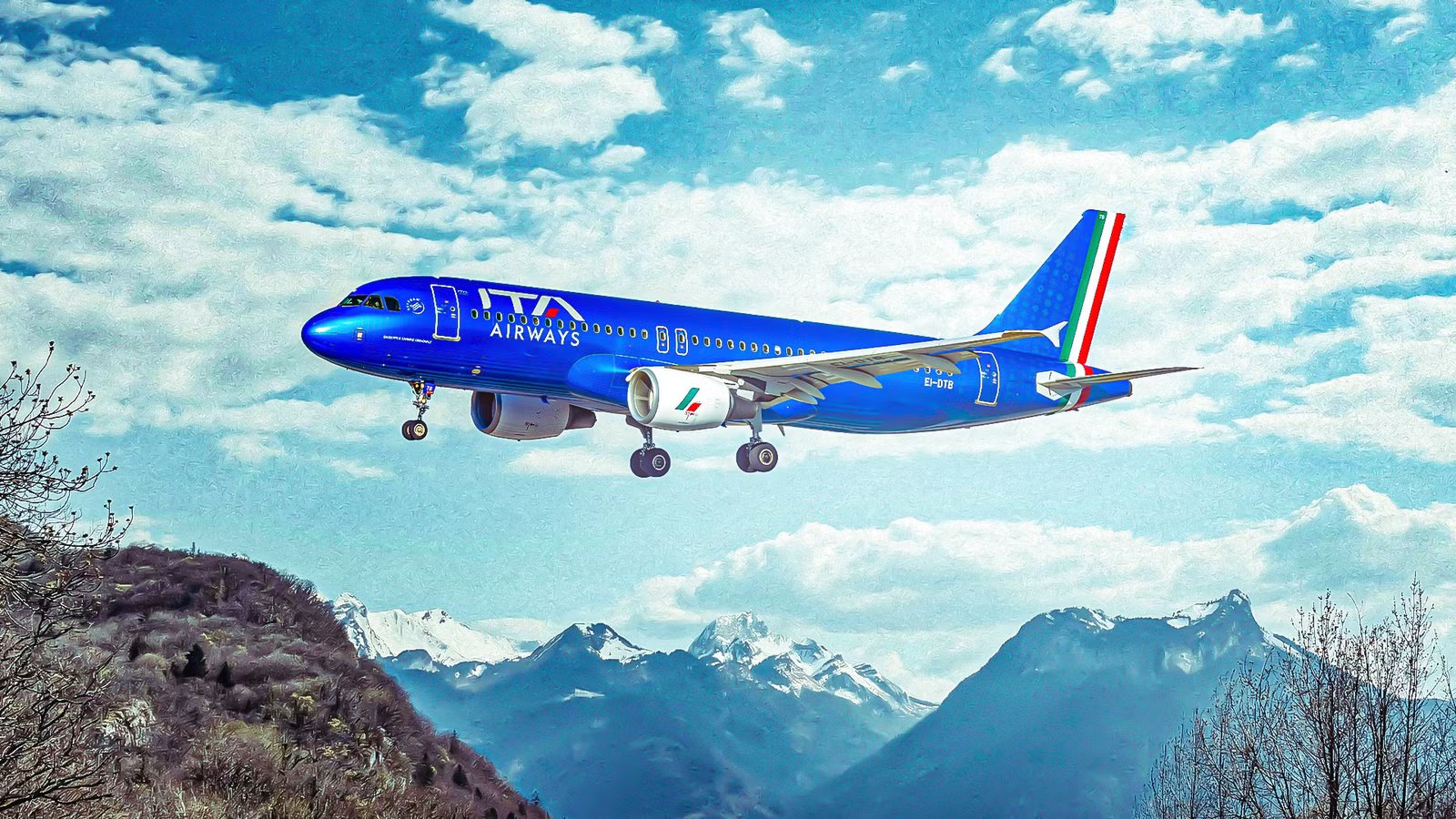
The Lufthansa Group has moved to tighten its grip on ITA Airways, announcing plans to increase its stake in the Italian carrier from 41% to 90%. The move is another major step in Lufthansa’s long-running strategy of building the largest pan-European airline group around multiple hub carriers. Completion of the majority acquisition is expected in the first quarter of 2027.
But the deeper significance of the deal could lie nearly 1,200 miles west in Lisbon, where  Lufthansa remains locked in a battle for TAP Air Portugal. While ITA gives Lufthansa a powerful southern European platform centered at Rome Fiumicino Airport (FCO), it will simultaneously make regulators and Portuguese officials more nervous about allowing the German group to take control of another strategically important southern European airline.
Lufthansa Tightens Its Grip On ITA Airways

As reported by Reuters, Lufthansa has confirmed that it will exercise an option to lift its stake in Italy’s ITA Airways to 90% through the purchase of a second block of shares for €325 million. The remaining 10% will stay with the Italian state for now, although Lufthansa retains options that could eventually lead to full ownership. The transaction still requires approvals from European and US authorities, with closing expected in early 2027.
The move comes barely a year after Lufthansa formally completed its initial investment in the carrier and began integrating ITA into its broader network and loyalty ecosystem. Since then, ITA Airways has become progressively more integrated with the other airlines of the Lufthansa Group, including shifting to Lufthansa’s Miles & More loyalty program, moving its German operations to Lufthansa’s terminals at  Frankfurt Airport (FRA) and
  Munich Airport (MUC), and officially joining its parent within
  Star Alliance in late March.
Speaking at the airline’s annual general meeting, Lufthansa CEO Carsten Spohr said the group had delivered “the fastest airline integration in our history” with ITA, and went on to say:
“ITA Airways will play a central role in the Lufthansa Group as our fifth network airline, and strengthen our multi-hub, multi-brand, and multi-AOC strategy.”
For Lufthansa, this gives it ownership control within Europe’s third-largest aviation market, but the logic behind ITA has always extended well beyond Italy. Lufthansa’s traditional hubs — Frankfurt, Munich, Zurich, Vienna, and Brussels — are all concentrated in Central Europe. Rome gives the group something it has historically lacked: a southern European gateway better positioned for flows to South America, North Africa, the Middle East, and Mediterranean leisure destinations.
That matters because modern airline groups are increasingly built around long-haul connectivity and premium traffic rather than purely local demand, and Rome becomes a complementary hub that can feed transatlantic and intercontinental routes. ITA is also expected to move deeper into Lufthansa’s wider transatlantic strategy involving partners like  United Airlines and
  Air Canada. But while the deal strengthens Lufthansa operationally, it may have simultaneously made another acquisition target much harder to secure.
Why The TAP Bid Just Became More Difficult

Lufthansa’s ITA move lands at a sensitive moment because the group is also competing with Air France-KLM for a stake in TAP Air Portugal. Portugal has been preparing to sell a 49.9% minority stake in the flag carrier, with the buyer expected to become a strategic partner and potentially gain a path toward deeper control later. That makes TAP one of the most important remaining prizes in European airline consolidation.
The attraction is obvious. TAP is not just a Portuguese airline: it is a Lisbon-based bridge between Europe, Brazil, Portuguese-speaking Africa, the Atlantic islands, and North America. For Lufthansa, acquiring a stake in TAP would add a second powerful southern European platform alongside Rome. For Air France-KLM, however, Lisbon would fill a cleaner gap in its network, giving the Franco-Dutch group a southern European hub it does not already have.
That is where Lufthansa’s ITA expansion will likely become a problem. European authorities already imposed remedies before approving Lufthansa’s investment in ITA, largely because of concerns about competition on routes between Italy and Central Europe, as well as long-haul markets involving Lufthansa’s immunized Atlantic joint venture. Adding TAP into the equation could intensify those concerns significantly.
|
Stakeholder |
Why Lufthansa’s ITA Acquisition Makes TAP Deal Harder |
|---|---|
|
EU regulators |
Rome and Lisbon under Lufthansa influence could create excessive southern European concentration and reduce independent competition on intra-European, transatlantic, and South American routes. |
|
US regulators |
Both ITA and TAP joining Lufthansa’s Atlantic ecosystem with United and Air Canada could concentrate too much power on US-Europe routes (especially southern European destinations) |
|
Portuguese authorities |
Concerns that Lisbon could become secondary to Rome inside Lufthansa Group’s expanding southern European strategy |
At the same time, US regulators will also likely take a dim view of ITA and TAP both joining the Lufthansa Group, with a view to them becoming the eighth and ninth airlines to join the Atlantic Joint Venture. While the US might not block the sale of the TAP stake to Lufthansa, it’s what happens downstream that really matters. Too much concentration of US-Europe flows (especially to southern Europe) in the hands of one group would also certainly force US authorities to be tougher on antitrust immunity, carve-outs, or route-level remedies.
Ultimately, it is the authorities in Portugal that will have the strongest say, and this week’s news will undoubtedly make them far more cautious about Lufthansa’s intentions. Their view is that Lisbon cannot become just another feeder hub — it is the centerpiece of TAP’s global strategy. Portuguese officials have repeatedly stressed that any future owner must preserve and strengthen the airline’s role in supporting connectivity to Brazil, Africa, Madeira, the Azores, and North America.
But with Lufthansa now heavily focused on Rome, there are fears that TAP would be of secondary importance, and the ‘red-headed stepchild’ as the last entrant to a sprawling airline group with too many competing hubs. That creates a political problem as much as a regulatory one, and the cracks are already apparent, with the national pilots’ union coming out against the Lufthansa bid earlier this month. For Air France-KLM, the timing of Lufthansa confirming its majority stake in ITA really couldn’t have been better.
The 49.9% Question: Inside Air France-KLM’s Strategic Play for TAP Air Portugal
Air France-KLM has moved first in the TAP battle, and that could prove decisive.
Why Air France-KLM’s SAS Deal Is Different

Lufthansa will point out that it is not the only group making concurrent acquisitions. At the same time that Lufthansa has been deepening its ITA investment, Air France-KLM has been strengthening ties with Scandinavian Airlines (SAS). The group took a 19.9% interest in SAS in 2023 as part of the airline’s restructure, and that stake is set to increase to 60.5% in the second half of this year.
Yet the regulatory implications are very different. SAS gives Air France-KLM a stronger northern European position centered on Copenhagen and Stockholm, but doesn’t create the same kind of overlap concerns that Lufthansa now faces in Southern Europe. And as the Portuguese authorities evaluate TAP’s suitors, here is what they now see:
|
Lufthansa + ITA |
Air France-KLM + SAS |
|---|---|
|
Southern Europe overlap |
Minimal overlap |
|
Strong Latin America implications |
SAS has no routes to Latin America |
|
Increased EU regulator scrutiny |
Far lower risk of regulator penalties |
|
Greater Atlantic JV scrutiny |
Far lower regulatory sensitivity |
|
Lisbon is the secondary Southern European hub |
Lisbon is a cornerstone in a north-to-south strategy |
The growing distinction between the two rival bids, therefore, becomes increasingly important as the contest for TAP intensifies and bidding enters its final phases. For Air France-KLM, the sales pitch is that it is the better match because it will be singularly focused on TAP, with Lisbon filling a geographic gap in its network without creating the same level of overlap. Lufthansa, by contrast, will now have to convince regulators that Lisbon will remain independently important even after Rome joins the group as another major southern hub.
The broader story is that Europe’s airline industry is rapidly consolidating into three giant camps: Lufthansa Group, Air France-KLM, and IAG, and TAP may be the last truly strategic network airline still available. Lufthansa’s move to increase its stake in ITA undoubtedly strengthens its overall position in Europe, but it may also have weakened its political and regulatory case for winning TAP. In the battle for Europe’s final major aviation prize, Rome may ultimately complicate the road to Lisbon.