dailynewsnblog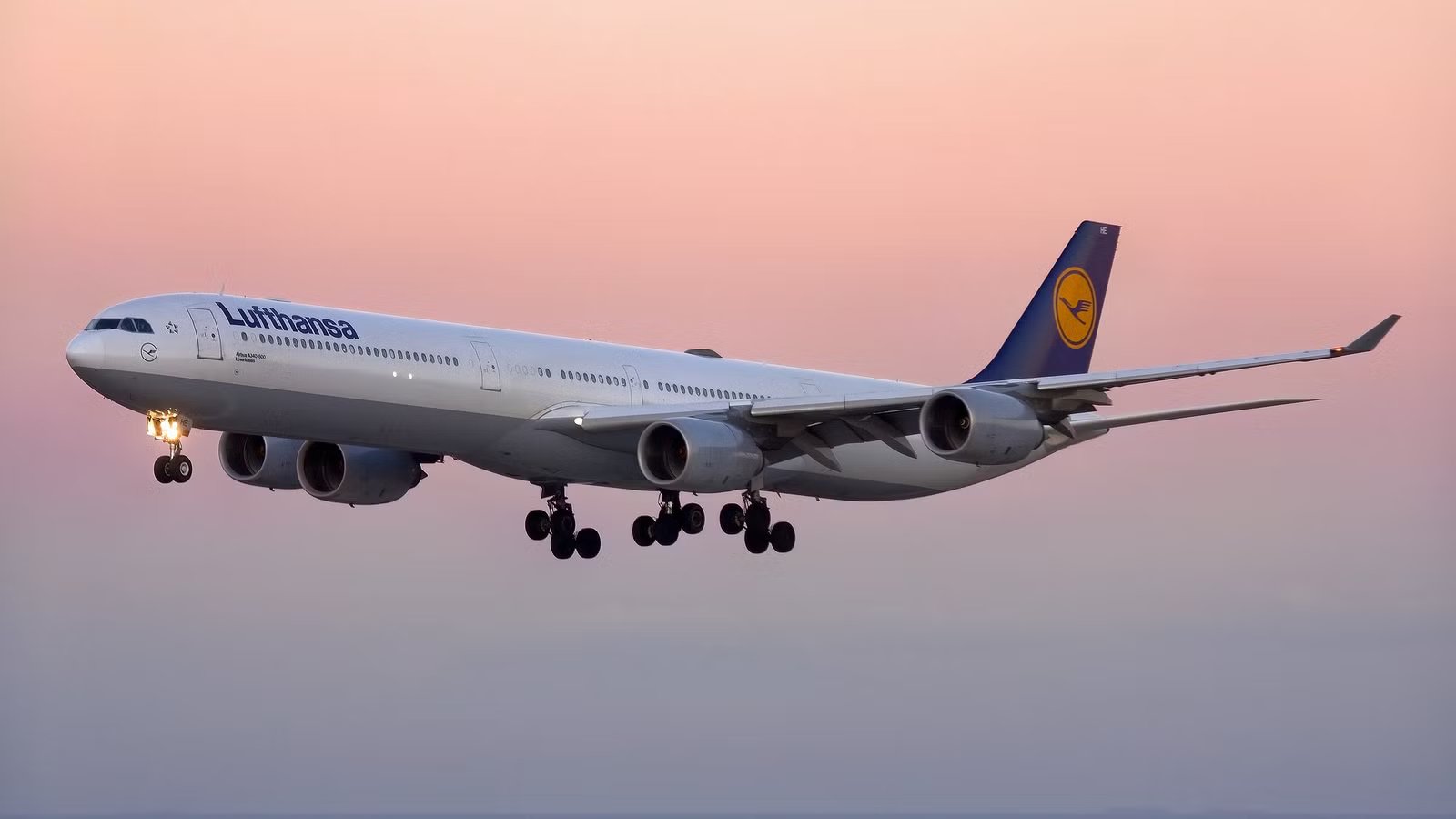
Lufthansa is an interesting case when it comes to its fleet. While many airlines have retired their older quadjets, the German flag carrier continues to fly a robust fleet. This includes the Airbus A340, Airbus A380, and Boeing 747-400 & -8. These older jets have stuck around to provide capacity that should have been filled by delayed Boeing 777X deliveries.
However, as the Lufthansa Group CEO, Carsten Spohr, gains confidence in the upcoming delivery of these first aircraft, it is finally time to sunset some of the airline’s older fleets. The Airbus A340-600 fleet is one of these, with the final flight of the type in Lufthansa colors planned for later this year.
One Airbus A340-600 Has Already Been Upcycled

According to CH-Aviation, just four of Lufthansa’s 24 A340-600s remain flying. Of the 20 already retired, some have already begun to be scrapped. There are many outcomes for scrapped aircraft, though an increasingly common one sees key parts such as the fuselage upcycled.
German-based company, Aviationtag, has partnered with Lufthansa to upcycle parts of the fuselage of D-AIHE into keyrings. The company has made a limited edition run of 8,500 tags, which are on sale starting at €34.95 ($39.85). Different parts of the fuselage were used, meaning it is possible to get tags in white, blue, and a mix of the two colors. The tags are on sale now.
Commenting on the release, Tobias Richter, CEO at Aviationtag, said,
“The D-AIHE edition is special because it brings together several important stories: Lufthansa long-haul heritage, the Airbus A340-600, our official collaboration with Lufthansa, and an extraordinary scientific mission… By transforming original aircraft material into a new collectible, we are preserving a piece of aviation history in a tangible form.”
About The Airbus A340-600 Registered D-AIHE

The aircraft that has received the upcycling treatment was registered as D-AIHE, and it was one of the aircraft that was retired early by  Lufthansa at the height of the pandemic. CH-Aviation data shows that the plane was ordered on December 5, 1997. It first flew on November 18, 2003, and went on to be delivered to Lufthansa, its only operator, on January 16, 2004.
The quadjet flew with Lufthansa for just over 16 years before flying to Teruel, Spain, where it has been stored and scrapped. In its time flying for Lufthansa, the aircraft is understood to have completed 8,873 flight cycles, totaling 76,889 flight hours. This gives an average flight length of 8 hours and 40 minutes.
The Airbus A340-600 had 281 seats spread across three cabins. Up front, passengers found eight first-class seats in a 1-2-1 configuration. This was followed by 56 business class seats in a 2-2-2 config. Behind this were 28 premium economy seats in a 2-3-2 config. At the rear of the aircraft were 189 seats in a 2-4-2 config. The Lufthansa A340-600 was
on the same level as the cargo hold.
D-AIHE Was Also Special For A Different Reason

D-AIHE, christened with the name Leverkusen, was part of a climate research sub-fleet within the Lufthansa fleet. Since 2004, the quadjet was part of the CARIBIC or Civil Aircraft for the Regular Investigation of the atmosphere Based on an Instrument Container program. Each time the aircraft flew, it was collecting valuable climate data between 9-13km above sea level (29,500 feet to 42,650 feet). These are measurements that scientists would be unable to otherwise regularly collect.
D-AIHE was grounded at the height of the COVID-19 pandemic, and the impact of its work and that of other aircraft was seen fairly quickly. Weather forecasts became demonstrably less reliable due to the lack of measurements from aircraft in the sky. The A340-600 completed around 500 measurement flights before retirement.
Since this Airbus A340-600 never returned to the skies, an Airbus A350-900 in the Lufthansa fleet took its place. Now D-AIXJ is undergoing the process to be converted into a flying laboratory.

![American Airlines Launches 10 Nonstop Routes From New York-JFK To Europe [List & Map]](https://dailynewsnblog.com/wp-content/uploads/2026/09/aa.png)