dailynewsnblog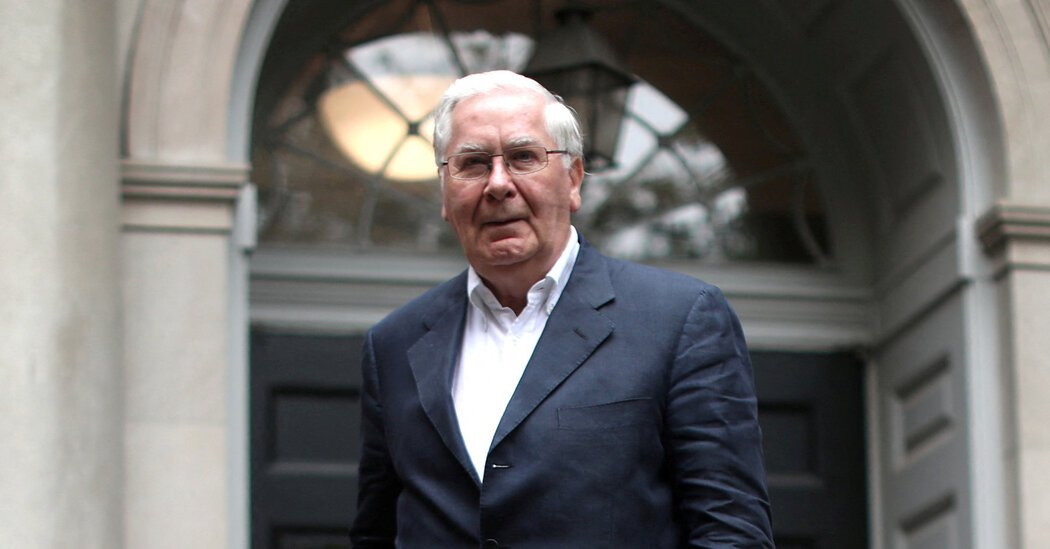
Kevin M. Warsh last week named a slate of external advisers to lead five task forces at the Federal Reserve, his most direct attempt yet to usher in change at the central bank.
The task forces span a range of topics that Mr. Warsh, the Fed’s new chairman, has said are “central to the broad conduct of monetary policy.” They include how the Fed communicates; its $6.7 trillion portfolio of government debt and mortgage-backed securities; the data sources it prioritizes; productivity trends and jobs; and the models and measures it uses to understand inflation.
Mr. Warsh’s selections — who include former policymakers, academics and business leaders — underscore the extent to which he wants the Fed to scrutinize how it operates. Many of his picks have worked at the Fed or have written extensively about its practices and are broadly seen as credible voices on the sweeping set of issues on which Mr. Warsh is seeking a fresh perspective.
Here are the people Mr. Warsh selected:
Communications
To examine the Fed’s suite of communications tools and how it can best deploy them, Mr. Warsh has tapped Mervyn King, a former governor of the Bank of England; Peter Fisher, a longtime BlackRock executive who worked at the New York Fed and the Treasury Department; and Arminio Fraga, who ran Brazil’s central bank.
Mr. Warsh believes the Fed overdoes it when it comes to publicly sharing its next steps, making it harder to pivot on policy if necessary. He has already forsaken this so-called forward guidance and opted against participating in the central bank’s exercise of submitting quarterly forecasts.
Mr. King led the Bank of England for a decade, until 2013, a year before Mr. Warsh conducted his own external review of the institution. Mr. King helped to usher in a more transparent era for the central bank.
He has argued that a credible central bank that is clear about how it will respond to changing economic conditions can often achieve its policy goals without having to make significant adjustments to rates. Instead, it can rely on expectations embedded in financial markets to influence the outcome.
Mr. Fisher capped off his 16-year career at the New York Fed in one of the most important jobs, running the central bank’s financial portfolio. He later worked in top roles at BlackRock.
Mr. Fraga steered Brazil’s central bank through a currency crisis during his four-year tenure, which ended in 2003. He was also responsible for establishing an inflation-targeting approach that helped to stabilize the country’s economy.
Balance Sheet
Raghuram Rajan, an economist at the University of Chicago and a former governor of the Reserve Bank of India, will join Karen Dynan, a former Treasury official now at Harvard, and Jeremy Stein, a former Fed governor, in leading the task force on the Fed’s $6.7 trillion portfolio of government bonds and mortgage-backed securities.
Mr. Warsh has long argued that the Fed should shrink its footprint in financial markets, saying that by buying up so many securities, the Fed has stoked inflation, worsened inequality and distorted the process of how financial assets are priced. He has said the Fed’s enormous footprint has jeopardized its own independence, but he has also proposed closer coordination with the Treasury Department.
Mr. Rajan, who has published extensive research on the central bank’s balance sheet, appears sympathetic to Mr. Warsh’s views, having focused his work on the unintended consequences of the Fed’s approach. One of Mr. Rajan’s primary criticisms of the Fed’s balance sheet policy is that the central bank, by being so quick to step in and provide support, has inadvertently encouraged risky behavior.
Mr. Stein has made a case for the Fed to maintain a big balance sheet and use it as a tool to maintain financial stability. Ms. Dynan supported the Fed’s past attempts to shore up the economy by buying government bonds and other assets.
Data
U.S. government data has long been viewed as the “gold standard” for measuring the economy. But it has come under pressure in recent years amid shrinking budgets, declining survey response rates and rising public skepticism of official statistics.
Mr. Warsh has said he wants the Fed to look beyond traditional metrics. The people he has asked to lead his task force on data have a history of doing just that.
The best-known name on the list is Doug McMillon, who was president and chief executive of Walmart for more than a decade before his retirement this year. Mr. McMillon is not an economist — he began his Walmart career as an associate when he was in high school — but he earned a reputation for basing decisions on data.
The other two leaders of the data task force are respected academic economists with reputations for working with data: Raj Chetty of Harvard and Kevin Murphy of the University of Chicago.
Mr. Chetty is known for his work using data from the Internal Revenue Service and other sources to study mobility across generations. He leads Opportunity Insights, which uses “big data” to study economic mobility and related subjects. During the Covid-19 pandemic, the organization pulled together data from public and private sources to track the effects of the crisis on workers and families.
Mr. Murphy has also studied inequality, and is part of a generation of economists that applied the field’s methods to a broader array of topics, including addiction and public health.
While all three of Mr. Warsh’s selections for the task force have worked extensively with data related to the economy, none has been deeply involved in recent debates over how to improve the statistical system. That may not be a coincidence. Mr. Warsh has indicated that he wants to make more use of data from private sources.
“My aspiration is that nine to 12 months from now we’re going to be using new technologies to understand what’s happening in the real economy in a contemporaneous, real-time way that positions us as central bankers to make better decisions, that we’re no longer going to have to rely solely on data that we get from government agencies with mismeasurement problems that have surveys that are no longer relevant,” Mr. Warsh said this month.
Still, economists point out that the Fed staff already uses private-sector data to produce forecasts. And they say it won’t be easy to replace government data, which is more comprehensive than anything produced by the private sector.
Productivity and Jobs
Mr. Warsh has in the past described the proliferation of artificial intelligence as “the most productivity-enhancing wave of our lifetimes — past, present and future.” That could have huge consequences for both aspects of the Fed’s core mission. Mr. Warsh has expressed optimism that A.I. could allow the economy to grow more quickly without driving up inflation. But some industry leaders warn the technology could destroy millions of jobs, leading to higher unemployment. Many economists remain skeptical of both those predictions, however.
Mr. Warsh has furnished his task force with industry leaders who are likely to share his view that A.I. will be a powerful economic force. The members include Marc Andreessen, the venture capitalist who runs Andreessen Horowitz; Chad Jones, a Stanford professor who is now working with Anthropic; and Microsoft’s Asha Sharma, who runs Xbox, its gaming business.
Inflation
To look into the Fed’s approach to understanding and assessing inflation, Mr. Warsh is bringing in Greg Mankiw, a Harvard professor who was the chairman of the Council of Economic Advisers under President George W. Bush; Thomas Sargent, a Nobel laureate at New York University; and William White, who worked for the Bank for International Settlements.
Mr. Mankiw wrote the most widely used economics textbook in the world, “Principles of Economics,” and has published extensive research on inflation dynamics, including why some prices are “sticky” compared with others.
The Fed has long targeted 2 percent inflation, as measured by the Personal Consumption Expenditures Price index, although for the past five years officials have overshot it. Mr. Warsh has made clear that this target will not be a topic of debate for the time being as changing it before reaching the Fed’s goal would tarnish the institution’s credibility.
Mr. White has argued in the past that central banks that are too focused on targeting inflation can often miss the buildup of costly financial bubbles.
Mr. Warsh believes the Fed can’t immediately influence near-term inflation trends, which are often driven by price fluctuations in idiosyncratic items like oil, eggs or beef. What the Fed can instead determine, in his view, is the trajectory of future inflation. That is based on not only the policy choices the central bank makes but also the public’s perception that the Fed is firmly committed to making good on its pledge to keep inflation low and stable.
The work that won Mr. Sargent the Nobel in economic science focused partly on people’s expectations about government policy and how that altered their behavior.