dailynewsnblog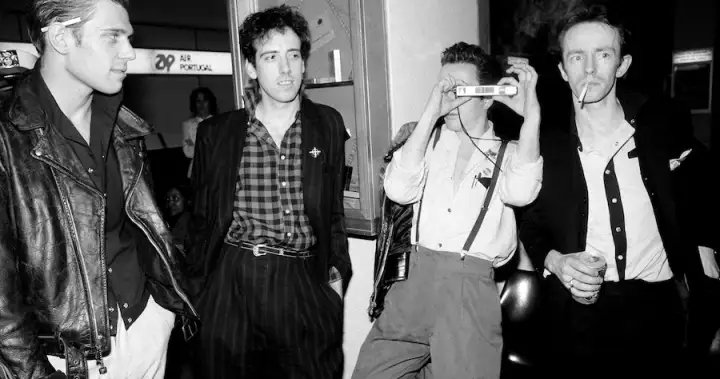
For decades, Terminator X was the backbone of Public Enemy’s hard-hitting, politically aware, socially conscious hip-hop.

His DJ skills and scratching were an essential part of the group’s sound. Onstage, he anchored the band’s visual image as Chuck D, Flavor Flav and the rest of the group pummeled audiences with their rhymes and flows. His work with Public Enemy ended in 1998 and he retired fully from the music industry the following year. What did he do next?
Emus. As in the big, fast, flightless birds from Australia. Terminator X went back to being Norman Rogers, his legal name, and devoted time to his emu farm on a 15-acre ranch in Vance County, N.C., launching one of the more interesting second acts in life. His emu stewardship lasted until the early 2000s and might have gone on longer had it not been for the damage caused by a hurricane. The emus are gone and the property is now populated by goats. Terminator X is back to DJing, but entirely on his own terms.
He’s not the only musician to have made a dramatic career change. Let’s have a look at a few other second acts.
Jim Martin (Faith No More)
Martin was a guitarist with Faith No More during their great run in the late ’80s and early ’90s. But by 1993, his relationship with the other members of the group had deteriorated and he was fired. All he’d ever done was be a musician. What was he going to do now? He found his answer in growing giant pumpkins. Competitively.
It all began with a gardening experiment when he decided to buy some pumpkin seeds near his home in Castro Valley, Calif. He had an open patch of yard. Why not raise a few pumpkins? He could sell them at Halloween and maybe make a few pies along the way. At some point, though, Martin became determined to grow the biggest pumpkins he could. Starting in 2000, he got very serious about it to the point where he entered his biggest fruits/vegetables (depending on the context, pumpkins can be classified as either) in contests. His best year was 2005, when he grew one that tipped the scales at 1,087 pounds. At one point, Martin was one of the five greatest giant pumpkin growers in America.
Brian Cox (D:REAM)
The problem with being in a boy band is that you and your fans grow older. What’s a now old boy-bander to do? In the case of Brian Cox, he needed something to do after his time in the English group D:REAM came to an end. In between albums and tours, he studied physics at the University of Manchester. When the band died in 1997, he continued his education, earning a doctorate in philosophy. He also became fascinated with high-energy particle physics.
As a physicist, Cox has held prestigious scientific chairs, written a number of books and worked with the CERN’s Large Hadron Collider. Cox is now a world-renowned pop physicist on the level of Neil deGrasse Tyson, who continues to host TV shows and documentaries for the BBC and others. Explaining the mysteries of quantum mechanics in layman’s terms is about as far as you can get from being in a fluffy dance band.

Get daily National news
Get daily Canada news delivered to your inbox so you’ll never miss the day’s top stories.
Terry Chimes (The Clash)
If you look at the liner notes on the first Clash album, you’ll find the drummer listed as “Tory Crimes.” He’d cycle in and out of The Clash several times over their existence and, when he wasn’t with them, he was playing drums for Johnny Thunders and the Heartbreakers, in Billy Idol‘s band, and even found work with Black Sabbath for a while during the non-Ozzy years.
Being a drummer can be extremely hard on the body, and Chimes learned the benefits of things like massage, stretching and, above all, chiropractic treatments. He’d developed such an interest in biology and physiology that when he felt that his body could no longer take the punishment of being a drummer, he dumped everything and studied to become a chiropractor himself. By 1994, he had retired from music and opened his own clinic in Essex. That one office later expanded into a chain. He now gives clinics on chiropractic methods and alternative medicine.
If that wasn’t enough, he experienced a spiritual awakening around 2000, which prompted a strong devotion to Catholicism, leading to work with the Church. Again, this is a guy who came up through the ranks of British punk rock and was a member of Black Sabbath.
Dan Spitz (Anthrax)
Anthrax is one of the Big Four of metal bands that have influenced countless others. Dan Spitz joined up in 1983 as lead guitarist, a job that lasted 15 years. But that was enough. His new passion was horology: the study, making and repair of timepieces. Spitz went deep, winning a scholarship to a Swiss watchmaking school, becoming certified as a “mechanical complications specialist” and earning various degrees in micro-mechanical engineering.
He eventually opened his own watch services, attracting clients and their Patek Phillipe, Audemars Piguet, Rolex and Richard Mille watches. He also became an instructor for watchmaker Chopard.
Robert Dean (Japan)
Japan’s best years were in the late ’70s and early ’80s when they acquired a reputation as one of Britain’s more interesting post-punk bands. But after three albums serving as their lead guitarist, Robert Dean became disenchanted with the band’s direction and quit. Dean turned to studio work (Gary Numan, ABC, Peter Gabriel) and was a collaborator with Sinéad O’Connor. Then he disappeared. Where did he go?
Costa Rica. He moved to the rainforest to decompress and indulge in his love of wildlife. He began watching the birds of the jungle carefully and then started painting them. At last word, Dean is living in Monteverde as an established and admired professional ornithology writer and artist. He’s contributed to various field guides that are not only for committed bird watchers but also for scientists.
Jeff “Skunk” Baxter
This may be the biggest pivot of them all. In the early ’70s, Jeff “Skunk” Baxter was the blisteringly good guitarist for Steely Dan, tearing off amazing solos like the one we hear in the song, Reelin’ in the Years. Take a look. A long-haired hippie guitar player? Yes, but…
One day in the early ’80s, though, Baxter got to talking with his neighbour, a retired engineer who had worked on Sidewinder missiles for the American military. Baxter was hooked and threw himself into the subject of ballistic missile technology.
That’s when he noticed that there were some similarities between the high-end studio gear Steely Dan used and the hardware used by the military, such as large-capacity digital storage devices and data compression algorithms. He then wrote an academic paper on how the U.S. navy could turn its offensive Aegis anti-aircraft missile system into a defensive one. The paper was passed to a congressman who was so impressed that he floated it past some of the right people in the defence establishment.
On the strength of that paper, Baxter was quickly granted high-level security clearances. Before long, he was consulting on various military matters. Remember Ronald Reagan’s Star Wars Initiative? Baxter had a hand in that. Improving spy satellites? Baxter. Various anti-terrorism technologies employed by the U.S. Government? Baxter again.
One of the many things on his resume is Senior Fellow and member of the Board of Regents at the Potomac Institute for Policy Studies. He’s also chairman of the Civilian Advisory Board for Ballistic Missile Defense, a member of the Director’s Strategic Red Team at MIT/Lincoln Labs and a consultant for the Global Security Sector at Lawrence Livermore National Laboratory. He’s done corporate work for Northrop Grumman, among other defence contractors, and knows a thing or two about asymmetrical warfare.
And what are you going to do in retirement?