dailynewsnblog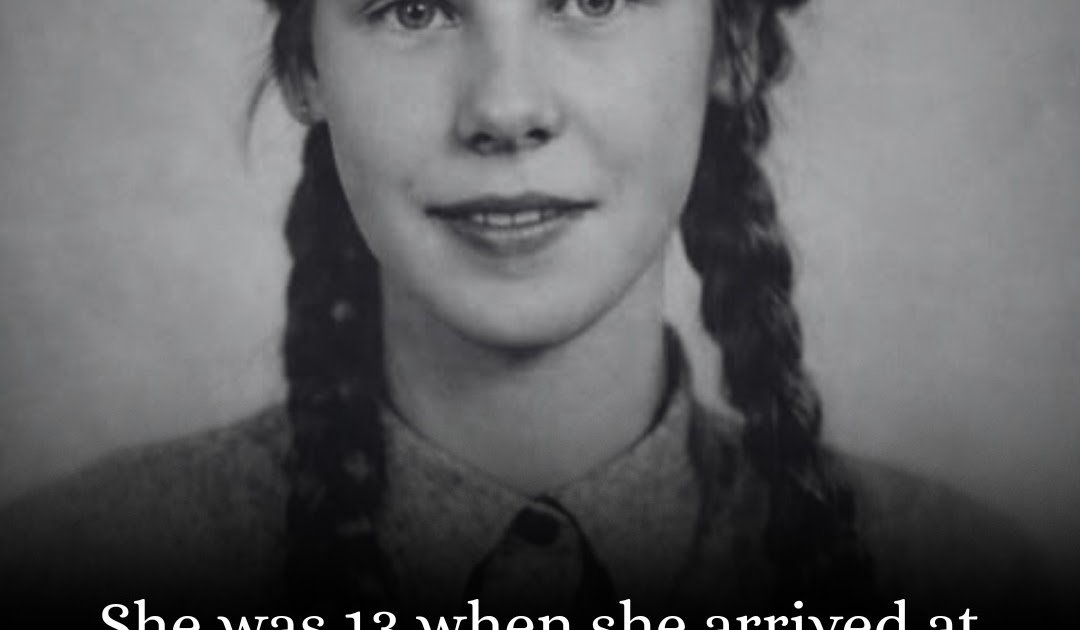

She was 13 when she arrived at Auschwitz in May 1944. Her long blond braids, carefully tended by her mother, made her appear older. The SS doctor selected her for forced labor instead of the gas chambers. Many younger children were sent directly to death. She survived. Liberated 1945, age 14. She wrote: “I am fourteen, and I have lived a thousand years.” Emigrated to United States, became professor, wrote memoir I Have Lived a Thousand Years. Livia Bitton-Jackson, born 1931, still alive at 93.
In May 1944, a thirteen year old Hungarian Jewish girl named Elli Friedmann arrived at Auschwitz-Birkenau. She had been deported with her family during the rapid mass deportations of Hungarian Jews ordered by Nazi Germany that year. On the crowded arrival ramp, amid shouting guards, barking dogs, and terrified families, the fate of each prisoner was decided within seconds by a selection process overseen by SS doctors, including Josef Mengele. A small detail changed Elli’s fate.
Her long blond braids, carefully tended by her mother, made her appear older than she was. When the doctor looked at her, he judged her old enough for forced labor. She was sent to the work line. Many younger children were sent directly to the gas chambers.
Once inside the camp, Elli’s life changed immediately. Like other prisoners, she was stripped of her belongings, shaved and disinfected, assigned a number instead of her name. The daily reality of the camp was relentless. Hunger, exhaustion, and fear dominated every moment. Elli and her mother were forced into hard labor, often moving and leveling earth or performing other physically punishing work under constant guard. Survival meant enduring chronic starvation, freezing conditions, disease and exhaustion, the constant threat of violence. In such conditions, time itself seemed to collapse. Days blurred together in a routine shaped by roll calls, labor, and the struggle simply to remain alive.
In 1945, as Allied forces advanced and the Nazi camp system collapsed, the camps were liberated. Elli was fourteen years old. But like many young survivors, she looked far older. Malnutrition and trauma had aged children beyond their years. Later, reflecting on that transformation, she wrote a line that became one of the most powerful descriptions of the experience of Holocaust survivors: “I am fourteen, and I have lived a thousand years.”
After the war, Elli rebuilt her life. She eventually emigrated to the United States, where she adopted a new name: Livia Bitton-Jackson. She studied history and later became a university professor, dedicating part of her career to teaching and speaking about the Holocaust so that its history would not be forgotten.
Bitton-Jackson shared her experiences in her memoir: I Have Lived a Thousand Years. The book recounts her life as a young girl deported from Hungary, her experiences in Nazi camps, and the long path toward rebuilding life after unimaginable loss. Through her writing and teaching, she sought to preserve the voice of the frightened but determined thirteen year old girl she once was, someone who survived not only through strength but also through hope.
Livia Bitton-Jackson’s story represents more than survival. It is a reminder of how quickly childhood can be stolen by violence, and how survivors carry those experiences for the rest of their lives. By telling her story, she ensured that the memory of what happened would remain personal and human, not just a statistic in history. The girl who stepped off the train at Auschwitz lived through horrors no child should ever face. But she also lived long enough to tell the world what happened, so that it could never be ignored or forgotten.