dailynewsnblog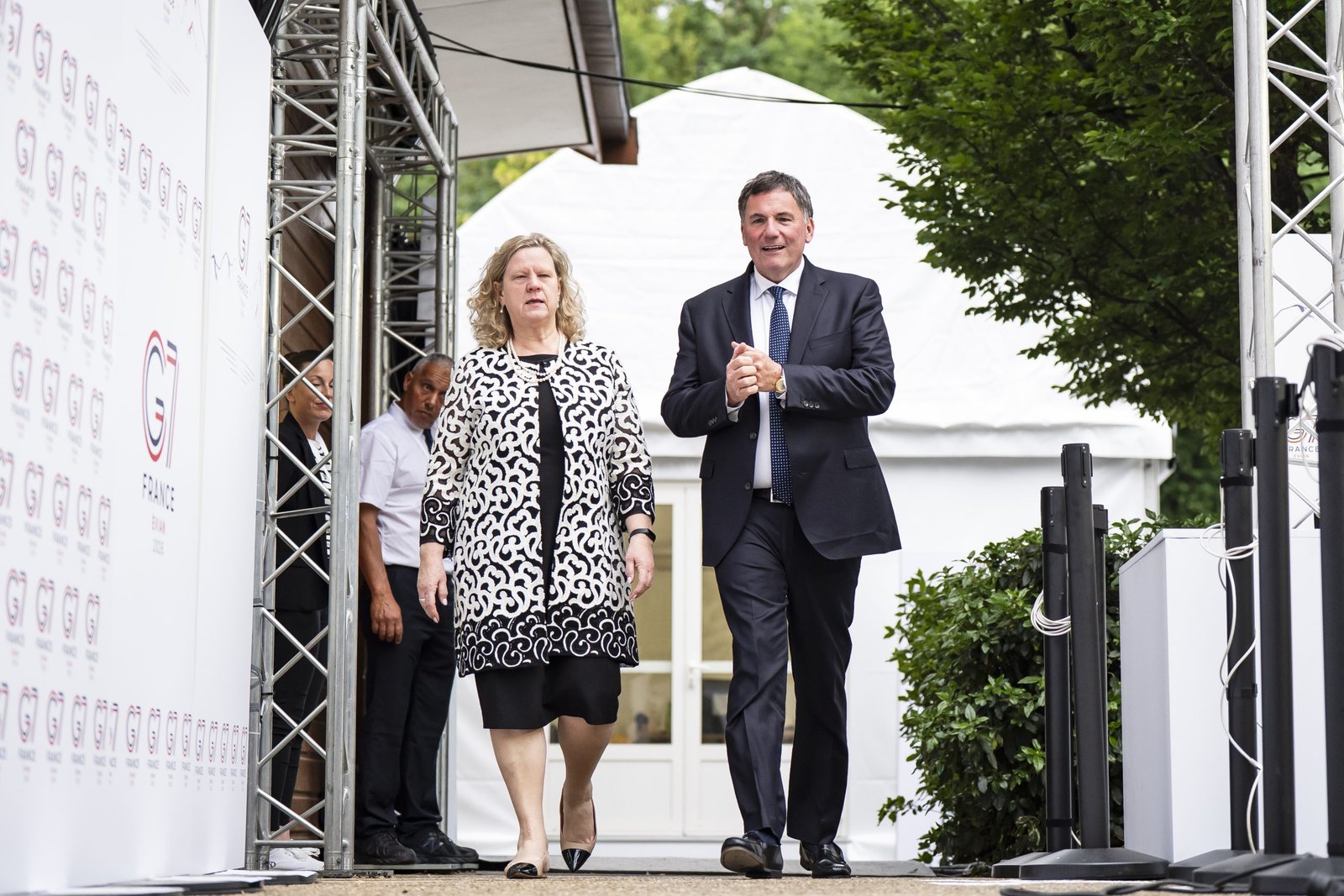
A government source said two meetings this week with Greer signals the talks “are going well” and there’s “momentum on both sides to do this.”
Canadian trade negotiators are holding intensive talks with the Americans in an effort to stave off another round of U.S. tariffs scheduled to take effect next week.
Canada-U.S. Trade Minister Dominic LeBlanc and chief trade negotiator Janice Charette were in Washington, D.C. on Thursday for discussions with the American counterparts, including U.S. Trade Representative Jamieson Greer.
LeBlanc will stay in Washington tomorrow but no meetings with Greer are scheduled just yet. The minister and Charette also met with Greer earlier in the week.
A government source said two meetings this week with Greer signals the talks “are going well” and there’s “momentum on both sides to do this.”
The source is speaking on the condition of anonymity because they’re not authorized to speak publicly on the matter.
U.S. President Donald Trump has threatened to hit a number of Canadian goods with 50 per cent tariffs come Aug. 19. Unlike previous rounds, there would be no exemption for products deemed compliant under the Canada-United States-Mexico Agreement or CUSMA.
With reports circulating on potential concessions, Canada’s dairy producers are calling on Ottawa to avoid making any further changes that would weaken supply management.
The system — which covers dairy, poultry and eggs — operates by controlling domestic production, setting prices and limiting foreign competition through tariff-rate quotas, or TRQs. Imports are permitted up to specified levels at low or zero tariffs, while products entering above those thresholds can face steep duties.
READ MORE: Canada-U.S. trade talks gain momentum as both sides signal room for concessions
iPolitics reported over the weekend that American negotiators aren’t seeking to dismantle the system but want changes to broaden access for U.S. dairy producers.
Bloomberg on Thursday reported that potential dairy concessions are being discussed in talks, but it’s unclear what shape those would take.
Canada’s dairy producers said it’s unfair to ask the industry to once again trade away further market access after doing so in pervious deals.
Under CUSMA, Canada agreed to give U.S. dairy producers tariff-free access to 3.9 per cent of the Canadian dairy market. Similar concessions were made to secure trade agreements with the European Union and Pacific Rim countries.
In a joint statement on Thursday, Canada’s dairy farmers and processors said the country’s food sovereignty shouldn’t be on the table.
“Canadians are understandably worried about the impact of U.S. trade disruptions and the impact it could have on their lives. It is also clear that Canadians believe in the importance of having control over our food supply and ensuring that Canada’s strong domestic dairy sector is not compromised,” said David Wiens, president of the Dairy Farmers of Canada.
Trump has repeatedly railed against Canada’s supply management system for blocking imports from the U.S., while critics have argued that promised access for American producers under CUSMA hasn’t been realized because of Canada’s process of awarding the quotas necessary to provide tariff-free access.
They say that Canada unfairly provides quotas to domestic processors that have no interest in importing products from competitors.
READ MORE: Trump takes aim again at Canada’s dairy system. Importers say there’s an easy fix — get the processors out of the way
The DFC said that argument falls flat when statistics show that exports of U.S. dairy products to Canada have increased by 150 per cent in value from 2019 to 2025 — a leap from $423 million to $1.06 billion.
The group also noted that prior Canadian concessions haven’t advanced CUSMA talks and the Americans have only responded with new demands.
“We won’t apologize for wanting a strong Canadian dairy sector that ensures a reliable supply of milk from Canadian farms, produced to Canadian standards while contributing to Canada’s economy and the vitality of its rural communities,” said Wiens.
While dairy producers are urging Ottawa not to give up more market access, industries already bearing the brunt of U.S. tariffs are focused on how much relief a potential deal could deliver.
Canadian steel producers have been among the hardest hit by Trump’s trade measures, with U.S.-bound shipments falling sharply since the tariffs took effect, but a source in the steel industry cautioned against reading too much into reports about what a potential agreement could look like, as the negotiations remain “highly sensitive.”
“Our thinking has been really to keep our head down,” the source said, adding that it’s important to give the negotiators room to work rather than publicly prescribe what an acceptable deal should look like.
However, the source noted that the preferred outcome isn’t simply a reduction in U.S. tariffs, but a return to tariff-free trade.
“What we want to return to is really the real work of stopping Chinese overcapacity steel from undermining our North American market — and that’s really what a good deal looks like in the long term for both sides,” the source said.
For smaller businesses, the stakes are more nuanced.
Tabatha Bull, president and CEO of the Canadian Council for Indigenous Business said the repeated tariff threats have been particularly difficult for small Indigenous businesses that often don’t have the in-house legal or trade expertise of larger companies.
In reference to Aurora Heat, a business that produces heat warmers for mittens and shoes from beaver fur.
“There’s two distinctions between two products: one that is like fur that’s attached to clothing, and one that isn’t — and one of those would be subjected to 338,” Bull said.
“These are really nuanced specific things that small businesses are trying to figure out, and where are they going to for help and support that is increasingly becoming impactful,” Bull said.
Even if Ottawa and Washington reach an agreement before next week’s deadline, Bull said businesses aren’t necessarily expecting the uncertainty that has defined the trade relationship to disappear.
“I don’t think anybody feels we’re going to get to a moment of certainty, even if we were to get to a good deal on CUSMA.”