dailynewsnblog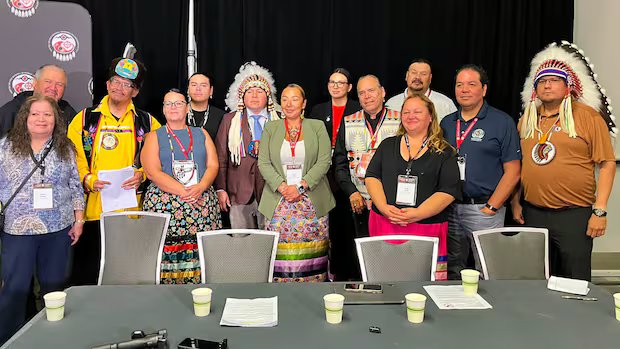

Listen to this article
Estimated 5 minutes
The audio version of this article is generated by AI-based technology. Mispronunciations can occur. We are working with our partners to continually review and improve the results.
First Nations leaders are raising concerns about the quality of health care their citizens receive after the chief of a northern Manitoba First Nation waited in pain for about 13 hours at a Winnipeg hospital last month.
Little Grand Rapids First Nation Chief Clinton Keeper, a cancer survivor, recently needed emergency medical care after experiencing complications from a kidney stone that obstructed his urinary tract, the Southern Chiefs’ Organization said in a news release last week.
He was assessed, hospitalized and eventually discharged, but his condition got worse and he returned to Grace Hospital in Winnipeg by ambulance on June 22, Keeper said at a Wednesday press conference in Ottawa, where leaders are gathered for the Assembly of First Nations’ Annual General Assembly.
“I was suffering really, really excruciating pain,” he said, adding his heart was racing and he knew “something was really wrong.”
He spent hours waiting on a gurney in a hallway, with staff only offering regular-strength Tylenol to help manage the pain, he said.
“They put me on a wheeled bed there — 13 hours I was in that bed,” Keeper said.

While he waited, Keeper asked for help with his urinary drainage device several times, after it leaked onto the bedding, according to SCO. The organization, which represents more than 92,000 people across 33 southern Manitoba First Nations, said Keeper didn’t get help until his family arrived hours later.
Jerry Daniels, the organization’s grand chief, called for urgent action to “address the barriers First Nations people continue to see and continue to face in emergency medical care” both in Manitoba and across Canada.
“Across Canada, First Nations citizens have to travel hundreds of kilometres to go into a system that is creating long wait times, language barriers, mobility issues, unfamiliar systems and continued discrimination,” Daniels said, adding that Keeper’s recent experience at Grace Hospital “demonstrates the human consequences of these failures.”
‘Safe and equitable space’
Last year, a data report conducted on behalf of Shared Health, Manitoba’s provincial health agency, found Indigenous people face longer wait times in Manitoba hospital emergency rooms and are more likely to leave emergency rooms without getting the care they need.
Daniels also noted First Nations people in Manitoba have a life expectancy that is 11 years shorter than other people in the province.
“Canada and the provincial Crown must show leadership and work together to reduce overcrowding, shorten these wait times and create a culturally safe and equitable space for our citizens,” he said.
SCO called on the Manitoba government to work with First Nations to identify and address these issues.
The organization wants to see First Nations patient navigators stationed 24/7 at all Manitoba hospitals to help people access care and talk to providers, especially if English is not the patient’s first language.
SCO said it plans to create new health advocate positions to help First Nations patients who have to travel from their communities for medical care.
In a separate news release on Wednesday, the organization also called on the federal and provincial governments to support First Nations-led transformation of health-care systems, including work SCO is doing to create a system serving the nations it represents.
Manitoba Keewatinowi Okimakanak Grand Chief Garrison Settee said First Nations leaders will continue to “rattle the cage until there’s transformation.”
‘Long-standing health inequities’: minister
Manitoba Health Minister Uzoma Asagwara confirmed in a statement sent to CBC News last week they had spoken to Chief Keeper but said they can’t comment specifically on a patient’s care.
Asagwara said the province is working to reduce wait times by adding more health-care workers and more staffed beds to the system.
They said the government is “committed to working in partnership with First Nations leaders and Indigenous organizations to advance culturally safe, equitable care and address long-standing health inequities.”

A spokesperson for the Winnipeg Regional Health Authority said emergency departments across the city, including Grace Hospital, “continue to experience high patient volumes and wait times.”
Work to reduce wait times in Winnipeg and across the province is “ongoing through a systematic approach,” with initiatives aimed at streamlining how patients move through hospital care, the spokesperson said in an emailed statement last week.
Waiting is difficult “when you are sick or in pain,” the spokesperson said, but patients are assessed and triaged upon arrival, with priority given to the sickest or most injured people.
Grace Hospital’s chief operating officer, Rachel Ferguson, has also reached out to Keeper to talk about what happened, the spokesperson said.