dailynewsnblog
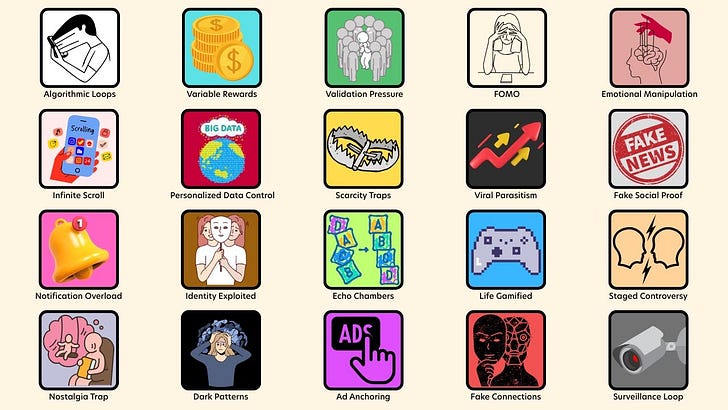
There are two separate but related pushes on from the federal government relating to the Internet that should be raising far more alarm than they are around lawful access and age verification. As with many government initiatives, these one go after the symptoms rather than the causes and risk severe unintended consequences.
Both sound innocent, even positive, on the surface. Bill C-22, however, is built around police and CSIS demands for better access to data. Big tech are apoplectic, this time for the right reasons. While an industry built around surveillance capitalism being mad about the government wanting improved surveillance tools offers a degree of irony, they have a point.
The Signal Technology Foundation, which offers the popular free encrypted messenger service of the same name, has warned that Bill C-22 may force them to leave the Canadian market. Signal is not an American tech giant grazing on the rage machine to feed the oligarchy, it’s a charitable non-profit operating under the IRS’s strict 501(c)3 rules with the simplest mission statement:
Protect free expression and enable secure global communication through open source privacy technology.
Signal’s perspective is that Bill C-22 opens the door to allowing the Canadian government and its police and intelligence services to force cryptographic back-doors into their software. If a back door exists in an algorithm for the benefit of the police, then a back door exists. Once that is the case, the security at the core of the service no longer does.
Bill C-34, introduced only a few days ago, takes on the noble task of protecting children on the Internet, including a social media restriction for children under 16 years old. The proposed law isn’t all bad by any means, but there are three major problems with the inevitable proof-of-age model that I see.
First, algorithmic manipulation by social media is not a problem unique to children. The current state of the United States in particular is a potent example of how voting-age adults are particularly vulnerable to the manipulated curation of information. Having children grow up without exposure to the problem won’t solve it if we don’t pivot our entire education system toward preparing our population into a mass of people taught to apply critical thinking rather than broken into soul-crushed factory workers with no factories left in which to work.
The second is that, when it comes to technology, there is always a way around it, and there is nobody better than the youth at finding it. By turning a whole pillar of society into a forbidden fruit, there will be a strong incentive for an entire generation to look to unregulated and possibly even dark web social media, and the parents won’t even know it’s happening. Technologically applied age restrictions, as a practical matter, are not an effective tool.
For those of us who grew up in the boundary generation between searching drawers indexed on the Dewey Decimal System and entering a simple search string into Google to find information, the idea of any older generation controlling what the younger generation does on the Internet is something of an entertaining notion.
As the late Hitchhiker’s Guide to the Galaxy author Douglas Adams wrote in the Salmon of Doubt:
I’ve come up with a set of rules that describe our reactions to technologies:
1. Anything that is in the world when you’re born is normal and ordinary and is just a natural part of the way the world works.
2. Anything that’s invented between when you’re fifteen and thirty-five is new and exciting and revolutionary and you can probably get a career in it.
3. Anything invented after you’re thirty-five is against the natural order of things.
The result is that older adults will find themselves unable to convince their social media apps that they are in fact of age, while children will be able to convince their social media apps that they are when they, in turn, are not.
The trouble is that in order to apply laws that enforce age restrictions, you must establish processes that reliably establish age, which takes us to the third and most serious problem.
If social media apps are required to collect government identification in order to establish legal age, we will be forcing the vast majority of the population to be turning their ID in all its glory and detail over to the already ethically-challenged social media industry, most of which is not even in Canada. This opens the door to very serious privacy concerns, improves the quantity and quality available to the big-data marketing machine — providing information such as likeness, residential address, medical conditions relating to driving restrictions for example, and exact date of birth for virtually the entire population.
Governments the world over are flailing in trying to deal with the impact of AI and social media, and the survival of legacy media. These disparate legal approaches taken on individual items by individual countries will not ever solve these problems.
The real solutions come down to cracking down on the algorithmic and worker abuses at the core of the problem in the first place. If social media manipulation of society is the problem, age-limiting who gets manipulated while providing more accurate data to the manipulators won’t solve it. The manipulation itself has to be addressed and curtailed — and that is something Canada cannot do on its own.