dailynewsnblog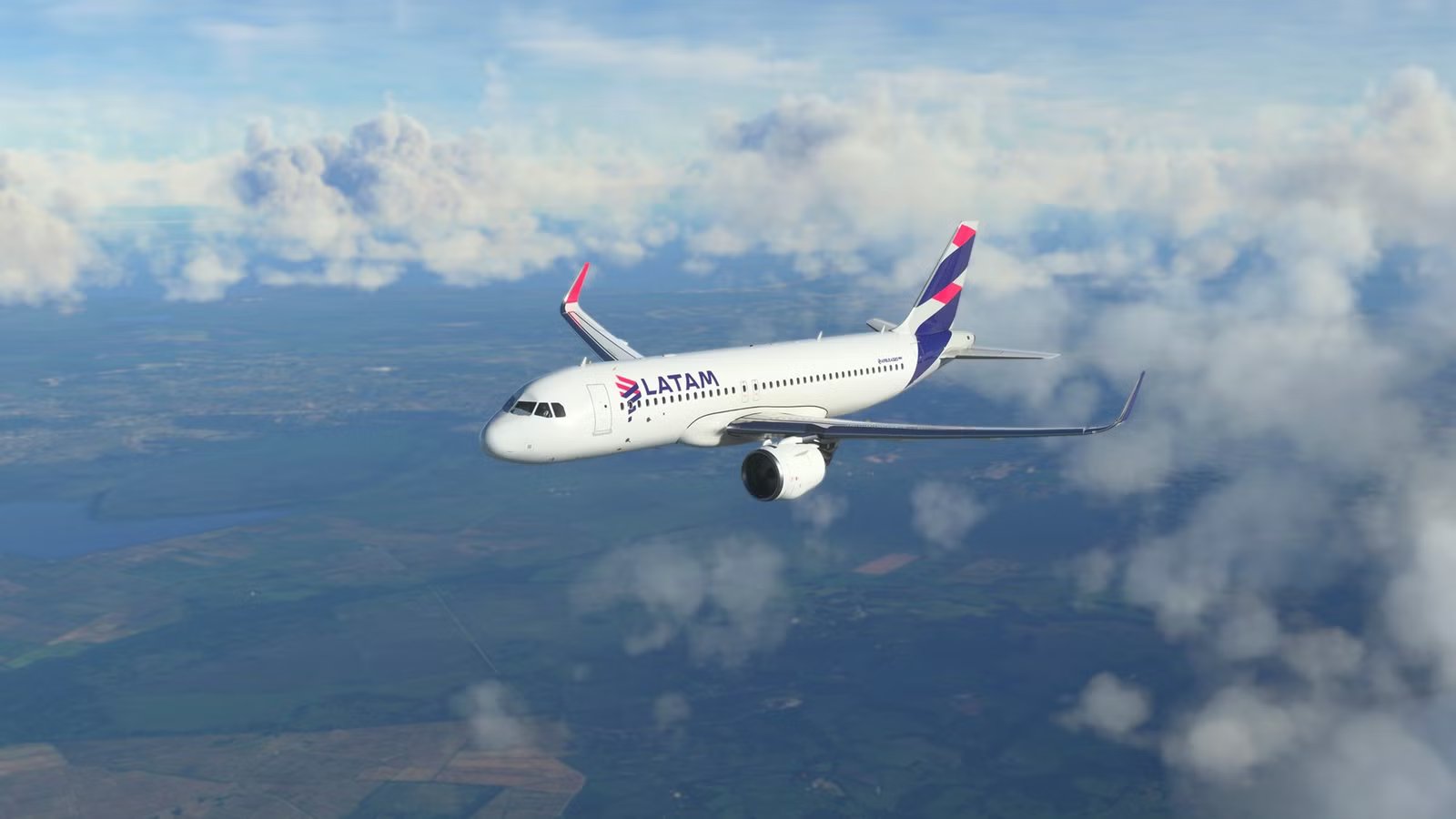
An Airbus A320 belonging to LATAM has veered off the runway in wet weather, leaving the aircraft stuck in the mud. The aircraft had just arrived in Cascavel (CAC) after a flight from Sao Paulo (GRU) when it lost control in the rain and a reported thunderstorm, making conditions less than ideal and causing it to veer off the runway.
Passengers and crew were then disembarked and bussed to the terminal. According to The Aviation Hub, a total of 145 passengers and six crew were onboard; there have been no reports of injury.
LA3858 From Sao Paulo To Cascavel Veers Off The Runway

Flight data identifies that the aircraft had just flown the near 90-minute journey from Sao Paulo to Cascavel, and saw the jet approach its destination from the northeast before setting up its approach. As the jet touched down, it deployed its reverse thrust and braked as normal. As the plane slowed to around 15 knots, the aircraft attempted to turn around and backtrack up the runway towards the taxiway and terminal.
As the plane made this turn, the aircraft veered off the paved runway and ended up in the mud; the jet then came to a stop adjacent to the airport runway. This incident does not indicate there was a runway excursion involved or a runaway during the landing roll. From reviewing the footage, it appears that the plane simply misjudged its turning circle.
Simple Flying has reached out to LATAM for comment; however, an airline spokesperson could not immediately be reached.
Stuck In The Mud At Cascavel

LA3858 is a daily scheduled flight to Cascavel, a region that is located near the Paraguay and Argentina border. The service had departed from Sao Paulo on Monday, August 31 at 8:19 AM, some 44 minutes behind its scheduled departure time of 7:35 AM. With a scheduled arrival time of 9:10 AM, due to the late running of the flight, it did not touch down until 9:47 AM, when disaster struck.
As already mentioned, Cascavel was facing adverse weather conditions, with reports of heavy rain and thunderstorms in the region when the aircraft was approaching and arrived at the airport. This likely played into the incident, with the pilots overcalculating the turning radius of the aircraft and ending up in the mud.
Due to the incident, the return flight, LA3859 back to Sao Paulo, was cancelled, and at the time of writing, the plane remains on the ground at Cascavel until it can be safely extracted from the mud and ferried back to the terminal for further inspection.
Aircraft Involved: PR-MYO

The aircraft at the centre of the incident is a LATAM Brasil Airbus A320-214 aircraft which has been operating for more than 14 years for LATAM and its predecessors. Information from ch-aviation identifies that the plane first took flight back in December 2011, under German Airbus registration D-AVVK.
Delivered to TAM on December 19, 2011, the plane was designated as PR-MYO and operated for the Brazilian carrier until it merged with LATAM in 2016. The plane was subsequently leased to Sundair (a German charter airline headquartered in Stralsund), where it operated for four years under D-ASEF. It returned to LATAM in April 2021. Further details in the table below:
Aircraft Registration | PR-MYO |
|---|---|
Serial Number (MSN) | 4974 |
Hex Code | E48AD4 |
First Flight Date | December 13, 2011 |
German Airbus Test Registration | D-AVVK |
Plane Age | 14.7 years |
Engines | Two x CFMI CFM56-5B4/P |
Historical Operators |
|
Following the incident in Cascavel, the plane ultimately sank into the mud and will now undergo an investigation to inspect the site and will require machinery to help pull the aircraft out. This can include laying metal mats so the wheels can roll out onto a firm surface and be ferried to the terminal or hangar, where mechanics can then assess the landing gear and undertake any required repairs, while also cleaning the engines in case there has been mud or other particles that have been ingested.