dailynewsnblog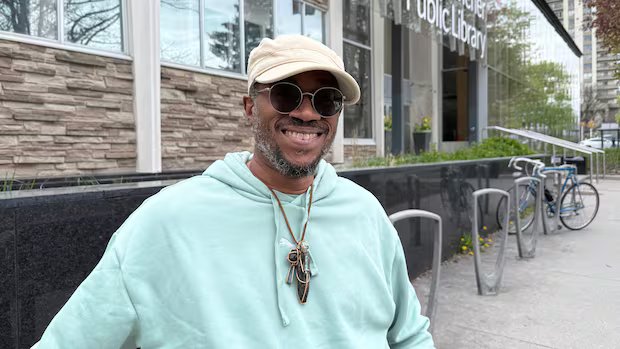
Everything about making music comes easy to Michael Monize — everything except finding accessible studio space.
The musician, who’s based in Kitchener, Ont., has used a wheelchair for over 20 years after a spinal cord injury. While pursuing his craft, though, he’s faced issues in finding an accessible studio.
Monize has been searching for space in cities across southwestern Ontario, including Toronto and, most recently, in Waterloo region.
“I would describe it as beyond challenging,” Monize said, reflecting on the amount of time and research that went into trying to find a wheelchair-friendly studio space.
“I’d call around to studios and you wouldn’t believe, a step or two would prevent access. It just changes the whole dynamic. I’m coming to a studio to create, be creative, be in that space — not deal with challenges getting into the space.”

A local musician is frustrated with the state of accessibility in Waterloo region. He says finding accessible studio spaces that accommodate his wheelchair was a challenge. He’s speaking out about the need for more wheelchair-friendly spaces for National AccessAbility Week, which takes place from May 31 to June 6. CBC’s Aastha Shetty has the full story.
Monize said he called four different studio spaces across Waterloo region before finally looking into the Kitchener Public Library’s Heffner Studio, a fully accessible space where he now creates music.
Ontario’s Ministry of Seniors and Accessibility offers a toll-free number to call if a business is not compliant with the province’s accessibility rules, but Monize said his calls haven’t led to actionable change.
“Nothing’s going to be done. You call a line, you complain this place isn’t accessible, they take your complaint and that’s about it.”
‘Holding back his potential’
Monize’s manager, Natalia Isak, said it’s frustrating to see Monize struggle to just find a space, and it wastes valuable time and energy.
“I can access places, I can do things, but he cannot,” Isak said.
“Before you go anywhere, you have to make plenty of calls to make sure that something’s accessible or whether this thing that you are doing is even possible for somebody with a disability just because the built environment isn’t accessible. So [it’s] definitely holding back his potential, his growth.”

David Lepofsky is chair of the Accessibility for Ontarians with Disabilities Act (AODA) Alliance. The volunteer-run advocacy group campaigns for the effective implementation of AODA standards.
Lepofsky said the provincial government isn’t doing enough to help.
“There’s some enforcement, but it’s pathetically paltry. We desperately need enforceable accessibility standards to prevent these kind of barriers, and while the government passed some, they haven’t passed a new accessibility standard since 2012,” Lepofsky said.
“When you build a building on a number of fronts, it has accessibility requirements in it, but they’re absolutely up to date as of the late Middle Ages. You can easily build a building that fully complies with the accessibility requirements and the building code, and yet it’s still a building that’s replete with disability barriers.”
At the Kitchener Public Library, David Mason, the library’s strategist of inclusive experiences, said they are dedicated to going above and beyond when it comes to improving accessibility for all.
“I think it’s great to be able to see [Monize’s] work happen in action at the studio at Kitchener Public Library,” Mason said.
“I think it’s important that we do accessibility work all the time. It’s helpful to see folks have a good experience. You do all this work to make the space as accommodating and welcoming as possible. Accessibility is a net win for everybody at the end of the day.”
Advocate calls phone line for complaints ‘a joke’
When it comes to making complaints about shops or studios that are inaccessible, Lepofsky said the provincial phone number is falling short.
“We fought for this over a decade ago as a complaint line where you could get things enforced. But from what we’ve heard … the government certainly doesn’t treat it that way,” he said.
“From any feedback we’ve received from people with disabilities, it’s a joke.”
In a statement to CBC News, the Ontario Ministry for Seniors and Accessibility said complaints are only occasionally received through the toll-free line, adding it’s meant for people to ask for assistance or pose questions related to compliance.
The Morning Edition – K-W6:31Kitchener musician calls out studios for lack of accessibility
A Kitchener musician is speaking out about the lack of accessible studio spaces that accommodate his wheelchair. CBC K-W’s Aastha Shetty spoke with Michael Monize about the challenges he’s faced finding studio space.
The ministry said accessibility requirements “apply to most new construction and to existing buildings undergoing extensive renovations. Building owners are encouraged to upgrade their buildings to meet the needs of their tenants and clients.”
That means older buildings without accessibility features are grandfathered under the building code until the building owner decides to make renovations.
For now, Monize said he’s happy at the library’s Heffner Studio.
“I was able to complete my first track here, I Am On, which I said I’ll release for National AccessAbility Week [May 31 to June 6],” he said.
“I connected with other artists here at the studio for my next project, Tears of Boswellia. They added some vocals for it and we were able to build like you would in a studio with other artists. I think that was fantastic.”