dailynewsnblog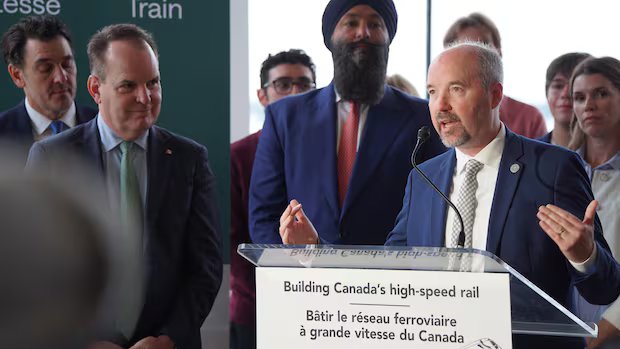

Listen to this article
Estimated 4 minutes
The audio version of this article is generated by AI-based technology. Mispronunciations can occur. We are working with our partners to continually review and improve the results.
Landowners along the proposed northern corridor for Canada’s planned high-speed rail line may have let out a sigh of relief after learning the federal government prefers a southern route instead.
But one man whose property could now be spared said his concerns haven’t really been allayed.
Robert Playfair’s family has been farming roughly 240 hectares near Balderson, Ont., since 1817, decades before Canada became a country.
Valleyfair Farm sits within the wide swath of land north of Highway 7 that was being considered by Alto, the Crown corporation behind the project.
Regardless of where the rail lines are put down, Playfair said he doesn’t think the risk to food production and people’s homes are worth it for a train that only connects two provinces.
“It’s not a ‘not in my backyard’ syndrome,” he explained. “I don’t want it for me, and I don’t want my neighbor to go through it either.”

On Monday, federal Transport Minister Steven MacKinnon announced that while a northern route is still on the table, his government has a “strong, strong” preference for a different approach.
Following consultations, he’s asked Alto to focus on a southern course and explore the possibility of a stop in Kingston, Ont.
“It is a longer route,” MacKinnon acknowledged, though he said it shouldn’t increase travel time so significantly that people will choose to travel by plane or car instead.
A stop in Kingston would also mean around 80 per cent of the population east of Peterborough, Ont., would live within 25 minutes of a high-speed rail station, the minister said, calling that “quite an amazing thing.”

MacKinnon pointed to the city’s connections with existing rail, a growing population and a large student population at its three post-secondary institutions who are looking to travel to major centres.
“You’re already a hub for regional connectivity with the fourth busiest Via Rail station in Canada,” he added.
Stop could be decided this fall
Alto CEO Martin Imbleau told CBC the “plea” from local officials had been heard.
“We’re keeping the northern corridor alive, but of course we will be focusing for the next few months way more on the southern corridor, because we would like to present where potential station Kingston could be in the fall,” he said.
Kingston Mayor Bryan Paterson had been working with residents of South Frontenac to push for a stop in Kingston.

On Monday, he said he was relieved that Alto had listened, and he believes the “best thing” would be to have city staff work directly with the Crown corporation as it continues planning.
“Even if it’s not right along [Highway] 401, in the 401 corridor, we still think it makes a lot of sense, and we’re going to continue to press that case,” Paterson said.
The mayor stopped short of sharing where exactly he thinks a stop in the city should be located beyond being “closer to the urban area with minimal environmental impact.”
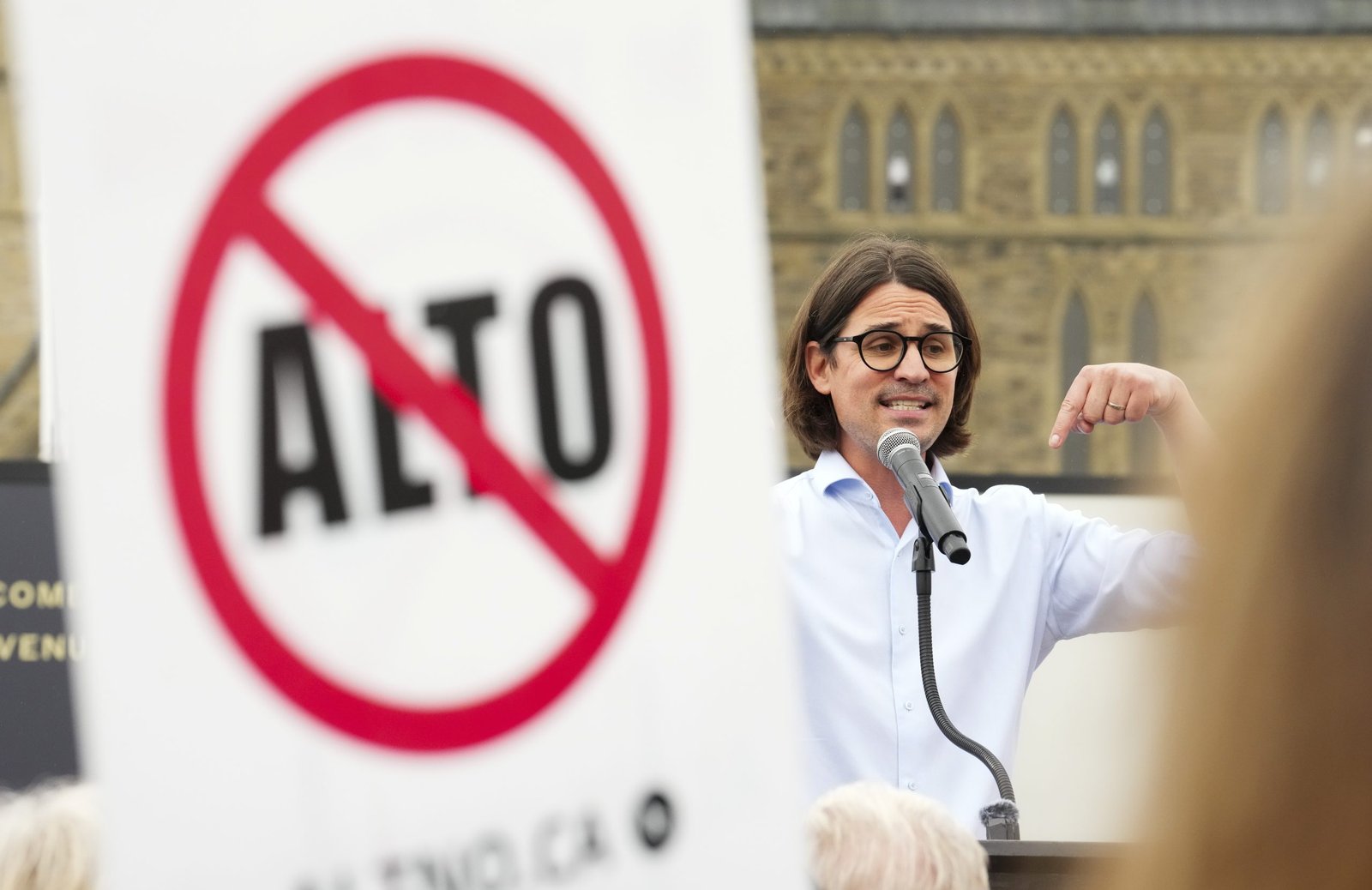
Outside Monday’s announcement, anti-Alto protesters temporarily stopped traffic as they voiced their concerns about how high-speed rail could impact wildlife and the environment, along with homes and farms that fall in the train’s path.

Eva Leon, chair of the Chaffey’s Area Lakes Association, said she’s especially worried about the Frontenac Arch Biosphere.
“This train … if it rips right through it, it’s going to destroy it, and once we’ve lost it we can’t gain it back,” she said.
Katie Koopman, co-founder of Save South Frontenac, which had been pushing for the train to go to Kingston rather that cut through rural communities, said the announcement proves even large infrastructure projects can be “fluid.”
While it may alleviate concerns for some, the bottom line for most people questioning the project is still “No Alto,” she explained.
Playfair, the farmer with property along the northern route, counts himself among that group.
“We just don’t want our communities cut apart and cut open,” he said. “You start creating all these problems that are going to affect how people live and our food supply.”