dailynewsnblog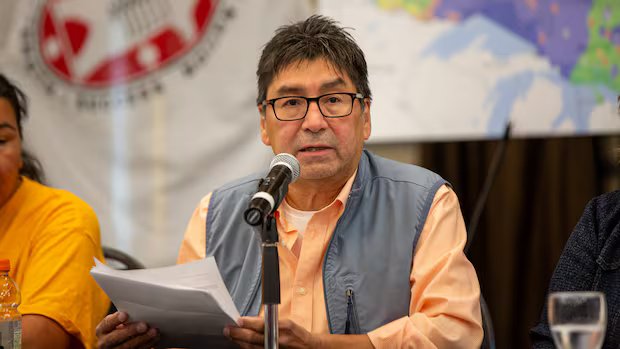
The leadership of Kiashke Zaaging Anishinaabek, also known as Gull Bay First Nation, is “vehemently opposing” the Ontario government’s withdrawal of wildfire implementation and evacuation orders around the community.
Wilfred King, chief of the Ojibway First Nation in northwestern Ontario, expressed his views about the withdrawal during an interview with CBC Thunder Bay.
“Our members are still at risk and our infrastructure is at risk,” he said.
North of Kiashke Zaaging Anishinaabek, Thunder Bay 36 is the largest wildfire in the province, covering more than 301,000 hectares.
To the southwest are wildfires Dryden 34 (over 45,000 hectares), Dryden 35 (over 31,000 hectares) and Thunder Bay 56 (nearly 8,000 hectares).
While leadership was aware and objected by letter to the minister of Energy and Natural Resources on plans to lift the orders, they received a letter on Thursday stating that they would end at 12:02 a.m. ET on Friday, according to King.
The fires surrounding the community to the north and west are still out of control, he said, noting that the northern fire is only 20 kilometres from the community and the western fires are roughly 30 kilometres away.
If the fire west of the community grows and poses a threat, King said, it would cross Highway 527, which is their only escape route.
“The only escape would be jumping on boats and crossing Lake Nipigon, and that’s not an alternative.”
After seeing what happened in Namaygoosisagagun, Whitesand First Nation and Armstrong, where the fire moved roughly 48 kilometres per day, he said the community was quite concerned that these fires weren’t under control and it would alleviate their concerns if they were.
“If the weather conditions improve, we would feel a lot more comfortable,” King said.
While the community has received updates on improved wildfire conditions, King explained that their concerns have not been alleviated, as the updates are mostly a day late — he doesn’t believe they’re accurate.
“A lot of times, the maps of the area burnt — we don’t get those till sometimes two days later,” King said.
Importance of good infrastructure
Although the wildfires are the community’s first and foremost concern, as they could “basically wipe the whole community out,” King said that before people return to the community, they also need to address the water treatment plant.

“Everybody’s anxious to go back and obviously, we want to make sure that there’s a smooth transition… We have to ensure [the] infrastructure is in working order. We have to do testing of our water treatment plant to make sure the water is potable and drinkable.”
Another concern was preventing a similar re-evacuation as Neskantaga First Nation due to sewage backup in the community.
“We’re in the middle of a sewage project that had to be suspended because of the wildfires, and so those sorts of infrastructure things have to be addressed before we can even tell people to go back,” King said.
Those are the sort of things that the community is completely aware of, but the ministry is “blind to recognize,” he said.
Ministry in ‘regular contact’ with First Nations
CBC News reached out to the MNR for comment on Gull Bay’s concerns and received an emailed statement on Tuesday evening.

“The Ministry of Natural Resources continues to be in regular contact with First Nations communities to share information on fire activity and answer questions,” wrote spokesperson Mike Fenn.
“Changes to evacuation orders issued by the ministry will only be made when fires no longer pose a risk to community, based on the best advice of fire behaviour experts.”
However, King said, the community’s position is that the implementation order should have stayed in effect until they’re confident that their community will be safe.
Kiashke Zaaging Anishinaabek has support from Indigenous Services Canada (ISC), and the minister has assured them it’s up to the community to lift its own evacuation order, King said, noting they’ve agreed to support its position.
While nothing prevents members from returning to the community, he said, chief and council made it clear to members that, if they return, they’d be entering at their own risk.
They won’t take responsibility or any liability if something disastrous happens to the community or members, King added.
The Hope for Wellness Helpline provides immediate, toll-free telephone and online chat-based emotional support and crisis intervention to all Indigenous people in Canada. This service is available 24/7 in English and French, and upon request in Cree, Ojibway and Inuktitut.